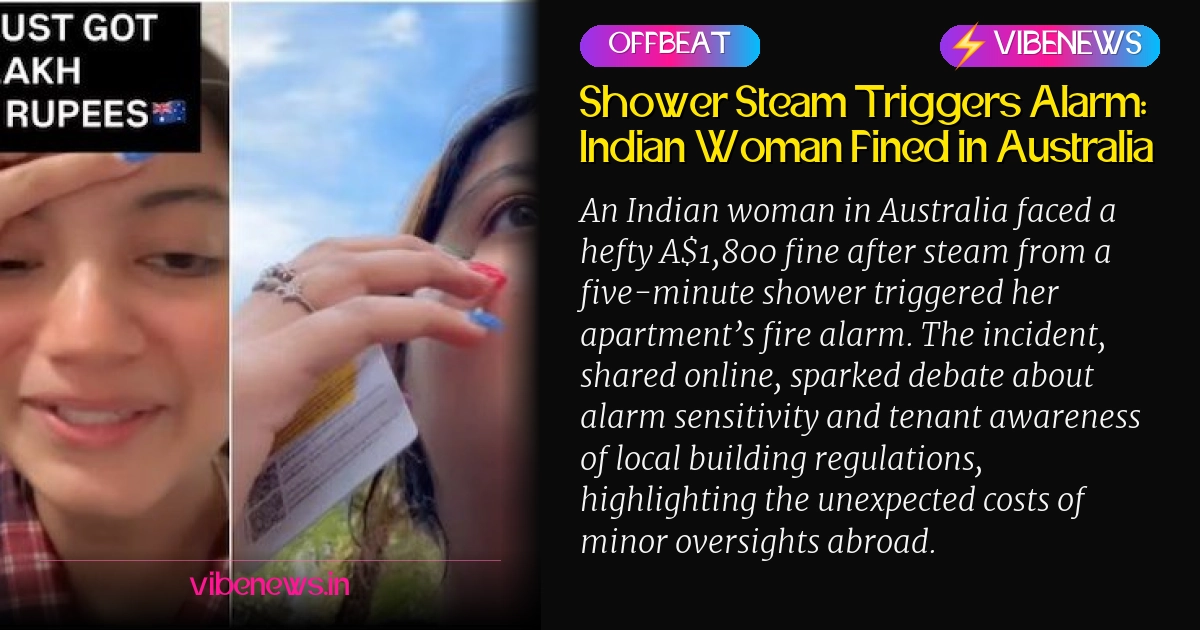
An Indian woman residing in Australia recently encountered an unexpected and costly consequence following a routine five-minute shower. The seemingly innocuous act led to her apartment’s fire alarm being triggered by steam, culminating in a substantial fine of A$1,800, equivalent to approximately Rs 1.30 lakh.
The incident, which quickly garnered attention after the woman, known by her Instagram handle @sorandomvamika, shared her experience online, underscores the often-overlooked nuances of living in a new country and the stringent regulations that govern residential safety systems.
The Unforeseen Alarm
The woman recounted her bewildering experience, explaining that the fire alarm blared moments after she stepped out of the shower. Initially, she mistook the piercing sound for a routine fire drill, a common occurrence in many residential complexes designed to ensure occupant preparedness.
Her confusion persisted until the building manager swiftly arrived at her apartment. Believing the manager was there to assist with an evacuation, she soon realized the visit was directly in response to the activated alarm within her unit.
Upon investigation, the manager determined that the cause was indeed the steam generated during her shower. Despite the brevity of her shower, the crucial oversight was her failure to switch on the exhaust fan, a device specifically designed to mitigate moisture and steam buildup in bathrooms.
This revelation prompted the woman to question the placement and sensitivity of the alarm system itself, expressing her bewilderment at a fire alarm being positioned in a manner susceptible to bathroom steam, particularly outside the immediate washroom area.
Public Response and Building Standards
The viral video sparked considerable discussion among online users. Many echoed the woman’s sentiments, questioning the extreme sensitivity of the alarm system and its proximity to a moisture-generating area like a bathroom.
Commenters suggested that the building’s fire alarm infrastructure might warrant inspection to ascertain why a short burst of shower steam was sufficient to activate such a critical safety device, potentially indicating an overly sensitive setup or a design flaw.
In Australia, fire safety regulations are rigorously enforced, with building codes mandating the installation of smoke detectors and fire alarms in residential properties. These systems are designed to detect smoke and heat, providing early warning in case of a fire emergency.
However, false alarms, often triggered by cooking fumes, dust, or indeed, steam, are a persistent issue. While frustrating for residents, these incidents also place a significant strain on emergency services, diverting resources from genuine emergencies.
Tenant Responsibilities and Financial Implications
Tenants in Australia, like in many other countries, bear certain responsibilities regarding the maintenance and proper use of their rented premises, including adherence to building rules and safety protocols. This often extends to understanding how installed safety features operate.
Fines for false fire alarms are not uncommon, particularly when negligence is determined to be a factor, such as failing to use an exhaust fan or intentionally tampering with an alarm. These penalties serve as a deterrent and help offset the operational costs incurred by fire departments responding to non-emergencies.
The cost of a fire brigade call-out for a false alarm can vary significantly by state and territory in Australia, often ranging from hundreds to thousands of dollars. Landlords or building management typically pass these charges onto the tenant if their actions are deemed responsible for the false activation.
This financial burden highlights the importance for new residents, especially those from different cultural backgrounds, to thoroughly familiarize themselves with local tenancy agreements, building bylaws, and the operational specifics of their apartment’s amenities.
Preventative Measures and Awareness
To prevent similar incidents, residents are generally advised to always use exhaust fans during and after showering to clear steam and moisture. Ensuring bathroom doors are closed can also help contain steam, preventing it from reaching smoke detectors located in hallways or adjacent rooms.
Regular cleaning of smoke detectors to remove dust buildup can also reduce the likelihood of false alarms. Furthermore, understanding the type of smoke detector installed (e.g., photoelectric vs. ionization) can provide insight into its sensitivity to different triggers.
For those new to a building or country, proactive engagement with building management to understand specific alarm system sensitivities and emergency procedures is a prudent step. This can prevent costly misunderstandings and ensure a safer living environment for all.
Editorial Context
This incident, while seemingly minor, offers a poignant illustration of the challenges individuals face when navigating new environments with differing regulatory frameworks and cultural norms. It transcends a simple story of a fine, touching upon broader themes of adaptation, responsibility, and the often-unseen costs of cultural assimilation.
Over the long term, such stories serve as crucial reminders for both individuals moving abroad and for host communities. They highlight the need for clearer communication regarding residential guidelines and the importance of accessible information for new arrivals to prevent similar, financially impactful oversights.
The widespread online reaction also reflects a collective curiosity and concern regarding the balance between stringent safety measures and practical living. It prompts a dialogue on whether certain safety systems are overly sensitive or if greater public education is needed to prevent avoidable incidents that strain emergency services and burden residents.
Ultimately, this episode underscores that even the most mundane daily activities can carry significant implications when one is unfamiliar with local rules, making awareness and proactive learning indispensable for a smooth transition into a new home.
TL;DR
- An Indian woman, identified by her Instagram handle @sorandomvamika, was fined A$1,800 (approximately Rs 1.30 lakh) in Australia.
- The substantial fine was issued after steam generated during her five-minute shower triggered her apartment’s fire alarm system.
- The incident occurred because the woman had not switched on the exhaust fan in her bathroom, leading to the accumulation of steam that activated the sensitive alarm.
- The woman publicly questioned the placement of the fire alarm, noting its proximity to the washroom area, which she believed contributed to the false activation.
- The viral video sparked significant online discussion and debate among users regarding the sensitivity of modern fire alarm systems and the specifics of building regulations in Australia.
- False fire alarms, often caused by everyday activities like showering or cooking fumes, are a common issue that can incur significant costs for emergency services and residents alike.