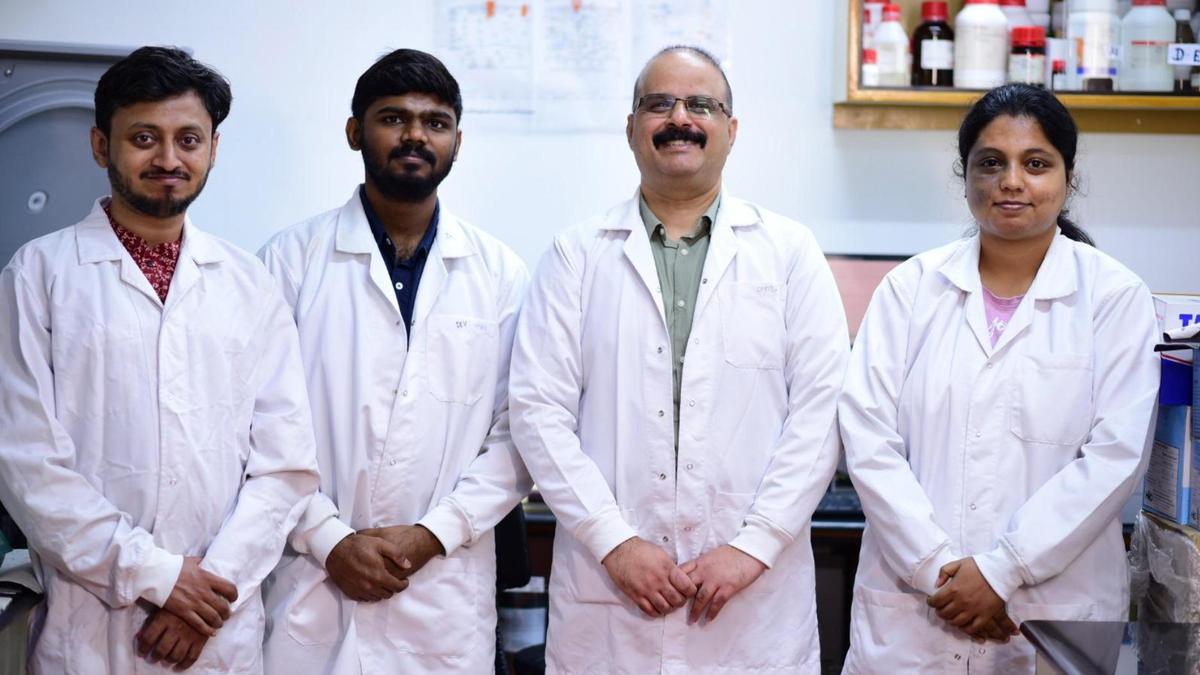
Scientists at the CSIR-Centre for Cellular and Molecular Biology (CSIR-CCMB) in Hyderabad have uncovered a critical mechanism that helps human cells detect viral infections and launch a rapid immune response. Led by Dr. Santosh Chauhan, the research team identified a protein named ‘DZIP3’ that acts as the body’s first line of defence against invading viruses.
When viruses invade human cells, they release genetic material that requires immediate detection. The study reveals that DZIP3 functions simultaneously as a sensor for viral RNA and an activator of the immune system. The protein remains inactive until it encounters viral genetic material inside a cell, triggering a structural change that activates it.
Once activated, DZIP3 migrates to the mitochondria—the cell’s energy-producing units—where it sparks a cascade that activates major antiviral defence proteins. This sequence results in the production of Type I interferons, which are powerful signalling molecules preventing viruses from multiplying and spreading.
This breakthrough validates a hypothesis proposed by Dr. Chauhan’s laboratory nearly seven years ago regarding human proteins playing a dual role in sensing viral genetic material and alerting the immune system. Laboratory demonstrations proved the pathway provides protection against several dangerous pathogens, including SARS-CoV-2, the Chikungunya virus, and the Japanese Encephalitis virus.
Discovering how DZIP3 senses viral RNA and directly triggers the cell’s immune machinery gives us a deeper understanding of human immunity.
Based in Hyderabad, Telangana, the CSIR-CCMB research team is now actively pursuing the creation of small-molecule drug candidates. These compounds are designed to enhance DZIP3 activity, aiming to boost natural human antiviral defences and establish new broad-spectrum treatments for emerging viral threats.
The study, funded by the Department of Biotechnology, featured Dr. Rinku Sahu as the first author alongside a network of national and international collaborators.
TL;DR
- CSIR-CCMB scientists in Hyderabad uncovered that the DZIP3 protein detects viral RNA and activates human immune responses.
- The protein changes its structure upon encountering viral genetic material and moves to the mitochondria to trigger Type I interferons.
- Research confirmed the pathway provides protection against SARS-CoV-2, Chikungunya, and Japanese Encephalitis viruses.
- The team is currently developing small-molecule drug candidates designed to enhance DZIP3 activity for new antiviral therapies.
- The study was led by Dr. Santosh Chauhan and funded by the Department of Biotechnology with contributions from various collaborators.