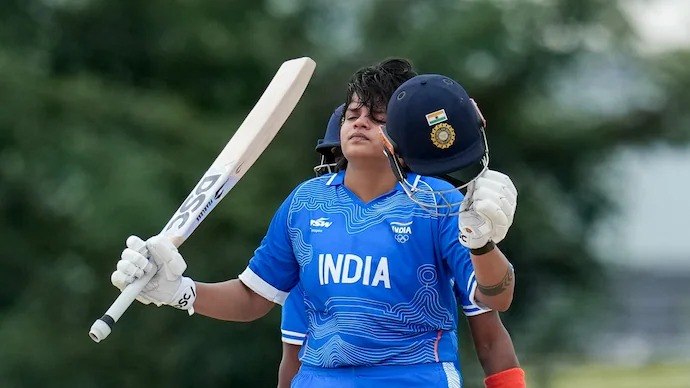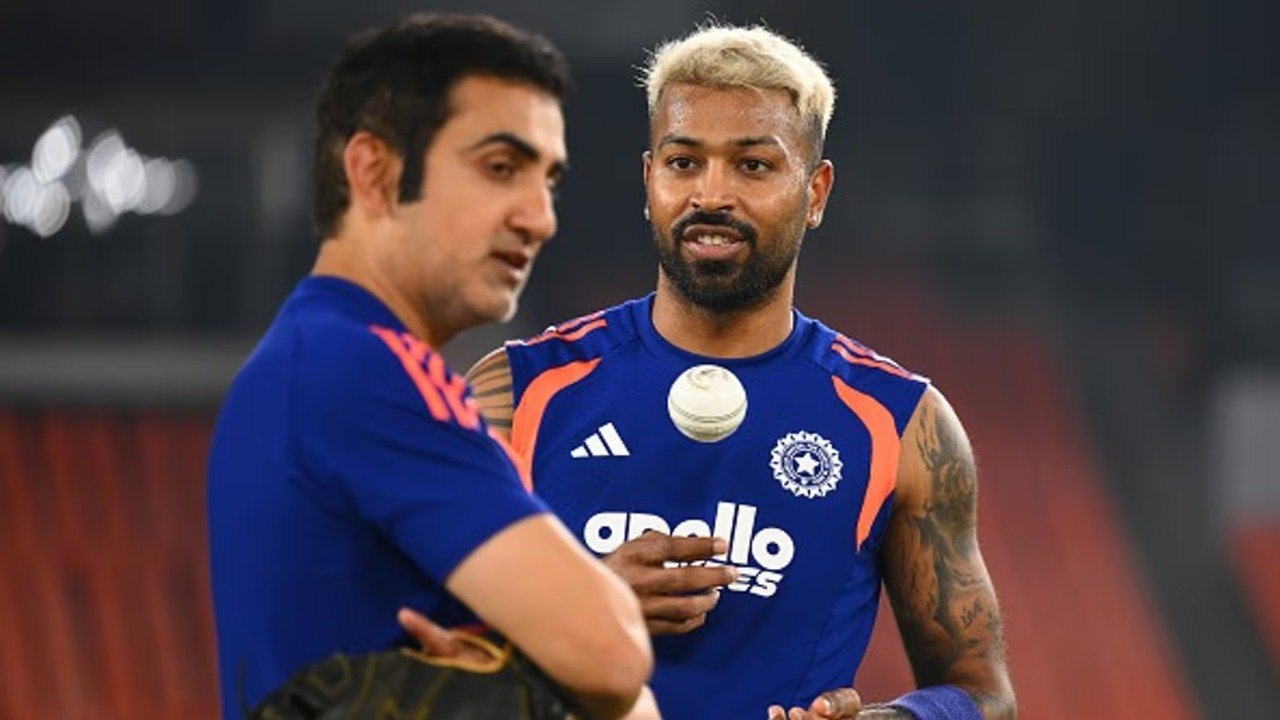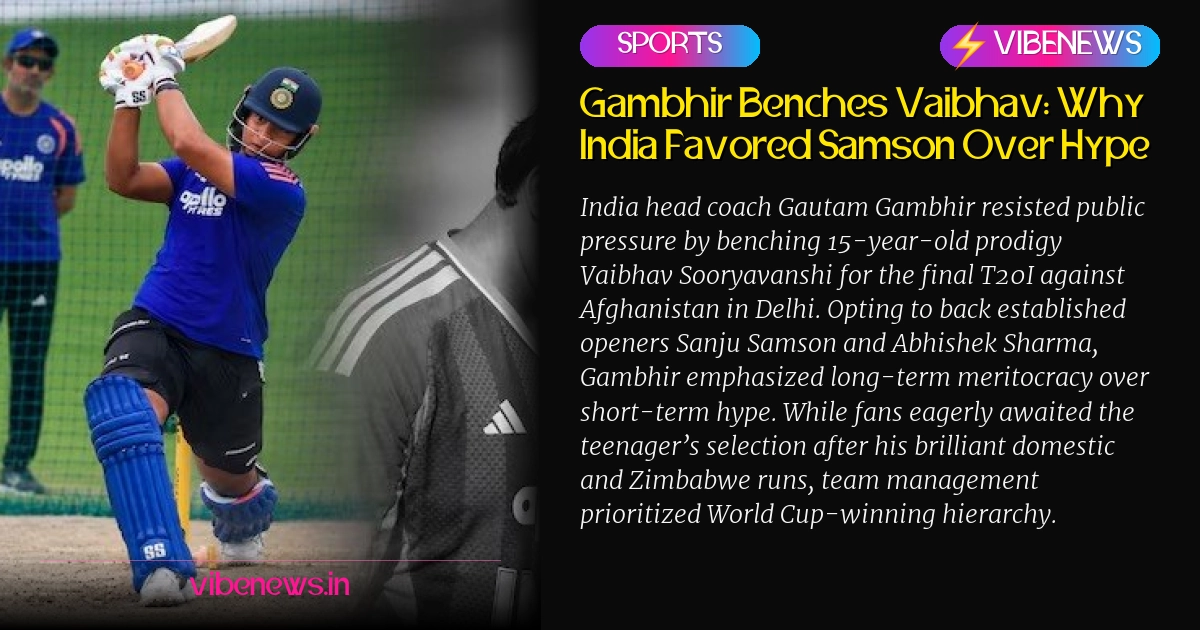
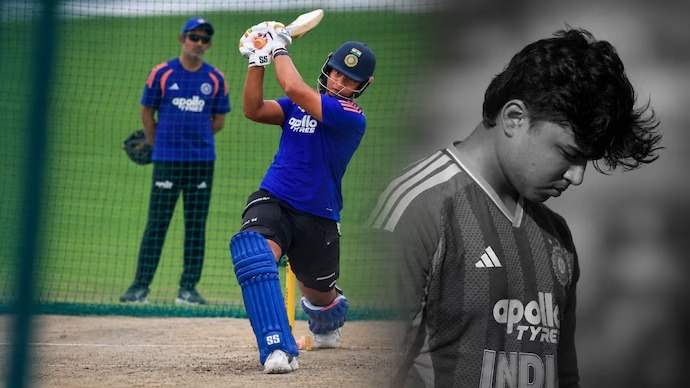
Indian head coach Gautam Gambhir left 15-year-old batting sensation Vaibhav Sooryavanshi out of the playing XI for the third T20I against Afghanistan in Delhi, standing firm on a selection policy that values long-term team continuity over public clamor. Despite India having already locked up the series victory, management resisted the temptation to hand the prodigy an easy outing in front of a packed capital crowd.
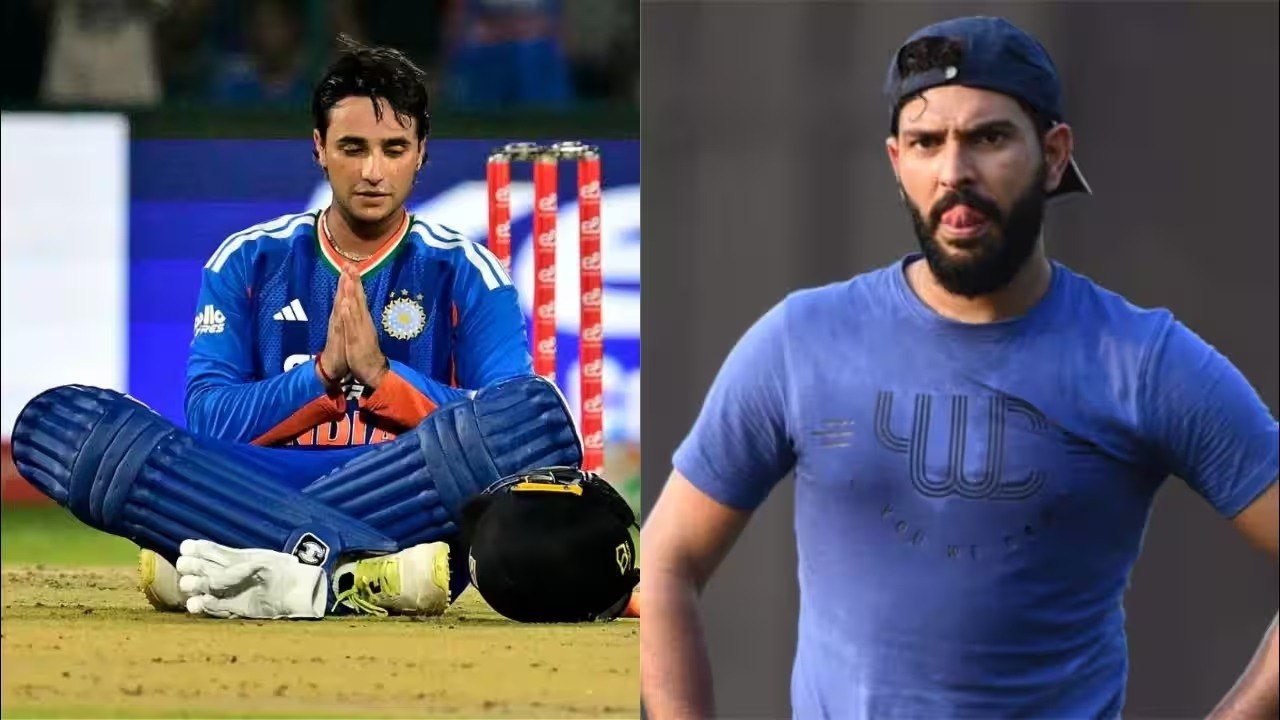
The atmosphere at the Arun Jaitley Stadium highlighted the immense excitement surrounding the young batsman. Spectators rushed toward the boundary fence simply to catch a glimpse of Sooryavanshi during pre-match throwdowns. However, the team leadership chose experience, fielding Sanju Samson alongside Abhishek Sharma. The decision paid immediate dividends on the field as the opening pair put on a commanding 142-run partnership, highlighted by Sharma hitting a 30-ball century—the fastest T20I hundred ever scored by an Indian batsman. Sharma concluded the series with 228 runs, while Samson added two fifties across the three matches.
Resisting Public Pressure and Recency Bias
Selecting the team based on crowd enthusiasm would have been the frictionless route, but Gambhir’s tactical discipline exposes a vital principle in high-stakes squad management: short-term excitement cannot displace proven multi-year reliability. Sooryavanshi’s trajectory has been extraordinary, marked by an Orange Cap-winning IPL season and a Player of the Series performance in Zimbabwe when Samson was rested. Yet, rotating him in and out based purely on momentum risks destabilizing the core structure that recently brought India an unbeaten T20 World Cup title.
"From Vaibhav’s point of view, it is again a very clear conversation that he has to wait for his opportunity. We know the kind of talent he has. We know what he can do. But again, someone who done extremely well over a period of years obviously will always be ahead of someone who has got into the team."
The Philosophy of Hierarchy and Patience
Gambhir acknowledged that leaving Sooryavanshi out during the previous England and Ireland tour was among the most difficult calls of his coaching career. Nevertheless, he rejected the notion that a brief dip in form should instantly forfeit a veteran’s place. Experienced players do not suddenly become subpar after three or four failures, particularly when they were instrumental in securing global silverware. Samson himself endorsed this rigorous approach, noting that true leadership requires making tough, unpopular decisions that put team stability ahead of public demand.
By refusing to indulge immediate gratification, the coaching setup is establishing a structured environment for Sooryavanshi’s future integration. Gambhir reassured that when the teenager finally earns his spot, he will receive an extended run in the side rather than sporadic, high-pressure chances. For now, the message from the Indian dressing room remains firm: elite talent is recognized, but patience remains non-negotiable.
TL;DR
- Gautam Gambhir benched 15-year-old Vaibhav Sooryavanshi for the third T20I against Afghanistan in Delhi.
- Sanju Samson and Abhishek Sharma opened, sharing a 142-run stand featuring Sharma’s 30-ball century.
- Gambhir stressed that established World Cup winners take precedence over recent individual form.
- The coach assured Sooryavanshi will receive an extended run when his designated opportunity arrives.
- Sanju Samson backed the management’s willingness to make tough, unpopular selection decisions.