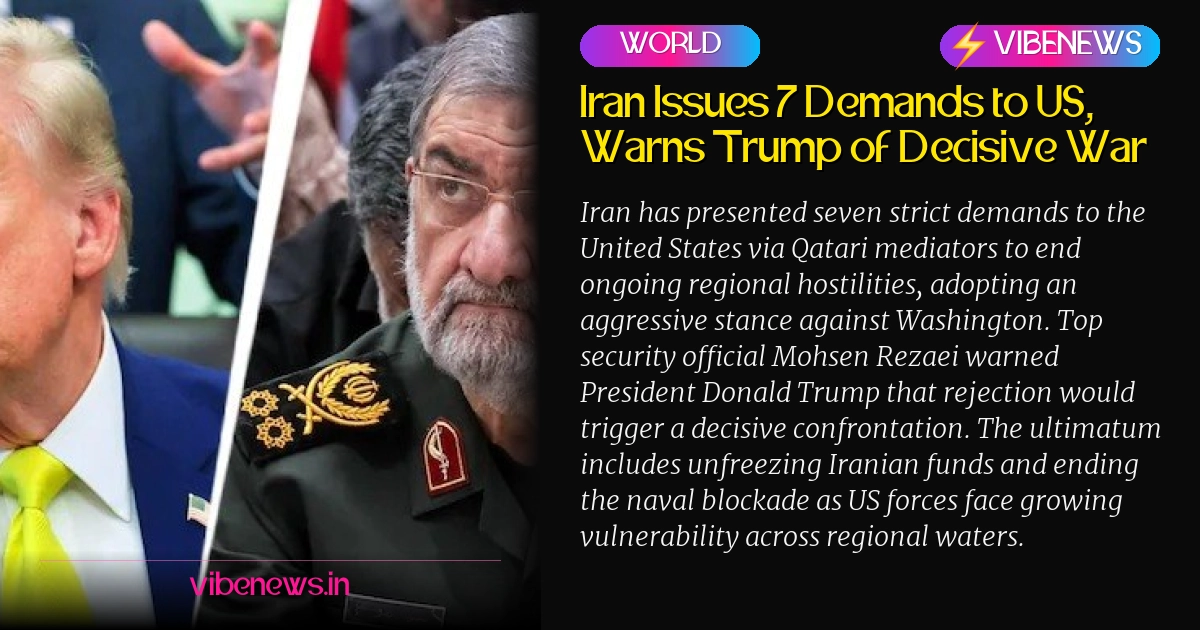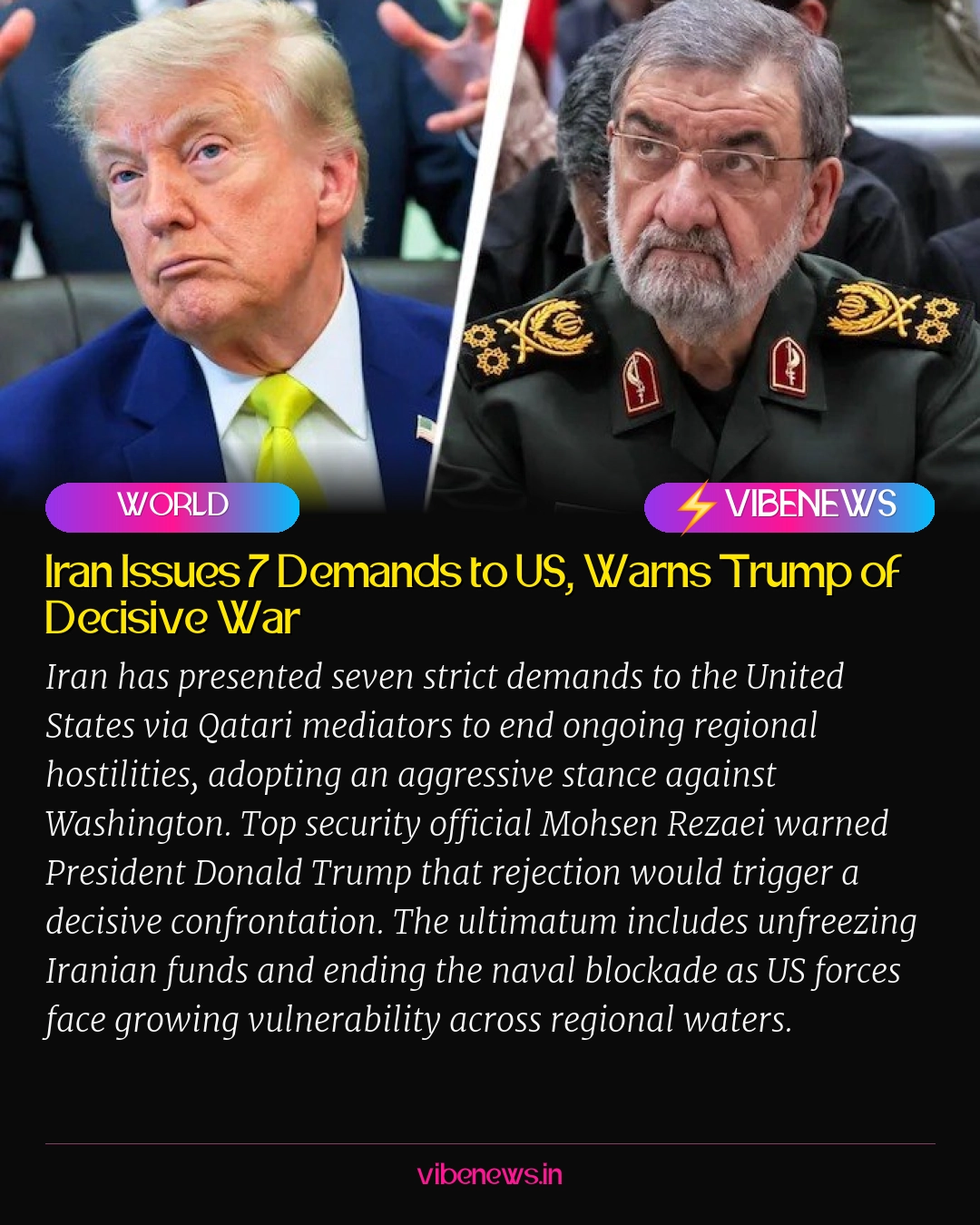
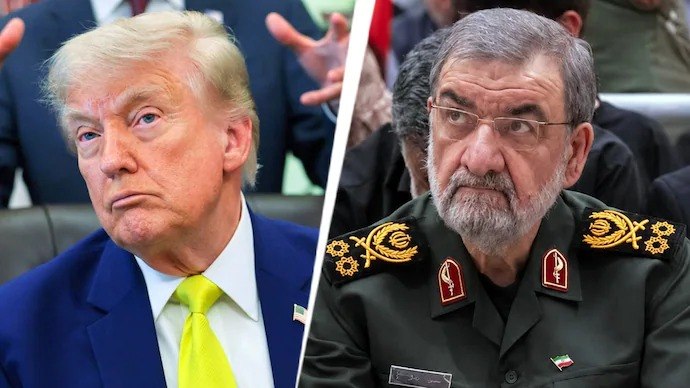
Iran has submitted a list of seven mandatory conditions to Washington through Qatari diplomats to halt military hostilities, threatening the United States with a full-scale conflict if President Donald Trump rejects the terms.
Mohsen Rezaei, Secretary of Iran’s Supreme National Security Council, confirmed that the ultimatum was conveyed to American officials via Doha. Asserting an uncompromising posture, Tehran made clear that the onus lies entirely on the White House to avert further escalation following months of armed engagement that began after combined US and Israeli strikes hit Iranian positions in late February.
Demands for Immediate Concessions
Detailing the framework handed to the mediators, Rezaei outlined non-negotiable prerequisites aimed at dismantling the economic and military pressure exerted by the United States. Tehran’s demands mandate an immediate cessation of military actions across every front, the release of all frozen Iranian financial assets held abroad, and a complete dismantling of naval blockades constraining the country’s maritime commerce.
Rezaei underscored that Tehran’s stance remains uncompromising, framing American military threats as ineffective against Iranian resolve.
It is in Washington’s interest to accept these conditions. Trump’s threats will not achieve any results. We are prepared for a decisive war.
Mounting Vulnerability for American Regional Assets
Highlighting Washington’s delicate strategic position across the Middle East, the Iranian security chief cautioned that American forces remain fully exposed to potential retaliation. Iranian military strategists have adjusted operational plans after surviving two previous rounds of direct combat, refocusing combat readiness directly toward US Navy formations deployed from the Persian Gulf through the Gulf of Oman and extending into the Arabian Sea.
Demonstrating its strike capability, Tehran disclosed the recent test-firing of an advanced multi-warhead anti-ship missile conducted in close proximity to an American naval vessel or aircraft carrier. Rezaei warned that if hostilities resume, Iranian forces are prepared to execute an extensive offensive targeting US military installations, commercial interests, and American corporate operations throughout the region.
Diplomatic Maneuvers and Nuclear Stance
The ultimatum comes amidst ongoing diplomatic efforts by Qatar and Pakistan to revive structured talks between the two adversaries following the expiration of a prior memorandum of understanding last month. Despite the combative rhetoric, diplomatic channels remain partially open as the US State Department granted entry visas to the Iranian delegation for the United Nations General Assembly High-Level Week in New York, scheduled from September 18 to September 28.
Addressing nuclear concerns, Rezaei noted that while Tehran has not formally withdrawn from the Nuclear Non-Proliferation Treaty (NPT), continued hostile measures by Washington could force a revision of that policy. For now, Iran maintains its official stance that its nuclear doctrine strictly adheres to a religious decree banning weapons of mass destruction.
On broader regional maritime choke points, Rezaei clarified that controlling the Bab al-Mandeb Strait remains the domain of Yemen’s Houthi movement, while a bilateral agreement with Oman regarding the Strait of Hormuz stands fully drafted and awaiting broader regional endorsement before public release.
TL;DR
- Tehran sent seven peace terms to Washington via Qatari mediators to end ongoing military hostilities.
- Iranian official Mohsen Rezaei warned the US faces a decisive war if President Donald Trump rejects terms.
- Iran demanded an immediate cessation of war, unfrozen national financial assets, and an end to naval blockades.
- Military strategy targets US naval assets spanning from the Persian Gulf down to the Arabian Sea.
- Tehran revealed a recent test-launch of a multi-warhead anti-ship missile near a US warship.
- US State Department issued visas for Iran’s delegation to attend the UN General Assembly in New York.