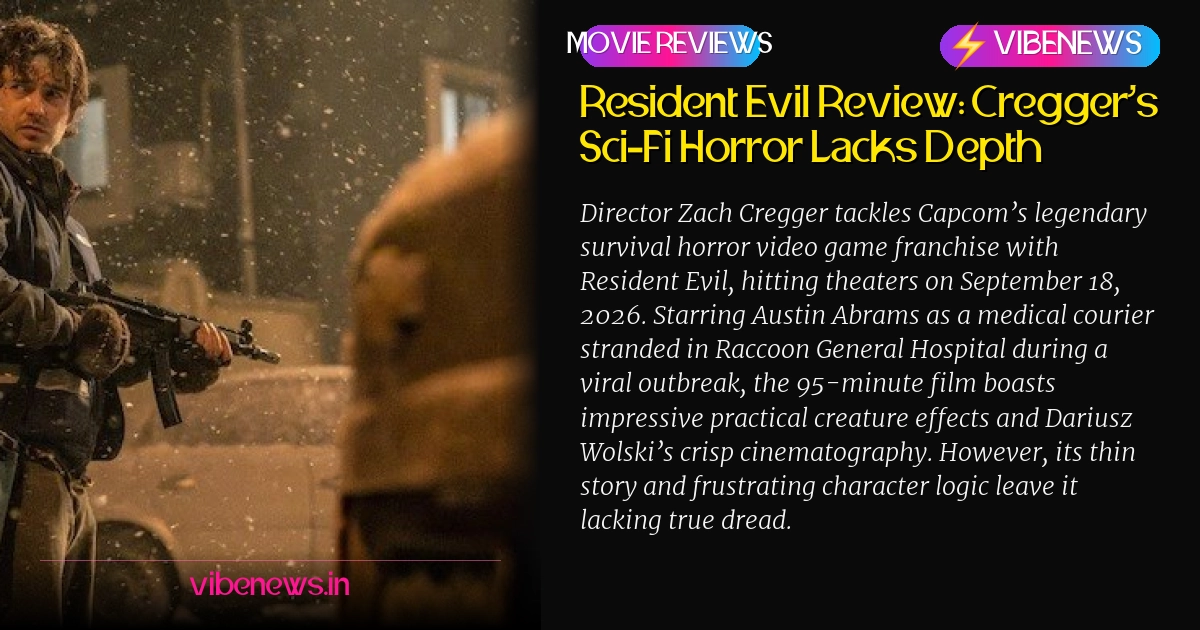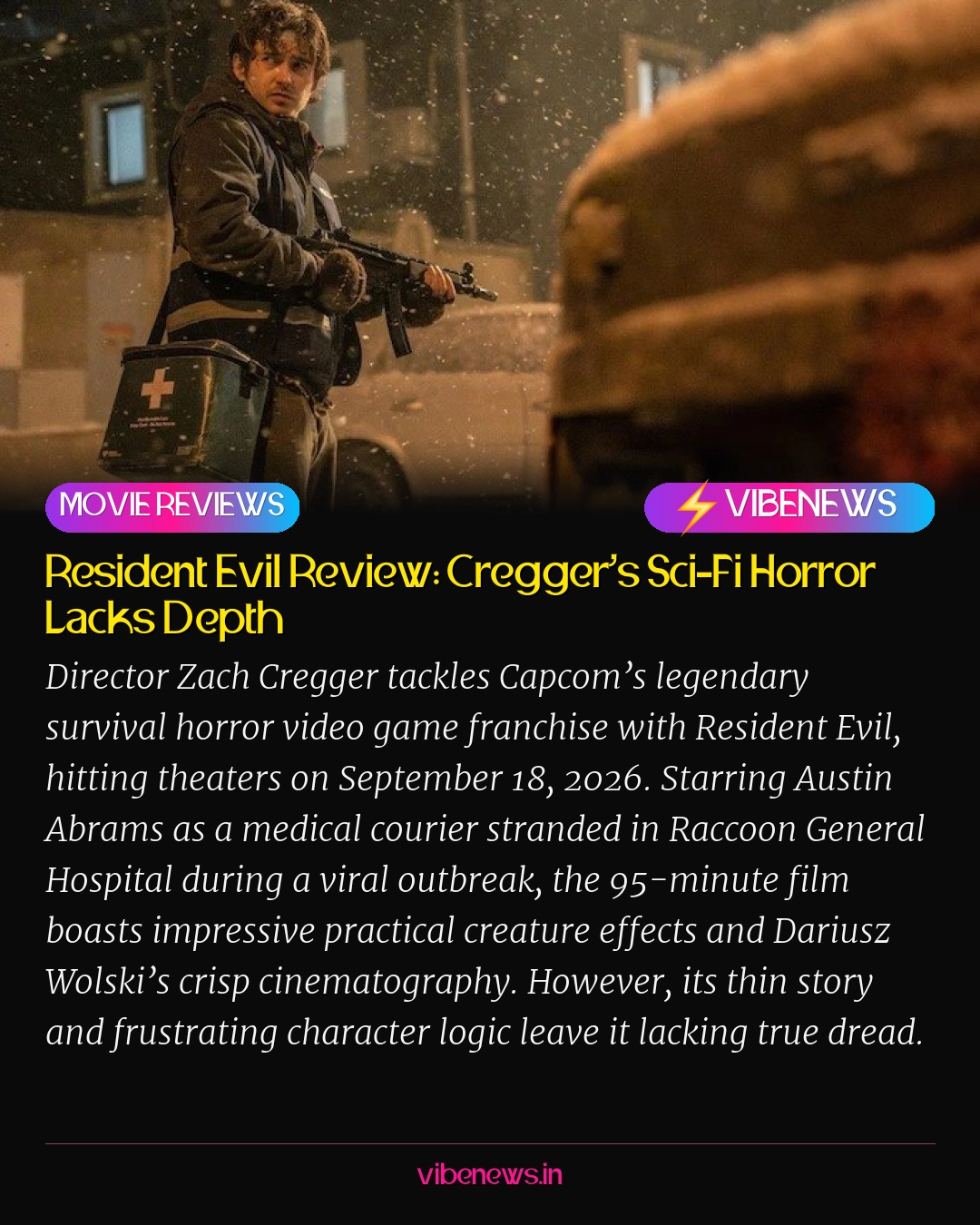

Director Zach Cregger’s theatrical adaptation of Capcom’s Resident Evil hit cinemas on September 18, 2026, offering high-decibel creature spectacle that fails to mask a thin, cliché-ridden screenplay.
Surface Spectacle Over Narrative Depth
Following his earlier directorial efforts with Barbarian in 2022 and Weapons in 2025, writer-director Zach Cregger, alongside co-writer Shay Hatten, attempts to re-energize the iconic video game property. The narrative focuses on Bryan, played by Austin Abrams, an ordinary medical courier assigned to deliver a crucial package to Raccoon General Hospital. Almost immediately, a catastrophic viral leak devastates Raccoon City, trapping Bryan in a high-stakes fight for survival alongside Umbrella Corporation employees portrayed by Paul Walter Hauser and Kali Reis.
Despite the fast-paced real-time setup, Cregger’s direction relies heavily on autopilot storytelling. Rather than cultivating genuine suspense or character development, the film quickly dissolves into a sequence of predictable creature encounters across dark hospital hallways.
"Where recent body-horror benchmarks like director Coralie Fargeat’s The Substance (2024) weaponised grotesque physical transformations for deep thematic impact, Resident Evil remains strictly in the realm of surface-level pulp."
Logic Flaws and Tired Horror Tropes
The central flaw in this sci-fi body horror lies within its writing, where repetitive character blunders undermine any potential terror. Bryan repeatedly violates fundamental survival logic—handling contaminated blood without protection, lingering over suspicious corpses, and stepping directly into an elevator right after an explicit warning against doing so. These absurd decisions drain the creature assaults of legitimate stakes, replacing palpable dread with mechanical predictability.
Furthermore, the supporting ensemble—including Zach Cherry alongside Hauser and Reis—is largely underutilized. While these actors inject brief bursts of energy, their characters are relegated to stepping-stone roles, delivering corporate Umbrella lore before becoming fodder for the infected monsters.
Technical Finesse and Grounded Acting
Where the production undeniably shines is in its technical execution and core performance. Austin Abrams elevates the material through genuine panic and physical commitment, rendering Bryan an approachable, vulnerable everyday protagonist rather than an invincible action hero.
Visually and aurally, the movie delivers high production values across its tight 95-minute runtime. Cinematographer Dariusz Wolski constructs an immersive, snow-dusted atmospheric backdrop inside Raccoon General Hospital. Concurrently, composers Ryan and Hays Holladay supply a thunderous soundscape where every flesh mutation and bone crunch hits with visceral power. Coupled with intricate practical creature designs, the visual effects team crafts a gruesome aesthetic.
Final Verdict for Genre Fans
Ultimately, Cregger’s Resident Evil functions as a hyperkinetic, technically polished ride tailored primarily for hardcore franchise enthusiasts. However, for moviegoers seeking psychological resonance or storytelling substance beyond visceral shock tactics, this reboot remains a hollow exercise in style over substance.
TL;DR
- Zach Cregger’s Resident Evil adaptation released in theaters on September 18, 2026.
- Austin Abrams plays medical courier Bryan surviving a viral outbreak at Raccoon General Hospital.
- The 95-minute movie excels in visual effects, sound design, and Dariusz Wolski’s atmospheric cinematography.
- Narrative weakness and predictable horror clichés severely undercut the film’s tension and psychological dread.
- Supporting performances by Paul Walter Hauser and Kali Reis are restricted to basic exposition roles.