
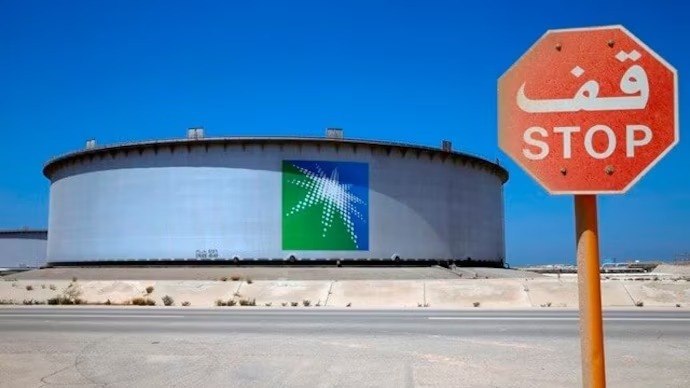
Saudi Aramco has indefinitely suspended crude oil shipments to Indian refiners following a drone strike that shut down Saudi Arabia’s critical East-West pipeline late last week.
The unexpected shutdown has delivered a severe oil shock to India’s energy sector, threatening to rapidly inflate procurement expenses for domestic refiners already grappling with elevated international benchmarks. Allegedly targeted by an Iraqi militia, the East-West pipeline served as the kingdom’s chief overland route to bypass maritime chokepoints. With this strategic artery out of commission, state energy giant Aramco has halted direct crude deliveries to India across both the Red Sea and the Strait of Hormuz routes, choking off contractual term supplies to one of its most vital Asian markets.
A Severe Energy Supply Disruption
Saudi Arabia occupies a central pillar in India’s energy security architecture, accounting for approximately 9% of the nation’s total crude imports since the outbreak of recent geopolitical conflicts. Unlike spot market buyers who trade on fluctuating real-time pricing, Indian refiners rely primarily on Aramco’s predictable annual term contracts governed by official selling prices. The sudden cessation of these regular contractual flows forces state and private domestic refiners to scramble for alternative barrels at a moment when global supply buffers are severely eroded.
While industry insiders indicate that Indian refiners retain the operational capacity to secure replacement crude from alternative international producers, the financial burden of doing so threatens to trigger a deep economic strain across the domestic refining ecosystem.
"Indian refiners are confident of finding alternative crude supplies, but the cost of those barrels is expected to be higher as international oil benchmarks have risen and discounts on Russian crude have disappeared."
Surging Benchmarks and Escalating Shipping Costs
The timing of the supply freeze exacerbates an already precarious pricing environment. Global oil benchmarks remain firmly entrenched above the $100 threshold, with Brent crude trading at $103.46 per barrel despite a minor pullback of $1.36 or 1.30%, and West Texas Intermediate (WTI) standing at $101.06 per barrel following a $0.85 or 0.83% dip. This elevated pricing baseline, compounded by dwindling global crude inventories, severely limits the availability of cheap replacement barrels on the open market.
Making matters worse, Indian refiners face a double hit from skyrocketing maritime transportation expenses. Tanker freight rates have surged close to record highs, adding heavy logistics costs to every replacement cargo brought to Indian ports. Furthermore, the substantial discounts previously enjoyed by Indian refiners on Russian crude imports have largely vanished, removing a critical buffer that previously cushioned domestic buyers from global price shocks.
Spot Market Scramble and Complex Supply Workarounds
As direct contracted deliveries grind to a halt, procurement teams are being forced into the volatile spot market, where prices during physical supply disruptions escalate far faster than paper futures contracts. Although direct pipeline shipments are frozen, minor volumes of Saudi crude are still expected to trickle into India through third-party global trading desks taking extreme operational risks.
These complex trading workarounds involve private commodity traders purchasing heavily discounted Iraqi crude and navigating the vulnerable Strait of Hormuz toward the Gulf of Oman. Cargoes are then transferred between ocean tankers off the coast before continuing onward to Indian destinations. However, industry analysts emphasize that these risky ship-to-ship transfers will yield only marginal volumes, nowhere near enough to replace the massive loss of regular Saudi term cargoes.
Pressure on India’s Fuel Demand and Import Dynamics
The oil shock arrives against the backdrop of shifting domestic energy metrics. According to official data from the Petroleum Planning and Analysis Cell (PPAC), India’s crude oil imports fell by more than 11% month-on-month in August to 19.01 million metric tons, marking a 3% year-on-year decline from 19.60 million metric tons recorded in August last year.
Domestic fuel demand also exhibited signs of cooling prior to the pipeline attack. India’s total fuel consumption fell 6.3% month-on-month in August to 18.61 million metric tons, reaching its lowest monthly reading since September 2024. Petroleum product exports similarly contracted, sliding over 13% year-on-year to 4.92 million metric tons. Conversely, imports of refined petroleum products expanded by more than 9% over July levels to reach 2.72 million metric tons, though remaining roughly 40% below figures from a year prior. Liquefied petroleum gas (LPG) imports surged to 1.30 million metric tons in August from 870,000 metric tons in July, while fuel oil imports plummeted to 132,000 metric tons from 365,000 metric tons a year earlier.
With energy benchmarks standing firm above $100 and regional security risks escalating near key Middle Eastern infrastructure, Indian refiners remain exposed to severe cost inflation and unpredictable supply timelines as the crisis unfolds.
TL;DR
- Saudi Aramco halted crude oil supplies to Indian refiners after a drone attack shut down Saudi Arabia’s East-West pipeline.
- The pipeline halt cuts off Aramco’s key alternative export channel following prior maritime disruptions around the Strait of Hormuz.
- Brent crude climbed to $103.46 a barrel while WTI reached $101.06, amplifying energy cost pressures on Indian importers.
- Indian refiners receive 9% of crude imports from Saudi Arabia and must now seek costlier replacement cargoes on spot markets.
- Higher tanker freight rates and disappearing discounts on Russian crude threaten to sharply escalate procurement costs for India.