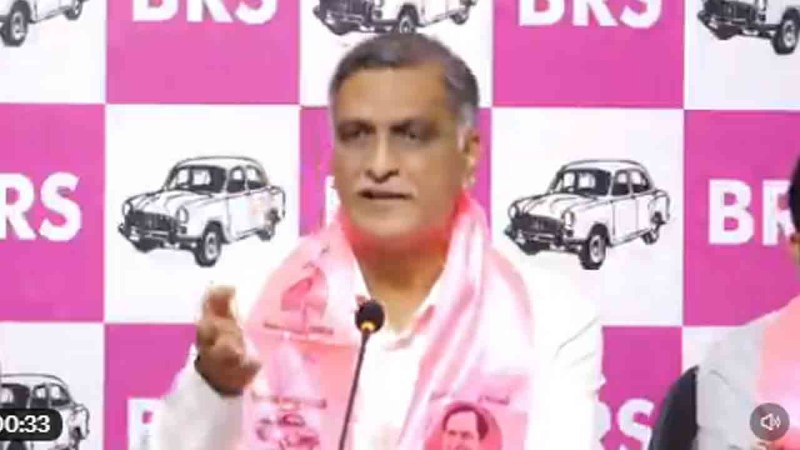
Former minister and BRS deputy floor leader Harish Rao on October 26, 2026 accused the Congress government of bringing drought to Telangana by letting water flow to Andhra Pradesh, and he demanded a white paper on how much water the state actually lifted from the Godavari.
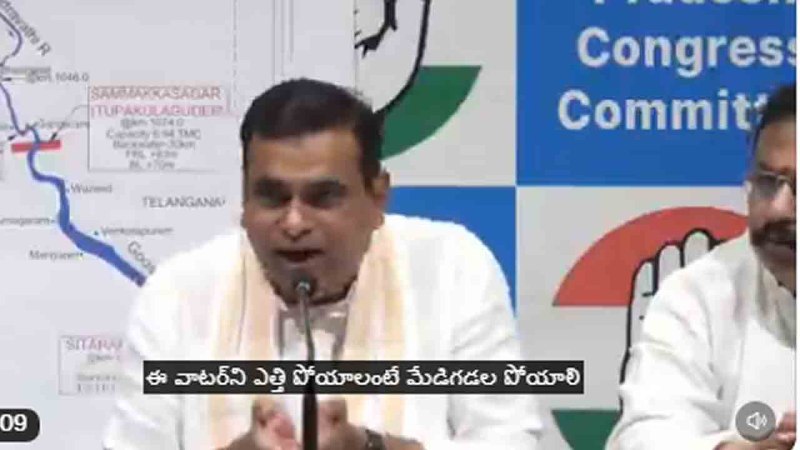
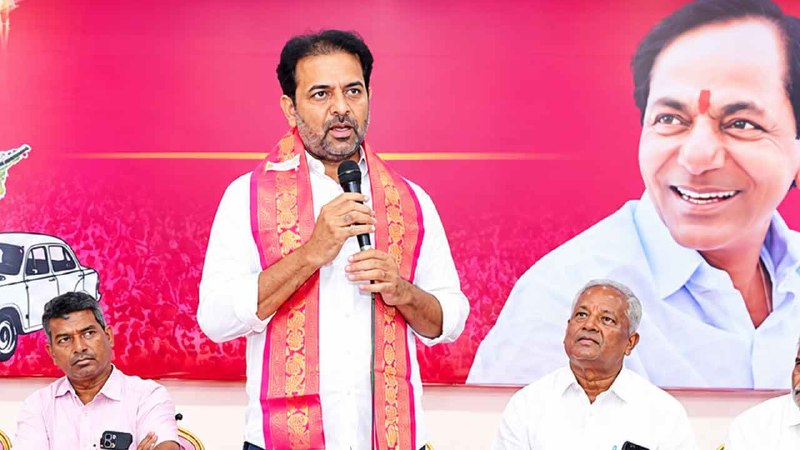
Speaking at a media conference held at Telangana Bhavan, Rao went straight for the government’s core claim. He said the Congress party had released water to Andhra Pradesh and, in doing so, had created the drought that Telangana now faces. He did not soften the charge.
It was the Congress party that released water to AP and brought drought to Telangana.
He built his argument on a comparison. Rao said the newspapers had reported that the Pattiseema motors ran for 100 days, 24 hours a day, lifting water to protect the Godavari and Krishna deltas in Andhra Pradesh. He framed that as proof that Andhra had kept its fields watered through a dry stretch, while Telangana was left short.
The Pattiseema question
Rao then turned the comparison back on Telangana. He pointed out that the Sammakka Barrage had been built upstream of Pattiseema on the same Godavari river, and that Devadula Phase 3 had also been completed. In his telling, the state had those structures in hand and still failed to use them when it mattered.
His core demand was simple and specific. He asked the government to release a white paper stating how many days the Pattiseema motors ran, how many hours they ran, and how much water they lifted. He wanted numbers, not assurances.
Rao also made a physical argument about how river water moves. If Telangana grabs the water first, he said, nothing flows downstream to Pattiseema or to Andhra. Water reaches the lower reaches only after the upstream state has lifted what it needs. By his reasoning, the Pattiseema operation for 100 days straight should not have been possible unless Telangana had let water pass.
The Devadula demand
Rao’s sharpest charge concerned the Devadula project. The BRS, he said, was demanding that the government explain why it had not lifted water from the Sammakka Barrage through Devadula. He presented this as the central failure, not a side issue. Water sat in reach, he argued, and was not drawn.
He also said the Devadula project on the Godavari had been handed to the Congress government in working form, which he used to argue that the current administration inherited the infrastructure and the means to act. The implication was blunt: the tools existed, and the decision not to use them was political.
The El Nino attack
Rao reserved his most personal line for Chief Minister Revanth Reddy. He accused Reddy of doing nothing beyond scaring people with the El Nino warning. In Rao’s words, the government’s response to the weather threat amounted to fear, not action.
The El Nino framing matters because it is the government’s public explanation for the water and drought worries. Rao’s charge is that the warnings were used as a substitute for concrete steps on water lifting and distribution. The BRS is making that a question of competence as much as policy.
Why Andhra Pradesh is in the story
The Andhra Pradesh connection is not incidental here. Rao’s argument rests on water released or lifted for the Godavari and Krishna deltas in Andhra Pradesh, and on the Pattiseema operation that moved water toward those deltas. The dispute is therefore not only about Telangana’s internal water management. It is about how the two states share a river system that both depend on.
Rao did not present a counter-narrative about Andhra’s needs. His focus stayed on Telangana’s failure to use its own infrastructure. But by tying the drought to water that reached Andhra, he made the interstate flow the battleground.
What the BRS wants
The BRS is asking for transparency. Its demands are a white paper on the Pattiseema motor hours, the total water lifted, and an explanation for the Sammakka Barrage and Devadula decisions. These are measurable questions, and they put the government on the spot to produce figures.
The party has made the drought a test of governance. If the government cannot show the numbers, the BRS will say the state failed its farmers. If it can, the debate shifts to the decisions behind the figures.
The stakes
Water is one of the most emotive issues in both Telangana and Andhra Pradesh. Drought affects farmers, drinking supply and local politics at once. A claim that one state’s water went to the other while your own fields dried up lands hard in that context.
Rao’s press conference was a political attack, and it was delivered as one. He made no offer of cooperation. He made a case, set out demands, and left the government with a direct question: how much water did you lift, and why did you not lift more? The answer will shape how the drought is judged in the months ahead.
TL;DR
- Harish Rao accused the Congress government of bringing drought to Telangana by releasing water to Andhra Pradesh.
- BRS demanded a white paper on how many days and hours the Pattiseema motors ran, and how much water was lifted.
- Rao said the Sammakka Barrage and completed Devadula Phase 3 were not used to lift water in Telangana.
- He accused Chief Minister Revanth Reddy of only scaring people with the El Nino warning and doing nothing else.
- The dispute centres on Godavari water, interstate flows and who controls water during a dry spell.