
India’s Pragmatic Stance Ahead of the 2026 BRICS Summit
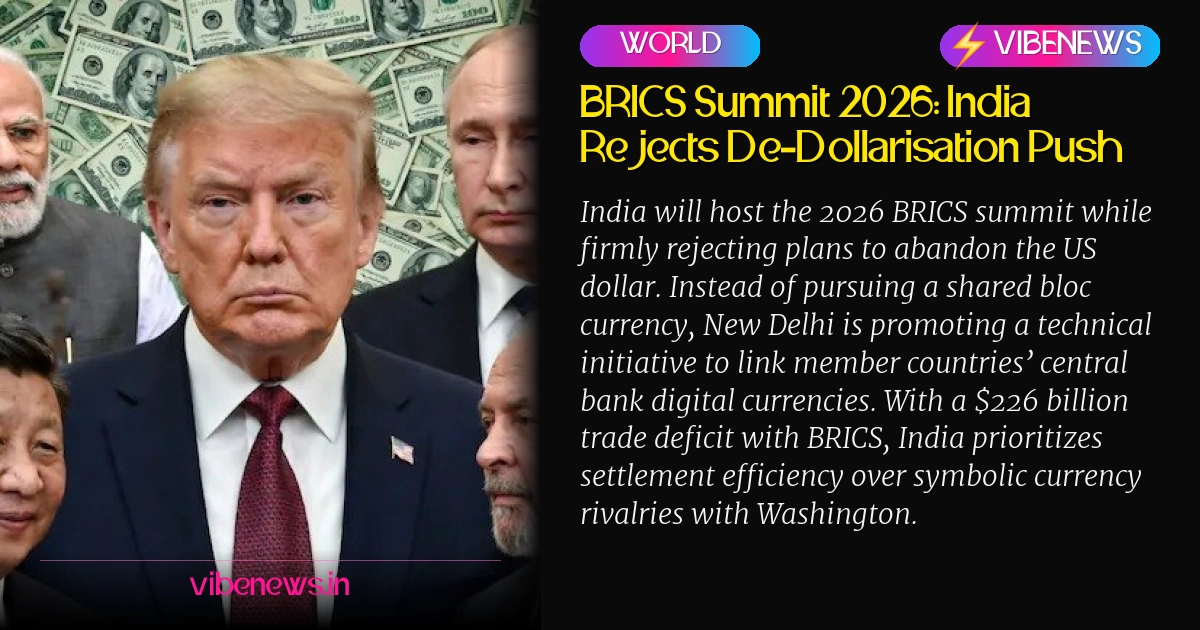
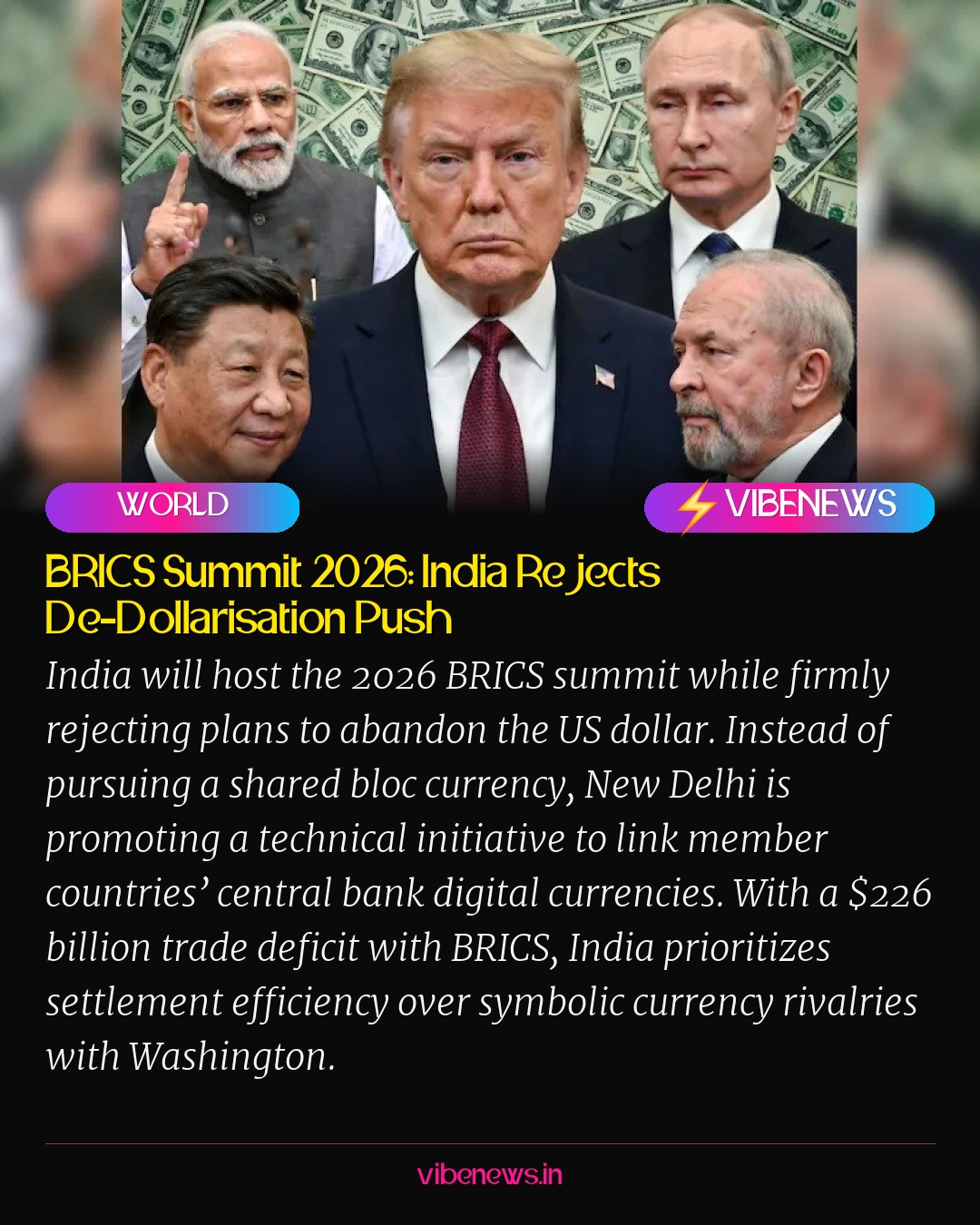
As India prepares to host the 2026 BRICS summit, New Delhi is sending a clear message to fellow member nations: it will not join the push to dismantle the supremacy of the US dollar. While alliance partners such as China and Russia continue to advocate for de-dollarisation as a core strategic objective, and Brazil’s leadership actively champions the cause, India is choosing a distinct economic path. As the second-largest economy within the bloc, India is firmly rejecting the creation of a rival currency in favor of technical, efficiency-driven trade reforms.
India’s diplomatic and economic positioning was clearly articulated by External Affairs Minister S Jaishankar at the Carnegie Endowment in Washington. Clarifying that concern over dollar dependence does not translate into an active effort to displace it, Jaishankar defined the boundary of New Delhi’s strategy.
Targeting the dollar is not part of our economic, political, or strategic policy.
This policy boundary has remained firm even as the BRICS coalition expanded in 2024 to include Egypt, Ethiopia, Iran, Saudi Arabia, and the United Arab Emirates—nations that each brought distinct motivations to diminish dollar dominance.
Central Bank Digital Currencies over Currency Union
Instead of backing an ideological campaign against the greenback, India is proposing a technical upgrade focused on linking central bank digital currencies (CBDCs) across BRICS nations. The Reserve Bank of India (RBI) has recommended putting a formal proposal on the upcoming summit agenda to interconnect member CBDCs, marking the first time such an initiative would be directly considered by BRICS leaders.
This step builds upon the 2025 Rio de Janeiro summit declaration, which advocated for greater interoperability among payment systems. By focusing on CBDC integration, India aims to reduce transaction costs and lower friction in cross-border trade and tourism payments without engineering a broader monetary revolution.
Experts emphasize that a full monetary union remains impractical. Rishi Shah, Partner and Economic Advisory Lead at Grant Thornton Bharat, noted that a monetary union lacking the shared political and fiscal framework of a single nation makes little sense for a diverse grouping like BRICS, making common trading mechanisms a more realistic exploration.
The $226 Billion Trade Deficit Constraint
A crucial factor shaping India’s stance is its massive trade imbalance with its BRICS partners. India’s trade deficit with the rest of the bloc has crossed $226 billion, driven by heavy imports relative to its export volumes. This structural deficit complicates local-currency settlement schemes.
When trade is persistent in one direction, surplus nations accumulate large balances of non-convertible foreign currencies that cannot be easily utilized. India experienced this friction firsthand during its bilateral rupee trade mechanism with Russia, which resulted in Moscow holding excess rupee reserves that eventually had to be parked in Indian government bonds. To prevent similar bottlenecks, central bank currency swap lines are being considered alongside CBDC initiatives.
Sohom Banerjee, founder of research firm Quantive Advisory LLP, highlighted that framing the BRICS payment discussion purely as de-dollarisation misses the core objective. He noted that the primary opportunity lies in reducing transaction costs, settlement delays, and reliance on narrow cross-border payment rails rather than symbolically abandoning the dollar.
Navigating Geopolitical Mandates
India’s strategy also reflects a careful balancing act between its BRICS commitments and its diplomatic relations with Western powers, including its membership in the Quad and engagement with the G7. With political leaders in Washington, including former President Donald Trump, labeling BRICS efforts as anti-American and raising threats of tariffs, India’s technical approach framed around payment efficiency shields it from geopolitical blowback.
Ultimately, India’s multi-layered approach keeps the dollar intact where it proves most efficient, expands bilateral currency swaps, and tests CBDC links in controlled corridors. By focusing on building faster cross-border payment architecture rather than replacing reserve currencies, New Delhi ensures its trade infrastructure remains resilient without disrupting its global economic alignments.
TL;DR
- India will host the 2026 BRICS summit but opposes replacing the US dollar.
- RBI recommends linking BRICS central bank digital currencies for payments.
- External Affairs Minister S Jaishankar confirmed dollar replacement is not Indian policy.
- India faces a massive trade deficit exceeding $226 billion with BRICS members.
- Severe trade imbalances make local currency trade settlement structurally challenging.