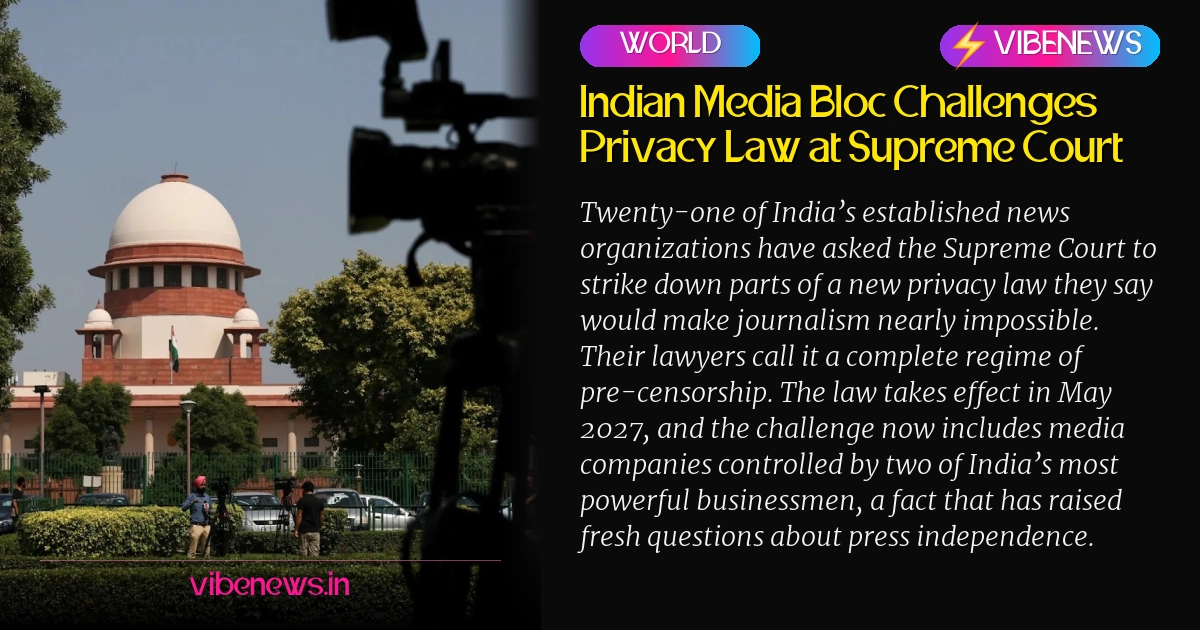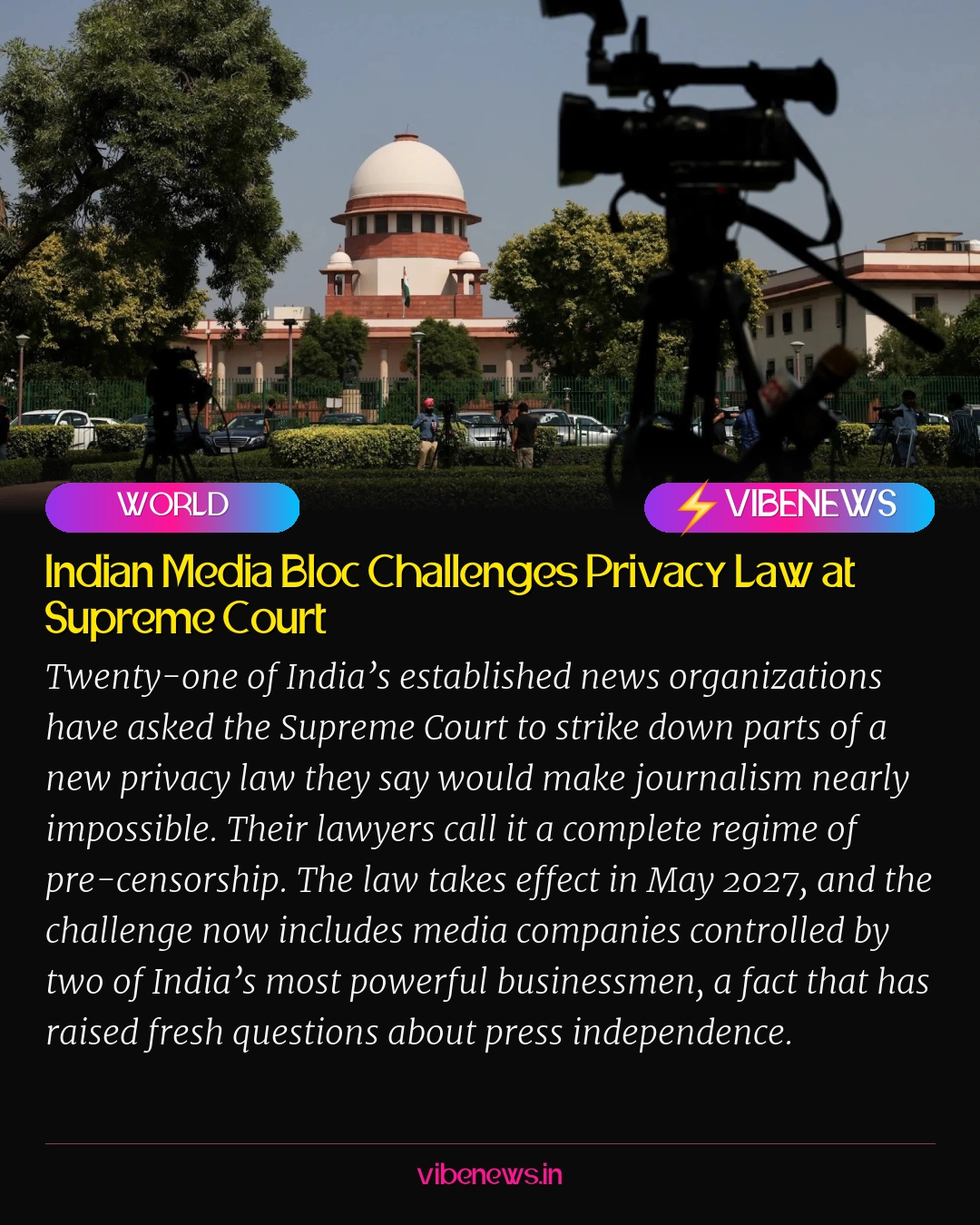
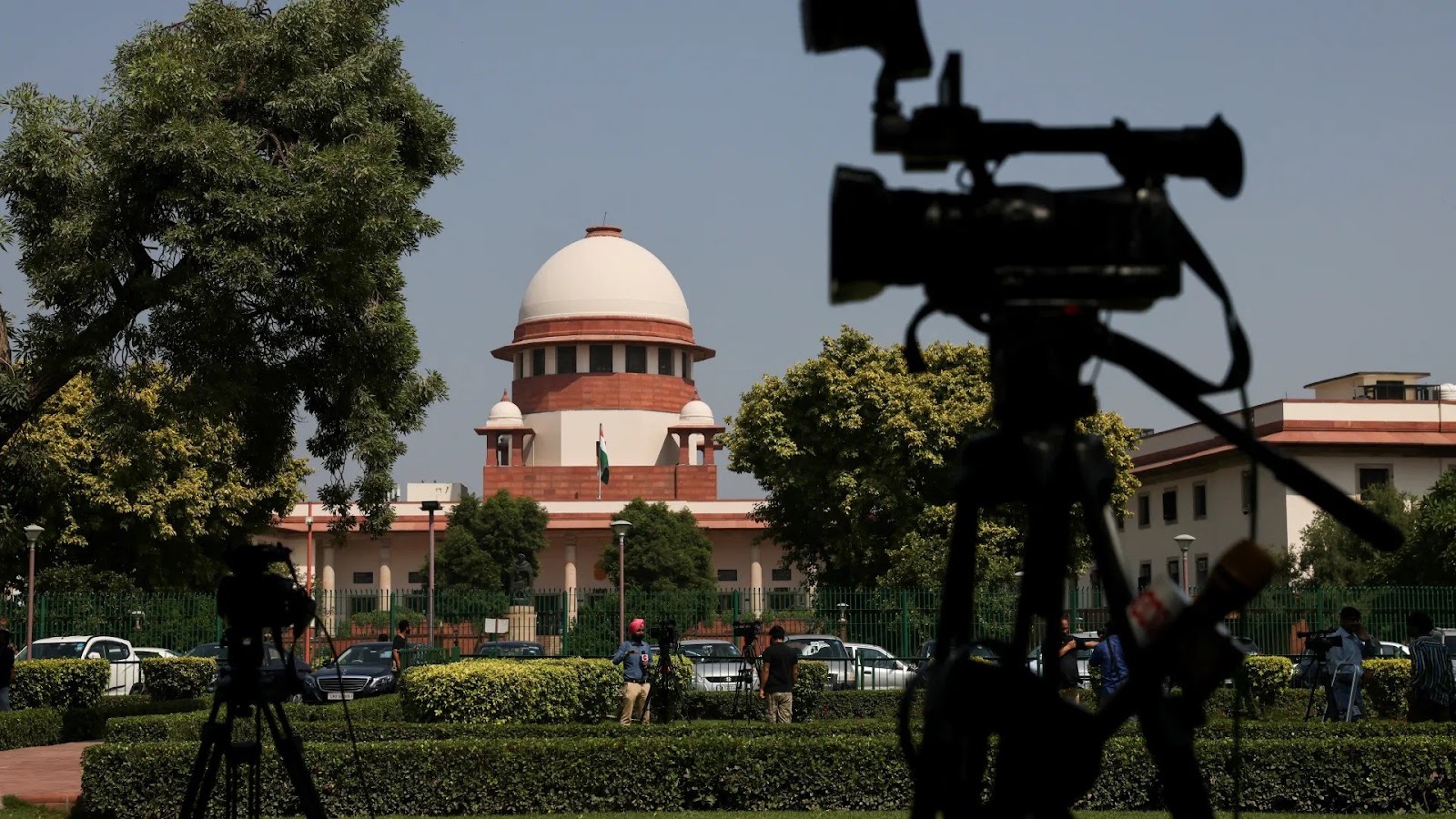
An association representing 21 of India’s established news organizations has asked the country’s Supreme Court to strike down provisions of a new privacy law. The group warns that the law would cripple investigative journalism and force newsrooms to close.
The Digital News Publishers Association made its case at a hearing on Tuesday. Its lawyers told the court that the law would make it nearly impossible for journalists to do their jobs.
“complete regime of pre-censorship”
That is how the publishers’ lawyers described the law’s effect on reporting. The phrase is blunt, and it is meant to be. The association is arguing that the rules would not simply slow reporters down. They would decide in advance what can be published.
A challenge with unusual backers
The legal fight over the privacy law had until now been led largely by free-speech activists and smaller independent news outlets. This filing changes the picture. Some of the country’s biggest media organizations are now part of the coalition pushing the court to act.
Among the members are companies controlled by the billionaires Mukesh Ambani and Gautam Adani. Critics have derided some of these outlets as overly deferential to Prime Minister Narendra Modi. Those perceived ties have long raised questions about whether the news output of these companies is truly independent.
That history gives the new alliance an odd texture. Journalists who have often found themselves at odds with the government are now sharing a courtroom with media companies whose closeness to the prime minister has been the subject of years of criticism. Whether that alignment makes the argument stronger or simply more complicated is a question the court will be asked to weigh, even if it is not one the filing itself addresses.
The core complaint: news treated as commerce
The publishers argue that the privacy law treats news organizations like ordinary commercial businesses. Under that framing, journalists would have to obtain explicit permission from people before reporting on them.
For investigative reporters, that requirement goes to the center of the work. The subjects of hard-hitting stories are rarely the ones who would willingly sign off on being covered. A rule that asks for consent before publication, the publishers say, hands the people with the most to hide a veto over what the public learns.
That is the argument at the heart of the challenge. The association is not asking the court to exempt journalism from privacy protections altogether. It is asking the court to strike down the specific provisions it says would turn reporting into something that needs approval first.
Why the timeline matters
The privacy law is set to take effect in May 2027. That gives the Supreme Court time to rule before the provisions apply, but it also places the publishers’ request on a clock. Once the law is in force, every investigation that touches a named person will have to pass through the same permission problem.
Newsrooms do not wait for a law to take effect before they make decisions about what to pursue. Editors weigh legal risk when they assign a story, when they decide whether to name a source and when they decide whether to publish at all. A law that puts consent at the front of that process would change those calculations long before the first court case is filed.
The publishers have framed the stakes in those terms. Their warning is not only about the stories that would be blocked. It is about the ones that would never be started.
What the coalition signals
Press freedom disputes in India have usually pitted independent reporters against the state. The arrival of large, established media companies on the same side of this case shifts the debate. It suggests that the concern about the privacy law extends beyond the smaller outlets that have carried the fight so far.
It also raises a harder question for readers. When companies with a reputation for closeness to power join a challenge to a rule that critics say could chill reporting, it is fair to ask what those companies are protecting, and what they may have chosen not to examine. The filing itself does not answer that. But the presence of those names on the list of challengers is likely to draw as much attention as the legal arguments.
The Supreme Court now has a case that combines a sweeping claim about pre-censorship with a coalition that spans the independent press and some of the country’s most powerful media businesses. How the court responds will determine whether the privacy law’s provisions survive in their current form, and whether Indian journalists will have to ask for permission before they report on the people in power.
TL;DR
- 21 established Indian news organizations asked the Supreme Court to strike down parts of a new privacy law.
- The Digital News Publishers Association says the law would make journalism nearly impossible.
- Lawyers called the law a “complete regime of pre-censorship” at a Tuesday hearing.
- The law treats news outlets like commercial businesses and requires permission before reporting on people.
- The privacy law is set to take effect in May 2027.
- Media companies controlled by Mukesh Ambani and Gautam Adani have joined the challenge.