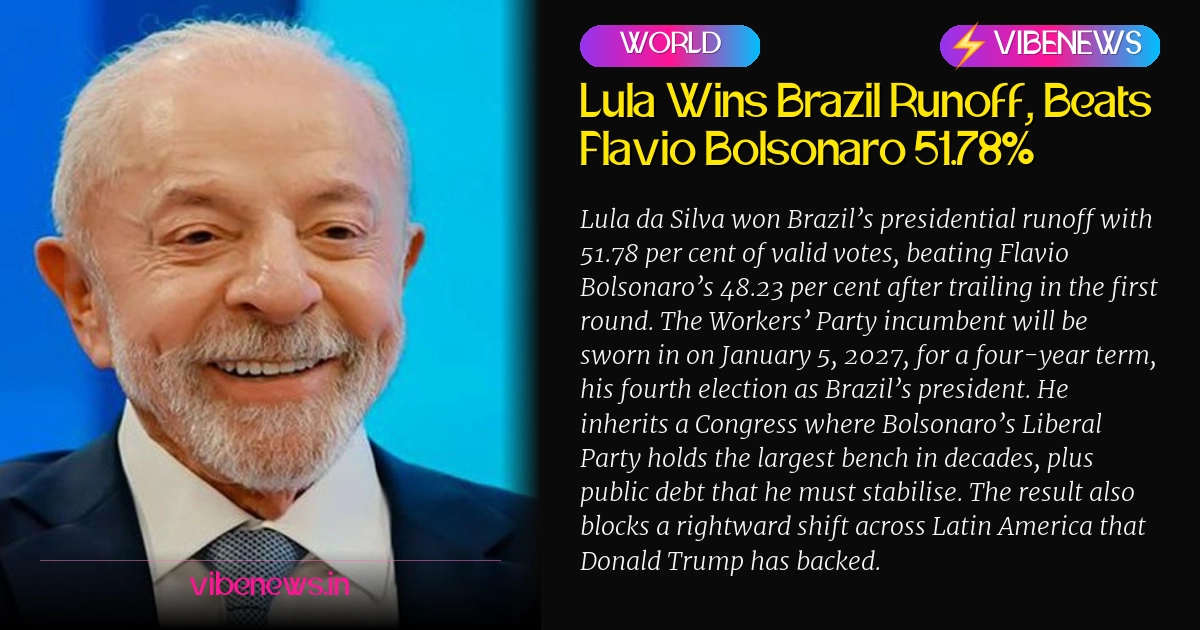
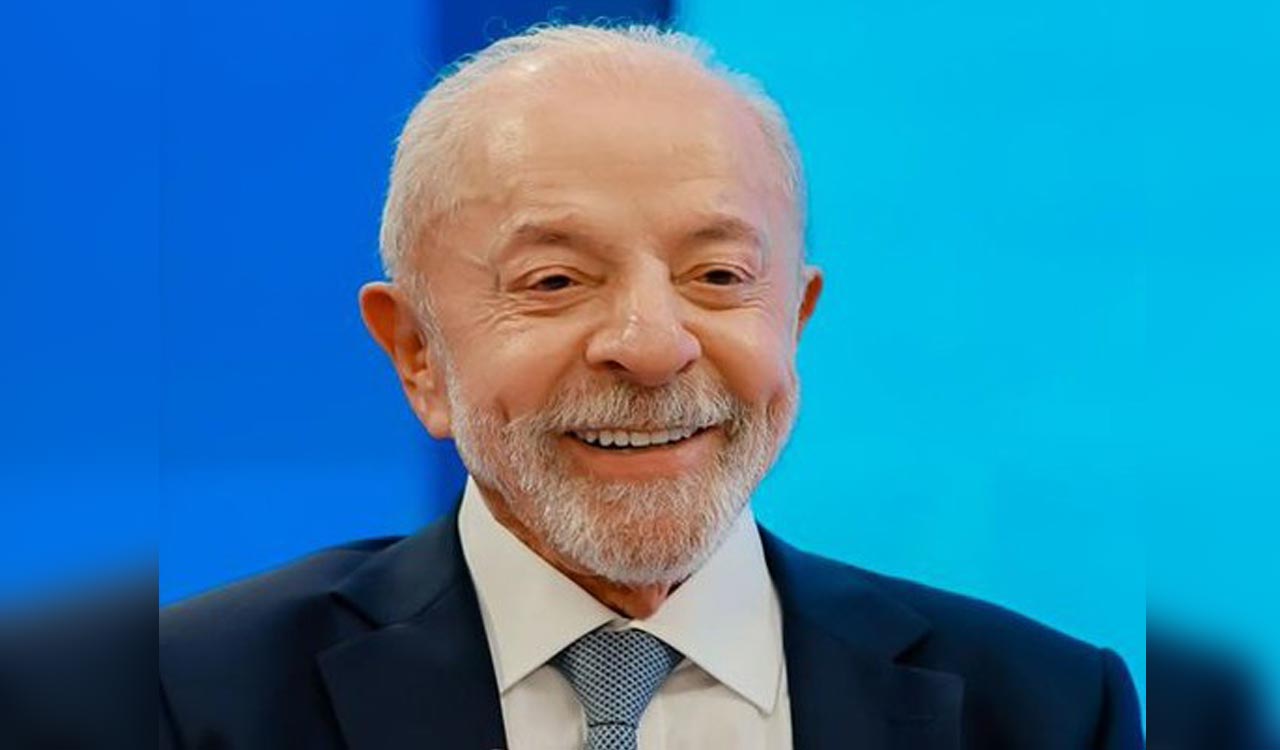
Brazilian President Luiz Inacio Lula da Silva has won the presidential runoff, defeating Flavio Bolsonaro and returning to power after falling behind in the first round. Results released by Brazil’s Superior Electoral Court show Lula took 51.78 per cent of valid votes with 99.89 per cent counted, while Bolsonaro received 48.23 per cent.
The vote took place on Sunday. Lula, candidate of the ruling Workers’ Party, will be sworn in on January 5, 2027, for a four-year term. It marks his fourth election as Brazil’s president, a record that few leaders in the country’s modern politics can match.
Bolsonaro, the Liberal Party’s candidate, is the son of former Brazilian President Jair Bolsonaro. He entered the runoff with momentum from the first round, which was held on October 4. There, he led with 47.03 per cent of valid ballots and narrowly edged out Lula, who secured 45.16 per cent. That result set up three weeks of intense campaigning across Latin America’s largest nation, and Lula used every day of it to close the gap.
The comeback carries weight far beyond Brazil’s borders. Lula’s win blocks a rightward shift in Latin America that US President Donald Trump has backed. For international observers tracking the region’s political direction, the outcome signals that a leftist incumbent can still rebuild a lead and win the final round, even when the early numbers point the other way.
Lula takes office with real obstacles at home. He will govern from 2027 to 2030 facing a Congress where Bolsonaro’s Liberal Party has held the largest bench in decades. That gives the opposition significant leverage over legislation, budgets and appointments. He also inherits a public debt that he must stabilise, a fiscal challenge that will test his government from its first days in office.
Lula used social media platform X to respond to the result. He credited voters for the win and pointed to campaign achievements he said were already changing lives, including the end of the 6×1 workday. His message was personal and direct.
“Once again, it was the Brazilian people who showed me that no dream is too big when we walk together. They were tireless days. Every walk, every act, and every march were much more than campaign moments. They were encounters of dreams that turned into concrete achievements, like the end of the 6×1 workday.”
He followed that message with a promise of renewed purpose. “We emerged from this journey stronger, more united, and more mobilised to ensure a better future. Thank you, Brazil, for every hug, every tear, every smile, and for never letting go of my hand. Our story still has many beautiful pages left to write.”
What comes next: The count shows a clear margin of three percentage points. The real test begins after the inauguration in January, when Lula must work with a Congress controlled in large part by the party of his rival’s family, while showing markets and voters that Brazil’s public finances can be steadied. Those two tasks will define whether this victory becomes a lasting mandate or a narrow win that lasts only as long as the next budget fight.
For now, the story is one of a comeback. A leader who trailed after the first round has secured another four years at the helm of Latin America’s largest nation, and he has done it at a moment when the region’s political direction is being contested in full view of the world.
TL;DR
- Lula da Silva won Brazil’s presidential runoff with 51.78 per cent of valid votes.
- He defeated Flavio Bolsonaro, who received 48.23 per cent, according to official results.
- Lula trailed in the October 4 first round, when Bolsonaro led 47.03 to 45.16 per cent.
- His win blocks a rightward shift in Latin America that Donald Trump had backed.
- Lula will be sworn in on January 5, 2027, for a four-year term.
- He will govern facing a Congress where Bolsonaro’s Liberal Party holds the largest bench in decades.