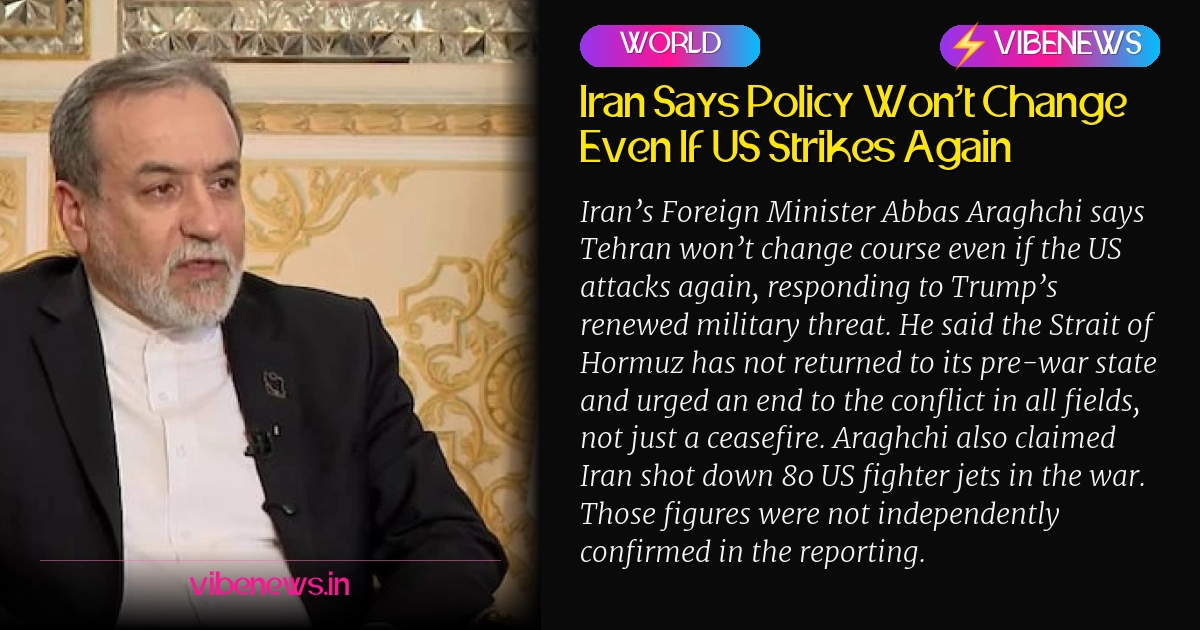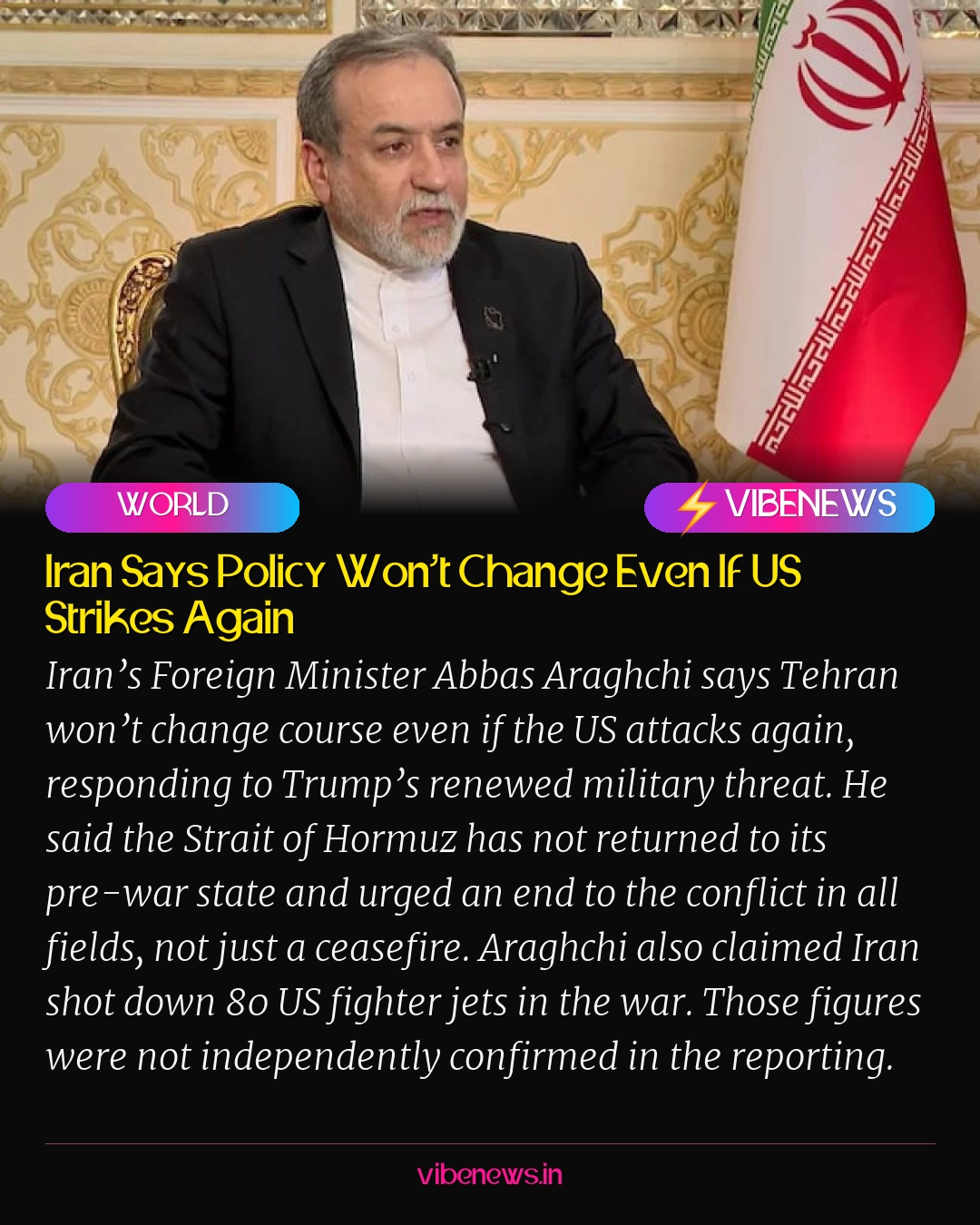
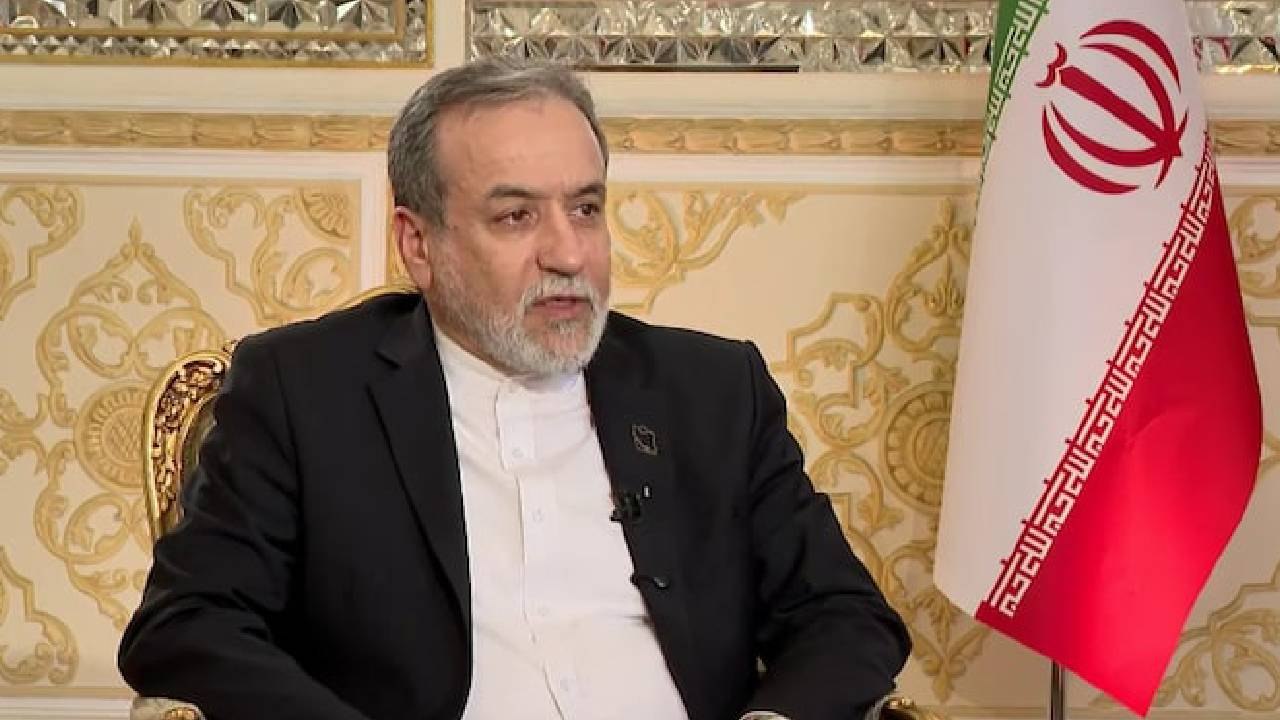
Iran says its policy will not change even if the United States launches another military attack, Foreign Minister Abbas Araghchi said on October 25, 2026, as Washington signals fresh strikes against the country.
The United States is preparing to attack Iran again, and President Donald Trump has publicly confirmed the move. Trump recently warned that further strikes on Iran may not be avoided. Tehran responded within hours of those remarks, with Araghchi laying out the country’s position on the war, the ceasefire and the future of the region.
Even if America attacks us again, our policies will not change.
Araghchi said talk of a renewed war is already circulating, with reports suggesting fighting could restart. Whether the war resumes or not, he said, Iran’s national policy will stay the same. His message was direct: the country’s course is fixed regardless of what Washington does next.
He went further, saying the United States would not attack Iran again if it acted with even a basic sense of rationality. That line carries weight because it frames the threat of another strike as a choice Washington has not yet made, and one Tehran believes it should avoid.
The Strait of Hormuz Has Not Gone Back
Araghchi focused heavily on the Strait of Hormuz, the waterway at the center of the conflict. He said the strait has not returned to the condition it was in before the war. The waterway did not go back to its prior state during the 40 days of fighting, he added.
Araghchi called the conflict the "Ramadan war" and said it has upended regional security arrangements. In his view, a pause in shooting is not enough. He argued that the war must end in every sphere, not just through a halt in direct military action.
That demand matters for a global audience. The Iran-US standoff has repeatedly raised questions about stability across the Gulf region, and the Strait of Hormuz sits at the heart of those concerns. Any renewed fighting there would draw attention from governments and markets far beyond the Middle East.
Claims of Destroyed Jets and Bases
Araghchi also made sweeping claims about the damage Iran says it inflicted during the war. He said Iran destroyed 80 American fighter jets and that all of them were brought down by missiles. He also said US bases across the region were wiped out and that hundreds of buildings were destroyed.
These are the claims of an Iranian official, presented in his own words. The reporting does not include independent confirmation of the aircraft losses, the base damage or the building count. Readers should treat those numbers as Tehran’s account rather than verified fact.
Still, the statements show how Iran is framing the conflict at this stage. By pointing to destroyed aircraft and bases, Araghchi is signaling that Iran believes it holds military leverage and will not accept a return to the pre-war arrangement without change.
The report does not describe any new US military timeline or any official US response to Araghchi’s comments beyond Trump’s earlier warnings. What it does show is a sharp escalation in rhetoric, with both sides speaking as if another round of fighting is a real possibility. For now, the immediate question is whether Washington follows through on its threat, and whether Tehran’s refusal to shift its policy hardens the standoff further.
This story is based on Telugu-language reporting on Araghchi’s remarks and Trump’s warning. As the situation develops, the central facts to watch are the status of the Strait of Hormuz, any formal ceasefire terms, and whether the US moves ahead with the attack Trump has described.
TL;DR
- Iran’s Foreign Minister Abbas Araghchi says Tehran’s policy will not change even if the US attacks again.
- Trump has signaled renewed military action against Iran, prompting Tehran’s response.
- Araghchi says the Strait of Hormuz has not returned to its pre-war condition.
- He called for an end to the conflict in all fields, not just a ceasefire.
- Araghchi claimed Iran destroyed 80 US fighter jets and wiped out American bases in the region.
- These claims were not independently confirmed in the reporting.