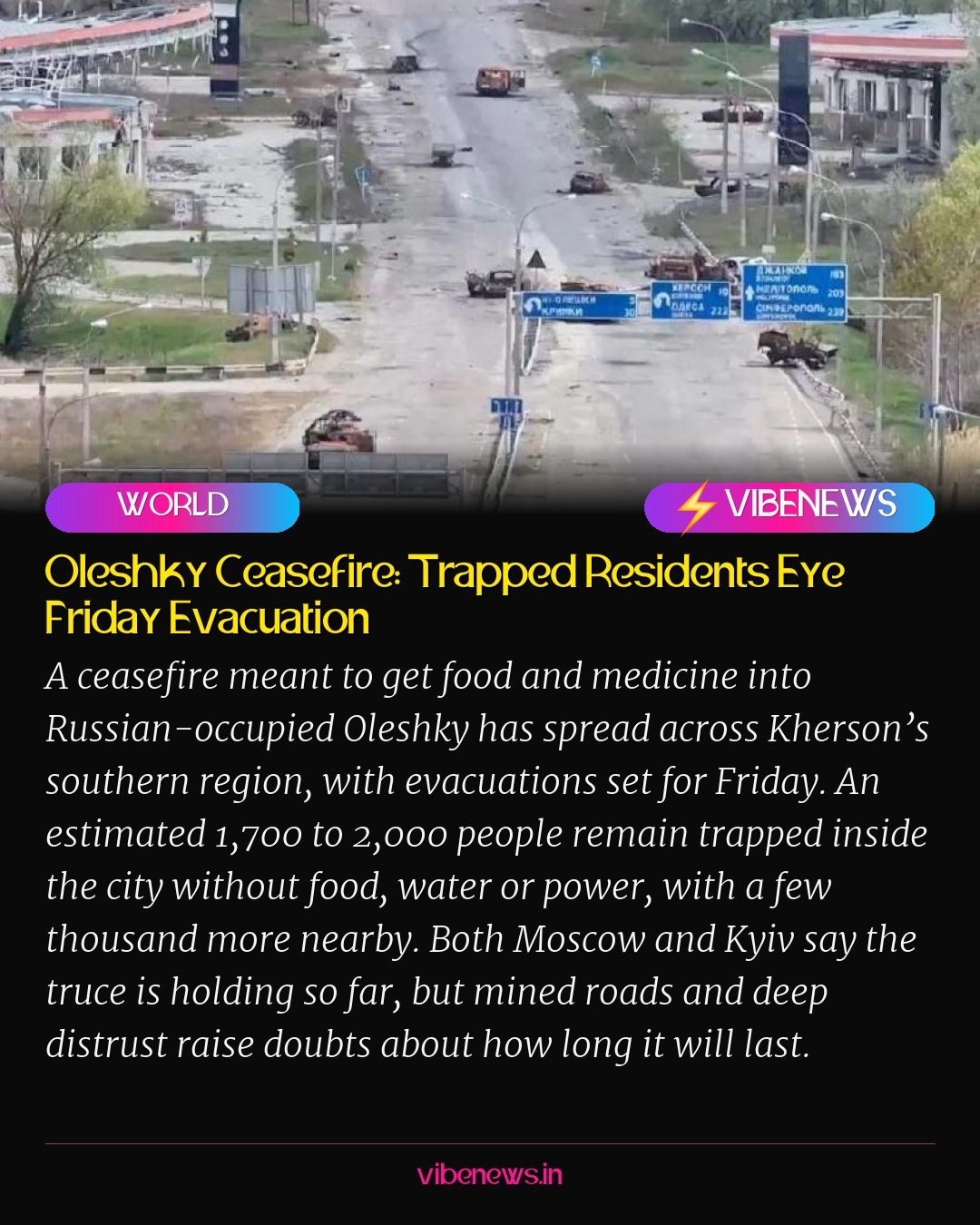
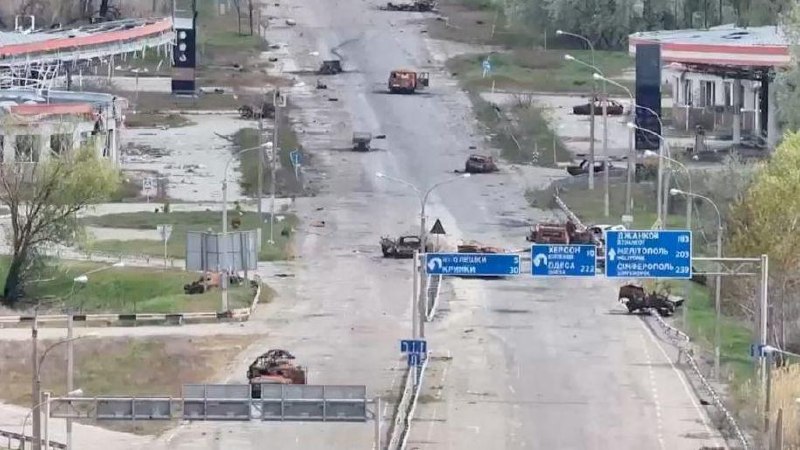
A ceasefire brokered with the help of US First Lady Melania Trump and Pope Leo XIV has been extended across Kherson’s wider southern region, opening a narrow window for aid and evacuations in the Russian-occupied Ukrainian city of Oleshky.
The truce began early on Tuesday with a single aim: getting food and medicine to a city where several thousand residents are cut off from food, water and electricity. The Dnipro river sits on one side and Russian forces sit on the other. Every road out is considered too dangerous to travel.
Melania Trump said on X that the area covered by the ceasefire ‘has expanded beyond Oleshky, within the Kherson region, to provide safe passage for the humanitarian convoys.’ The press secretary to Ukraine’s public ombudsman later corroborated the expansion. So did Oleksandr Tolokonnikov, deputy head of Kherson, who said Russian shelling had stopped both in Kherson city, which is in Ukrainian hands, and across the wider region.
The timetable on paper
Under the deal, the ceasefire comes first. Humanitarian aid deliveries to Oleshky follow, and then evacuations, planned for Friday, for anyone who wants to leave. The current truce is supposed to allow roads to be cleared of mines so supplies can reach the city, possibly on Thursday.
Russia’s defence ministry said units from the army’s Dnepr group had been conducting ‘engineering reconnaissance’ and clearing the main access roads into the village of explosive and booby-trap devices.
David Arakhamia, a key official in President Volodymyr Zelensky’s parliamentary party, said the truce would continue until 22:59 Ukrainian time on Sunday, 1 November. He described it as the ‘largest de-escalation since 2022.’
Who is still inside
Before the war, Oleshky was home to 24,000 people. Russia seized it during the first days of the full-scale invasion in February 2022. Today, an estimated 1,700 to 2,000 people remain in the city itself, with a few thousand more in surrounding areas.
The city has had no electricity, gas or water since the Kakhovka Dam was blown up in 2023, flooding the area and killing many people in Oleshky itself. No shops are open. Many residents have resorted to cooking garden weeds to survive, telling the BBC they are suffering extreme hunger and want to leave.
Escape has been a deadly gamble. The routes out have been mined and are subject to drone attacks. One woman told reporters she had stepped on a landmine and was in hospital after two operations. ‘I don’t know how long I will have to spend there,’ she said, worried she would miss the evacuation.
A local volunteer told the BBC that about 500 people had already expressed interest in leaving by Tuesday afternoon. Many details of the evacuation remain unclear, and residents are wary of giving officials their names and addresses.
Both sides say it is holding, for now
No breaches of the truce had been reported as of Tuesday. Kremlin spokesman Dmitry Peskov said everything was proceeding ‘according to plan’ and praised US mediation, especially the representatives of Melania Trump. Ukrainian Foreign Minister Andrii Sybiha said that if the ceasefire produced results, it could ‘pave the way for other steps in the peace process.’
Pope Leo had earlier this month appealed to Russian President Vladimir Putin to allow food and medical aid into Oleshky along with a safe evacuation. He also urged Zelensky to cooperate with Moscow over a ceasefire. The White House later said Melania Trump had secured the truce.
The trust problem
The hardest question is not whether the guns go quiet this week. It is where people end up once they leave. Zelensky has warned that the routes out of Oleshky, demined by Russia, will funnel civilians to ‘head towards Russia and stay there.’ He said some residents would reach Ukrainian-controlled territory ‘one way or another,’ and that ideally anyone trapped could reach their destination in Ukraine.
Russian-installed head of occupied Kherson, Vladimir Saldo, said temporary accommodation had been prepared in the region, in Russian-annexed Crimea, and across the border in the Rostov, Krasnodar and Stavropol regions. He told Russian media that most Oleshky residents wanted to leave and stay in Russia. His account has not been corroborated on the ground.
Residents and relatives who have spoken to the BBC fear Russia may not let them return to Ukraine. Some worry their phones and online activity could be examined for signs of support for Ukraine, which could put them in danger. Communication is patchy, and many people are reluctant to speak about conditions for fear of reprisals.
Ukraine’s military general staff urged people not to trust unverified reports or spread rumours about ‘the routes, time and place of the movement of people and humanitarian convoys.’
’You simply cannot trust the Russian Federation.’
That is how Serhii, who fled Oleshky through minefields around three weeks ago, described the situation. He eventually returned to Ukraine via Russia and Belarus, and he is calling for a route across the Dnipro that avoids occupied territory.
That route looks out of reach for now. Bridges across the Dnipro have been destroyed, and sources say the riverbank is also mined and dangerous. Crossing into Ukrainian-controlled territory appears impossible for the moment.
What the other side of the river looks like
In Kherson city, no explosions have been heard and no drone-related injuries have been reported since 03:00 local time on Tuesday. Cars and pedestrians are moving freely, according to local reports. ‘Judging from the fact that more people are walking around, it feels a bit calmer,’ said Galina Kyrychenko, a resident, speaking to Suspilne.
That calm is real, but it is also limited. The ceasefire has reached far enough to quiet the shelling and clear some roads on paper. Whether it reaches the people still stuck inside Oleshky, and whether those who leave can safely come home, will decide if this truce becomes a turning point or just another pause.
TL;DR
- A ceasefire that began to get food and medicine into Oleshky has been extended across Kherson’s southern region.
- An estimated 1,700 to 2,000 people remain trapped in Oleshky without food, water or electricity.
- Evacuations are planned for Friday, but the escape routes are mined and under drone attack.
- The truce runs until 22:59 Ukrainian time on Sunday, 1 November.
- Both Moscow and Kyiv say the ceasefire is being observed so far.
- Bridges across the Dnipro are destroyed, leaving no clear path to Ukrainian-controlled territory.