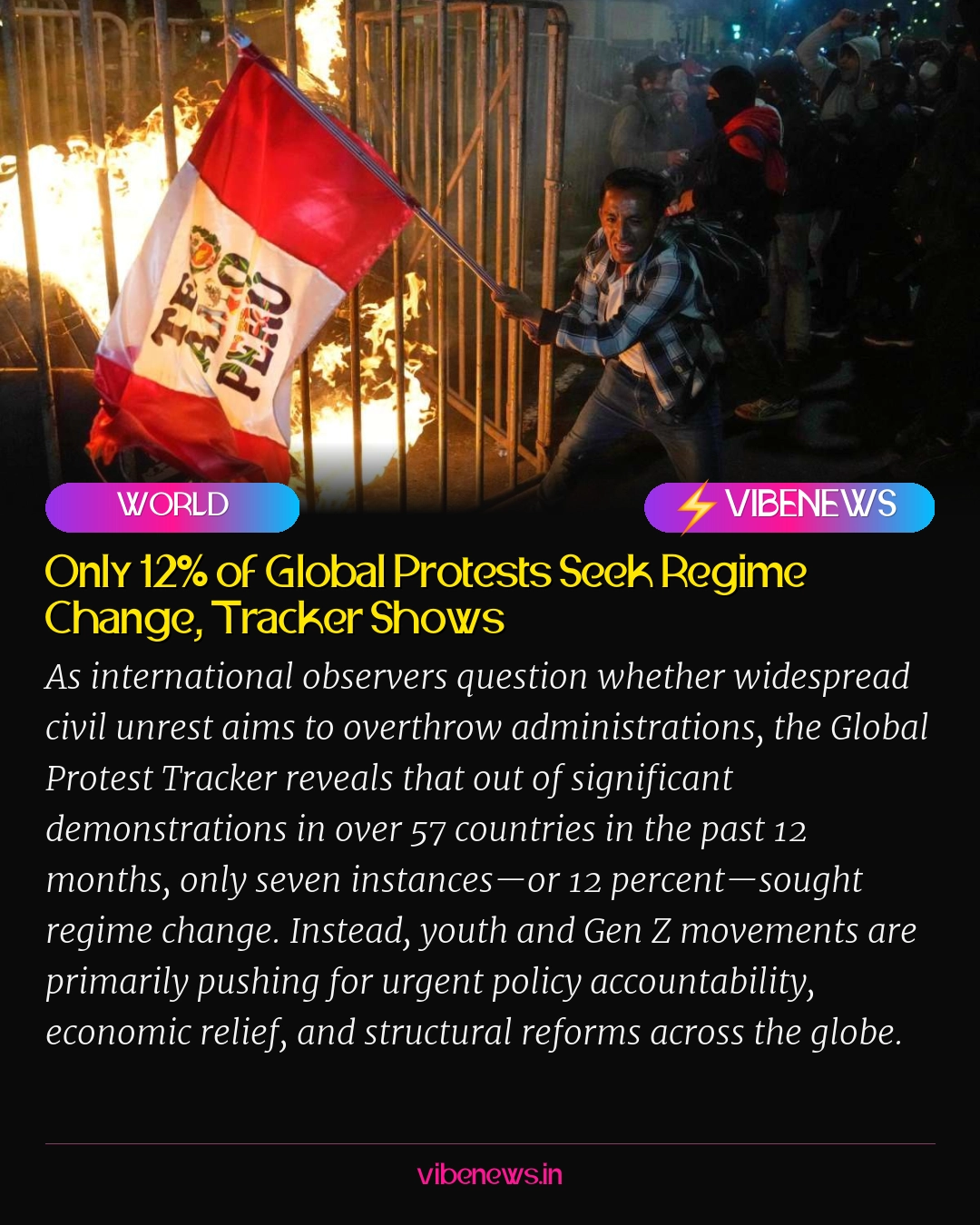
Only seven out of more than 57 nations experiencing significant civil unrest over the past 12 months saw demonstrations aimed at overthrowing their governments, according to data compiled by the Global Protest Tracker.
While 33 of these national movements remain actively engaged in street resistance, the data shows that just 12 percent of recent uprisings have sought regime change. This statistical reality challenges an escalating anxiety across political corridors worldwide, where governing bodies frequently interpret mass street demonstrations as existential threats to state power. High-profile political collapses—including the ouster of Sheikh Hasina in Bangladesh, the flight of the Rajapaksa family in Sri Lanka, and sweeping executive reshuffling in Nepal—have amplified fears among international observers in Europe, the United States, and Asia that public mobilization inevitably seeks constitutional upheaval.
However, the broader spectrum of global civil unrest points toward an alternative reality: populations are largely mobilizing to hold power accountable rather than dismantle it.
Protests are not organised merely to topple governments, but also to show them a mirror, to reshape policies, and to save the remaining foundational structures of democracy.
Policy Overhaul Over Total Overthrow
In the vast majority of cases, demonstrations are organized around concrete governance failures, crumbling infrastructure, and generational economic insecurity rather than executive removal. In France, unrest ongoing since September 2026 has mobilized high school students, youth groups, and labor unions over neglected public school funding, chronic teacher shortages, dilapidated educational facilities, and an opaque university admissions process. Coupled with rising living costs, French demonstrators have concentrated their resistance on demands for resource redistribution rather than an administrative coup.
Similar patterns have manifested across emerging markets where youth demographics are bearing the brunt of public mismanagement. In Indonesia, street actions during August and September 2025 focused on surging consumer costs, youth unemployment, tax hikes, police violence—highlighted by the death of a delivery driver—and lawmakers’ lavish housing allowances. Demonstrators demanded legislative rollbacks and anti-corruption safeguards rather than state collapse.
In Morocco, an autumn 2025 movement titled Gen Z 212 surfaced after preventable maternal deaths at an under-resourced public hospital exposed deep inequities in social spending. Mobilizations questioned massive financial allocations for World Cup infrastructure while domestic healthcare and education systems suffered, demanding redirected state investment without seeking to overturn the governing framework.
In the Philippines, demonstrations sparked in September 2025 targeted corruption within flood-control infrastructure projects, with the public demanding the recovery of misappropriated funds and systemic anti-graft enforcement.
The Exception: Where Regime Change Takes Hold
The minority of demonstrations that do demand the fall of a government typically stem from systemic democratic backsliding or severe state-sanctioned violence. In Georgia, street protests erupting in October 2024 sought regime removal following documented claims of systematic electoral fraud during parliamentary elections and the Georgian Dream party’s decision to freeze integration talks with the European Union. Despite enduring heavy crackdowns and state-sanctioned violence against student sit-ins, the movement’s push for new elections and the release of political prisoners has been met with entrenched official resistance.
In Albania, demonstrations ongoing since May 2026 escalated to direct demands for the resignation of Prime Minister Edi Rama. The unrest arose from state-sanctioned environmental deregulation, specifically commercial land clearance in the biodiverse Narta Lagoon wetland to accommodate international luxury real estate projects, which demonstrators denounced as elite favoritism over national preservation laws.
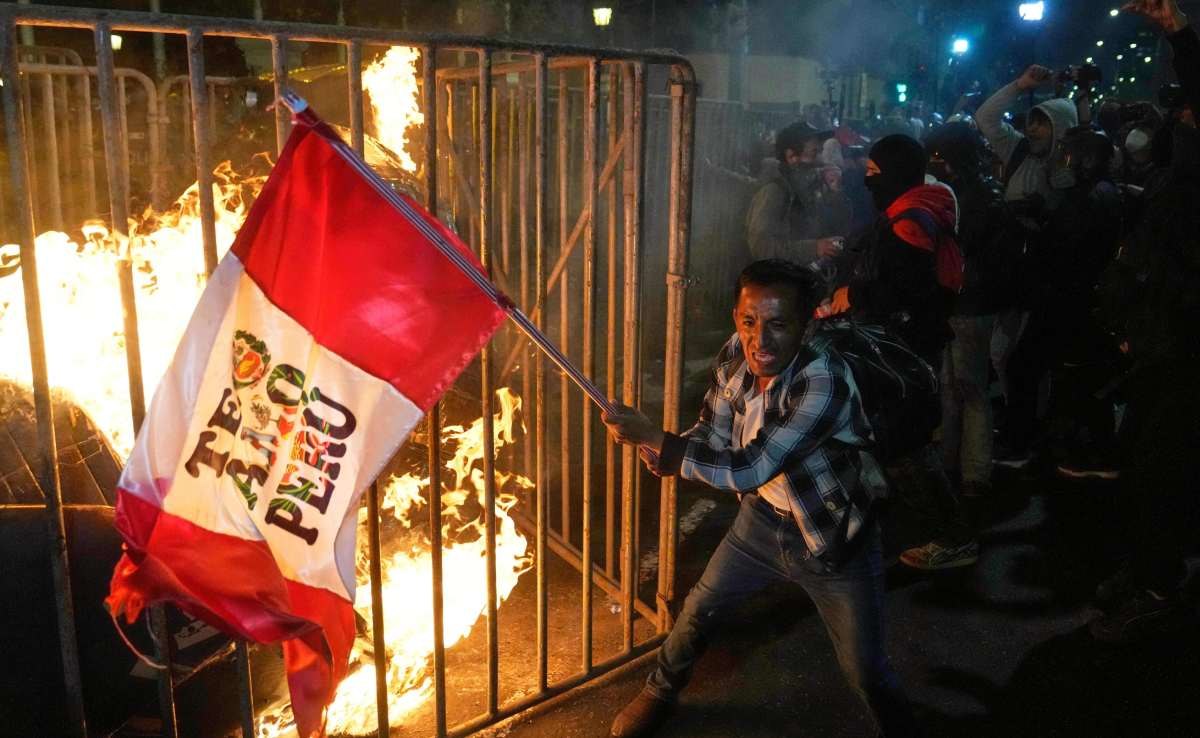
Meanwhile, events in Peru demonstrate the limits of political decapitation. Following the rapid, successive impeachments of national leaders, the installation of replacement President Jose Jeri, and a mandatory pension reform penalizing self-employed youth, Gen Z demonstrations triggered lethal emergency crackdowns involving rubber bullets and tear gas. Even after the presidency changed hands, street resistance persisted, proving that the removal of an individual leader often fails to resolve the deep-rooted socio-economic grievances driving the public into the streets.
The Cost of Economic Grievance
In Kenya, prolonged unrest that began in June 2024 illustrates how quickly policy-driven anger can escalate into high-stakes state confrontation. What originated as resistance to controversial tax hikes transformed into sustained opposition against exorbitant state spending, official corruption, and police brutality after more than 60 demonstrators were killed in custody or on the streets.
Despite digital censorship, targeted activist abductions, and media blackouts, Kenyan youth coalitions continue to organize around governance reform and civil liberties rather than executive removal. Across both mature and developing economies, the data underscores that while unrest carries high stakes for national stability, the primary objective driving global youth to the front lines remains structural reform, survival, and institutional accountability.
TL;DR
- Global Protest Tracker reveals only 12% of recent protests in 57 nations sought regime change.
- More than 33 significant protest movements worldwide remain currently active.
- Most mobilizations focus on systemic corruption, living costs, and basic public services.
- Movements in France, Kenya, Morocco, and Indonesia prioritized policy reform over toppling leaders.
- Regime change efforts emerged in Georgia, Albania, and Peru amid severe democratic and environmental crises.