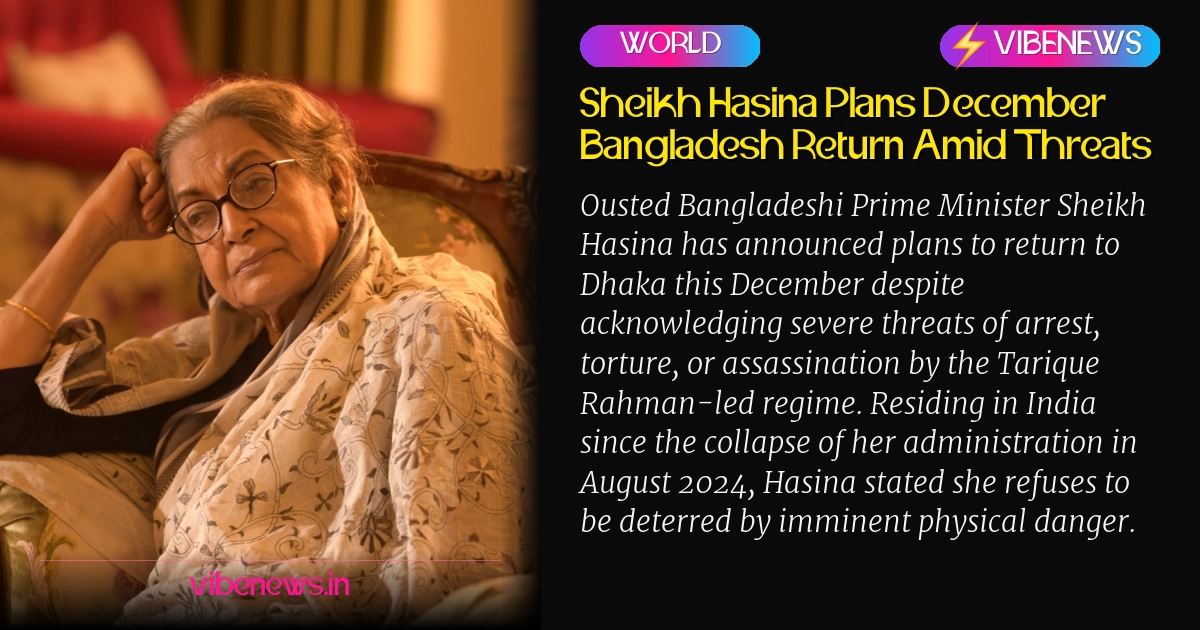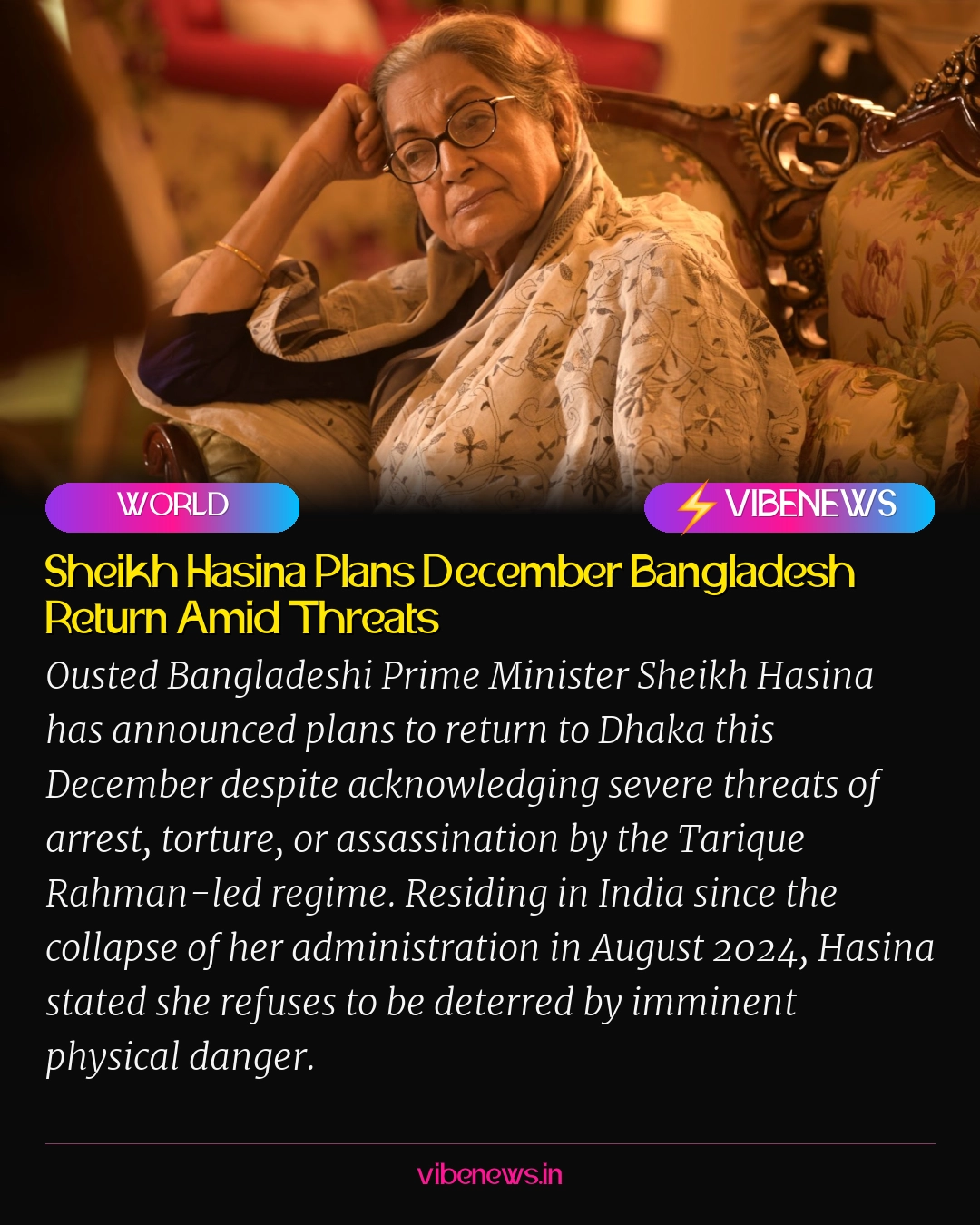
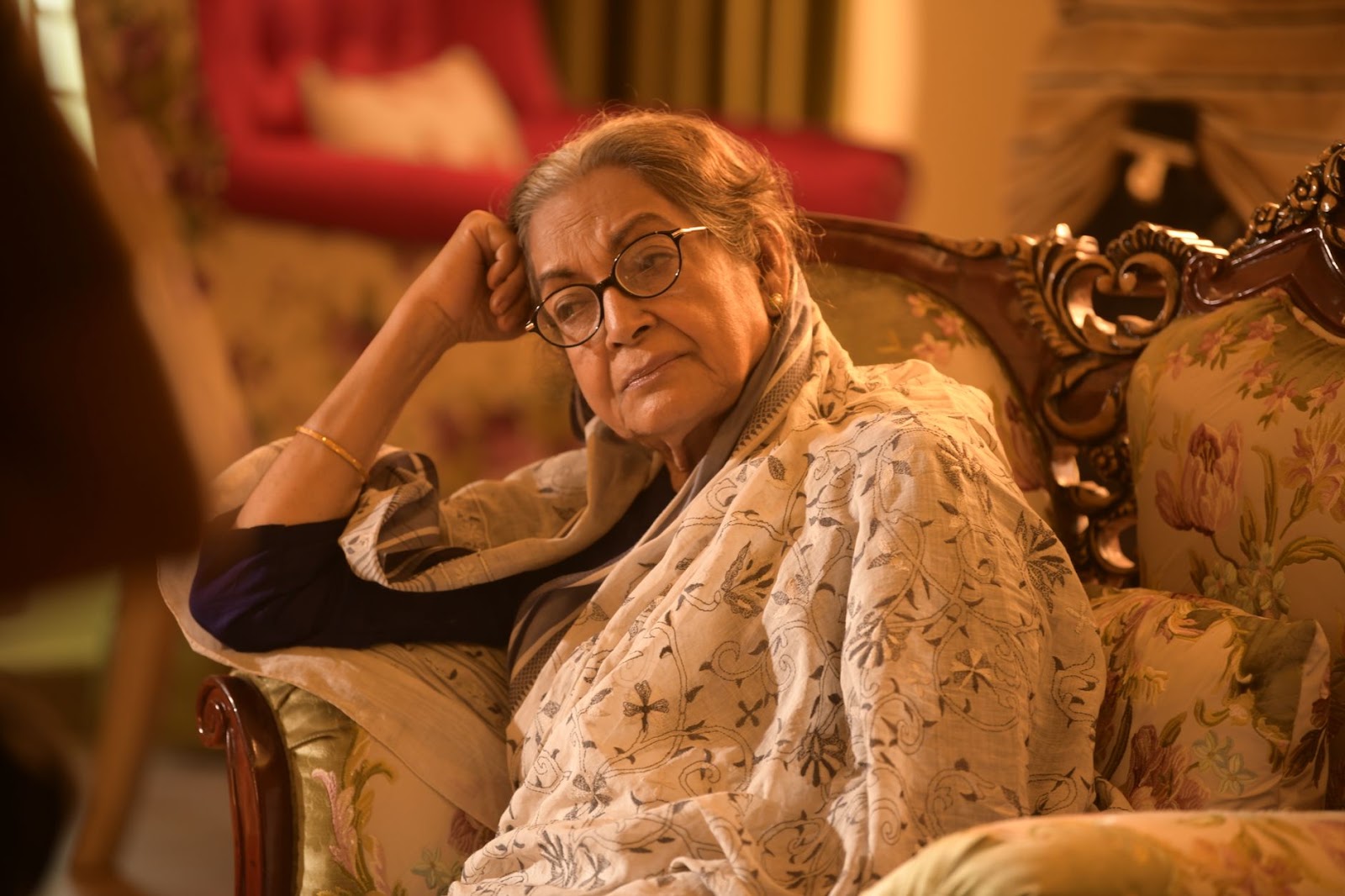
Former Bangladesh Prime Minister Sheikh Hasina declared during a virtual press conference that she will return to Bangladesh this December, despite acknowledging explicit threats of imprisonment, physical torture, and assassination.
Addressing reporters gathered at a Washington-based press conference via video link, the exiled leader signaled an extraordinary escalation in South Asia’s political landscape. Hasina fled Dhaka in August 2024 following the dramatic collapse of her administration and has since sought sanctuary in India. Rather than retreating quietly into permanent exile, the former premier insisted that her duty to her political base compels her to step directly into harm’s way, regardless of the lethal hostility awaiting her at home.
Defying Extreme Threats of Retaliation
Addressing the intense security risks surrounding her planned arrival, Hasina made it clear that she is bracing for the harshest possible measures from the administration currently led by Prime Minister Tarique Rahman. Rather than seeking assurances of safe passage, she openly anticipated state retribution while refusing to yield ground.
"I will go back to Bangladesh in December. I am not afraid. I know they can kill me, arrest me and torture me...It’s my responsibility to go."
The former leader reiterated that personal safety would not dictate her timeline, adding emphatically, "How risky it is, I don’t care. I have to go back." While Hasina fixed December as her target departure window, her son, Sajeeb Wazed Joy, subsequently briefed journalists that an exact date has not yet been locked in. Joy clarified that a specific schedule will be formally unveiled closer to the planned journey.
Historical Parallels and Gratitude to New Delhi
Throughout her address, Hasina contextualized her current predicament against a family legacy marked by political violence, survival, and repeated returns from foreign shores. She expressed deep gratitude to the Indian government and its citizens across political party lines for granting her refuge amid the 2024 political upheaval.
Hasina drew a direct parallel between her present sanctuary in India and the shelter extended to her family five decades ago. "Well, thanks to the Indian government and the people, all party, they received me just like in 1975," she stated, invoking the tragedy in which she and her sister survived the brutal assassination of her father, founding leader Sheikh Mujibur Rahman, alongside multiple family members.
This is not the first time Hasina has chosen confrontation over safety in exile. She cited her historic 1981 return to Bangladesh following years abroad after her father’s assassination, as well as her decision to re-enter the country amid the 2007 political state of emergency when she confronted an onslaught of criminal charges. In her view, her impending journey follows an established pattern of refusing exile when her party and supporters face severe persecution.
Accusations Against Tarique Rahman and Democratic Demands
Hasina mounted a sharp critique against the governing leadership of Prime Minister Tarique Rahman, accusing authorities in Dhaka of weaponizing criminal proceedings to dismantle the Awami League and silence legitimate dissent. She disputed the legality of the cases launched against herself and her colleagues, demanding that any allegations be evaluated solely through fair, impartial judicial mechanisms rather than political vendettas.
The ousted leader stressed that Bangladesh’s sovereignty belongs to its electorate and called for nationwide governance to be decided through open, inclusive electoral systems. Hasina insisted that excluding political factions would only fracture the nation’s fragile fabric, underscoring the urgent necessity of restoring fundamental democratic safeguards.
In her appeal, she urged the protection of independent courts, free expression, open political assembly, proper due process, and decisive security for minority communities. "Equally, those who oppose my government are citizens whose rights must be respected. The future of Bangladesh must be built on reconciliation, not revenge," Hasina emphasized.
Confronting the Fallout of the 2024 Upheaval
Hasina did not entirely sidestep the turbulence that ultimately triggered the downfall of her governance. She openly acknowledged that her administration faces searching scrutiny over its conduct during the deadly 2024 protests and their chaotic aftermath.
"I acknowledge the difficult questions surrounding my government, the events of 2024 and their aftermath," she admitted. Even so, she argued that accountability must be pursued through transparent, credible legal standards rather than unchecked state retribution. As the winter timeline approaches, Hasina’s planned arrival sets up a volatile standoff that tests the stability of Bangladesh’s current leadership and the resilience of its political institutions.
TL;DR
- Sheikh Hasina announced plans to return to Bangladesh in December.
- She acknowledged facing extreme risks of arrest, torture, and assassination.
- The former prime minister addressed a Washington-based press conference virtually.
- Hasina has resided in India since her government fell in August 2024.
- Her son Sajeeb Wazed Joy noted the exact return date remains unconfirmed.
- She accused Prime Minister Tarique Rahman of weaponizing criminal proceedings.