A catastrophic threshold in human history has been crossed as years of inadequate greenhouse gas cuts make exceeding 1.5°C of global warming entirely unavoidable, the United Nations Environment Programme revealed in New Delhi on October 21, 2026.
The Inevitable Breach of Earth’s Climate Guardrail
In its harrowing Emissions Gap Report 2026, the United Nations Environment Programme (UNEP) issued a severe indictment of international inaction. The core target of the 2015 Paris Agreement—keeping global warming capped at 1.5°C above pre-industrial levels without overshoot—is officially out of reach. The scientific finding establishes a terrifying reality: the window to completely prevent Earth’s temperature from breaking this fundamental safety boundary has permanently closed.
The data compiled by the UN outlines an alarming trajectory for global climate stability. If governments simply implement their current climate policies without dramatic revisions, the planet is on a course to heat up by 2.8°C by the year 2100. Even if every nation strictly fulfills its existing formal climate pledges, global average temperatures are projected to climb by approximately 2.6°C by the end of the century.
Escalating Extreme Weather and Existential Planetary Shock
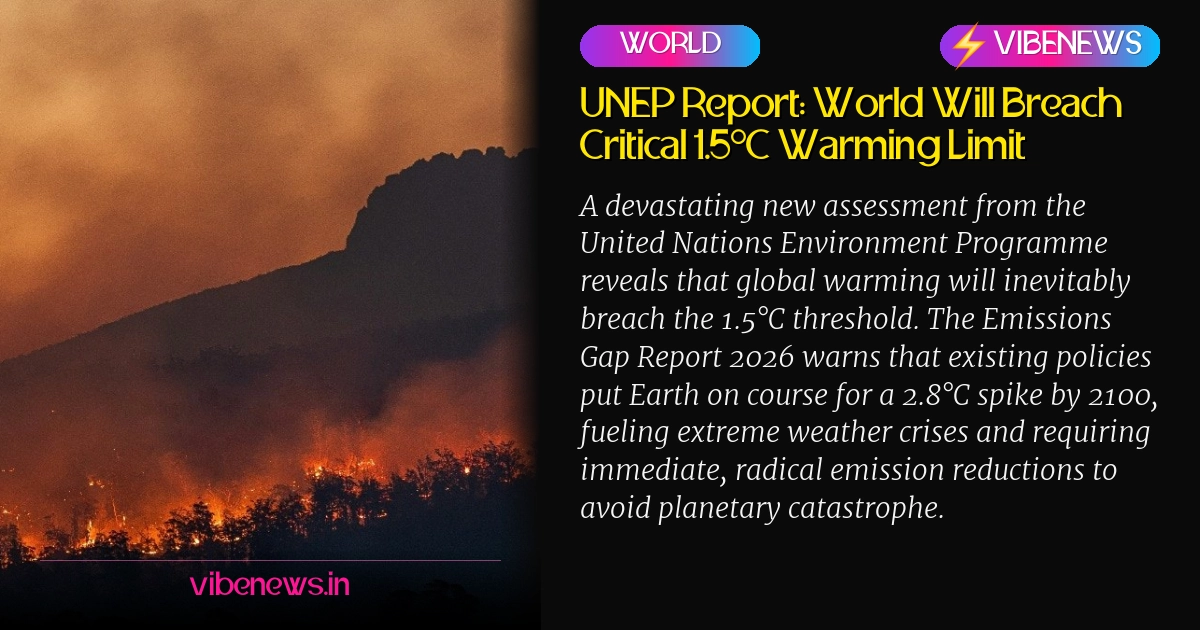
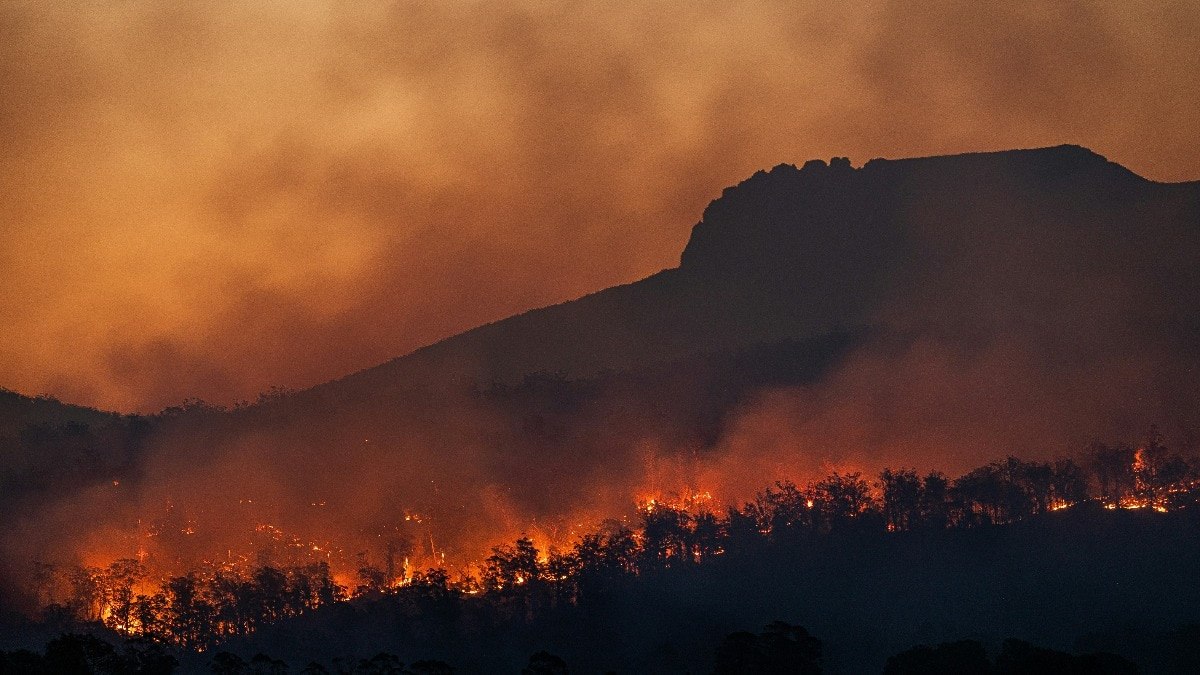
The gap between 1.5°C and 2°C represents a fundamental shift into dangerous instability rather than an incremental temperature rise. Every fraction of a degree amplifies mortal perils to human health, disrupts global food production, threatens freshwater reservoirs, and triggers potentially irreversible shifts in planetary systems. Already, extreme disruptions are accelerating across continents, from burning forests in Tasmania, Australia, to melting ice formations at the Skuta glacier near Kamnik in Slovenia, and oppressive heatwaves gripping Prayagraj and urban centers in India.
As these catastrophic trends converge, the risks of fatal heatwaves, destructive floods, surging sea levels, and total ecosystem collapses multiply exponentially. The 1.5°C threshold measures sustained, long-term global temperature averages rather than isolated hot years, meaning prolonged overshoot will systematically lock in damage that becomes exponentially harder to reverse.
What governments do this decade will help decide how unlivable the planet gets and how long it stays that way.
The Radical Emission Reductions Required to Limit Overshoot
While an overshoot beyond 1.5°C is now locked into Earth’s near future, UNEP emphasizes that humanity faces a stark choice over the scale and duration of that breach. The primary objective must now pivot toward restricting the peak warming overshoot and forcing temperatures back down through unprecedented systemic overhauls.
Under the report’s most ambitious decarbonization pathway, international greenhouse gas emissions must plunge by 18 percent by 2030 compared to 2025 baselines. The required drawdown steepens drastically thereafter, demanding a 45 percent drop by 2035 and an extraordinary 69 percent cut by 2040. Currently submitted national pledges offer only a negligible fraction of the aggressive curbs necessary to achieve this.
A Narrow Path to Stabilization
Under UNEP’s best-case model, coordinated global interventions could see average heating peak between 1.7°C and 1.8°C before potentially cooling back down toward 1.5°C by 2100. However, researchers stress that this pathway remains deeply uncertain and technologically demanding. In addition to terminating fossil fuel emissions at historic speed, stabilizing the biosphere on this track will require removing colossal volumes of carbon dioxide directly from the atmosphere.
Every passing year dominated by insufficient policy adjustments pushes the planetary climate further into uncharted peril. The magnitude of suffering across vulnerable communities, agricultural belts, and coastal infrastructure will depend entirely on whether world leaders enact emergency emission interventions before atmospheric limits are pushed beyond recovery.
TL;DR
- UNEP confirms breaching the 1.5°C global warming limit is now unavoidable.
- Current national policies put the planet on track for 2.8°C warming by 2100.
- Existing national climate pledges would still cause a 2.6°C temperature rise.
- Emissions must drop 18% by 2030, 45% by 2035, and 69% by 2040.
- Best-case model projects warming peaking at 1.7-1.8°C before 2100 cooling.
- Massive carbon dioxide atmospheric removal is required to reverse the overshoot.