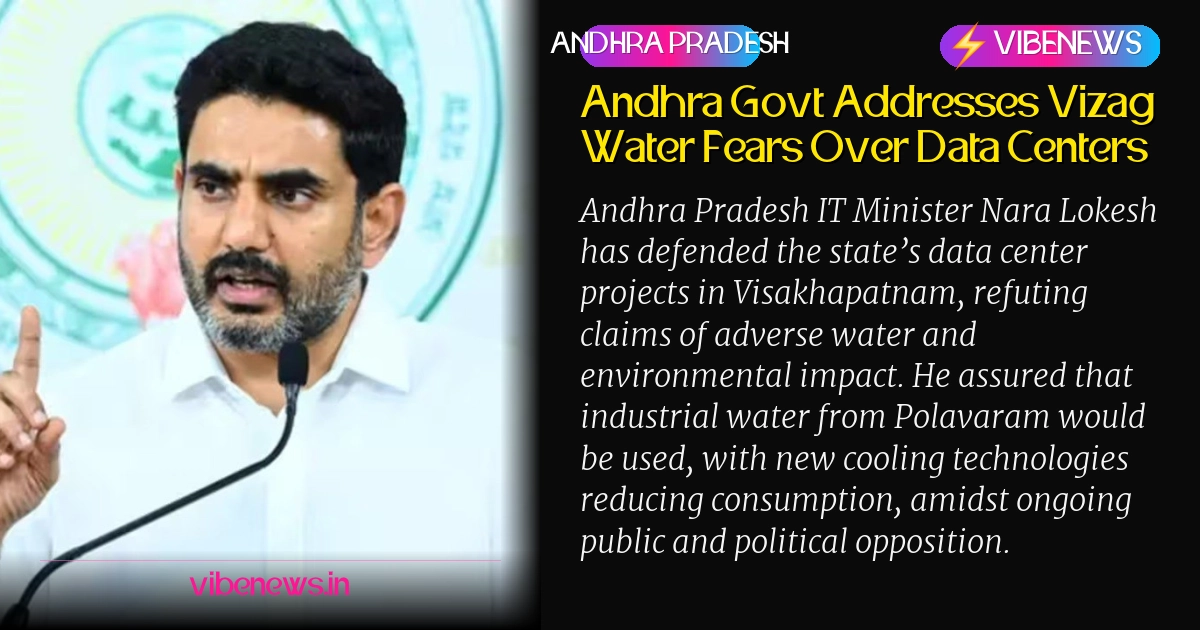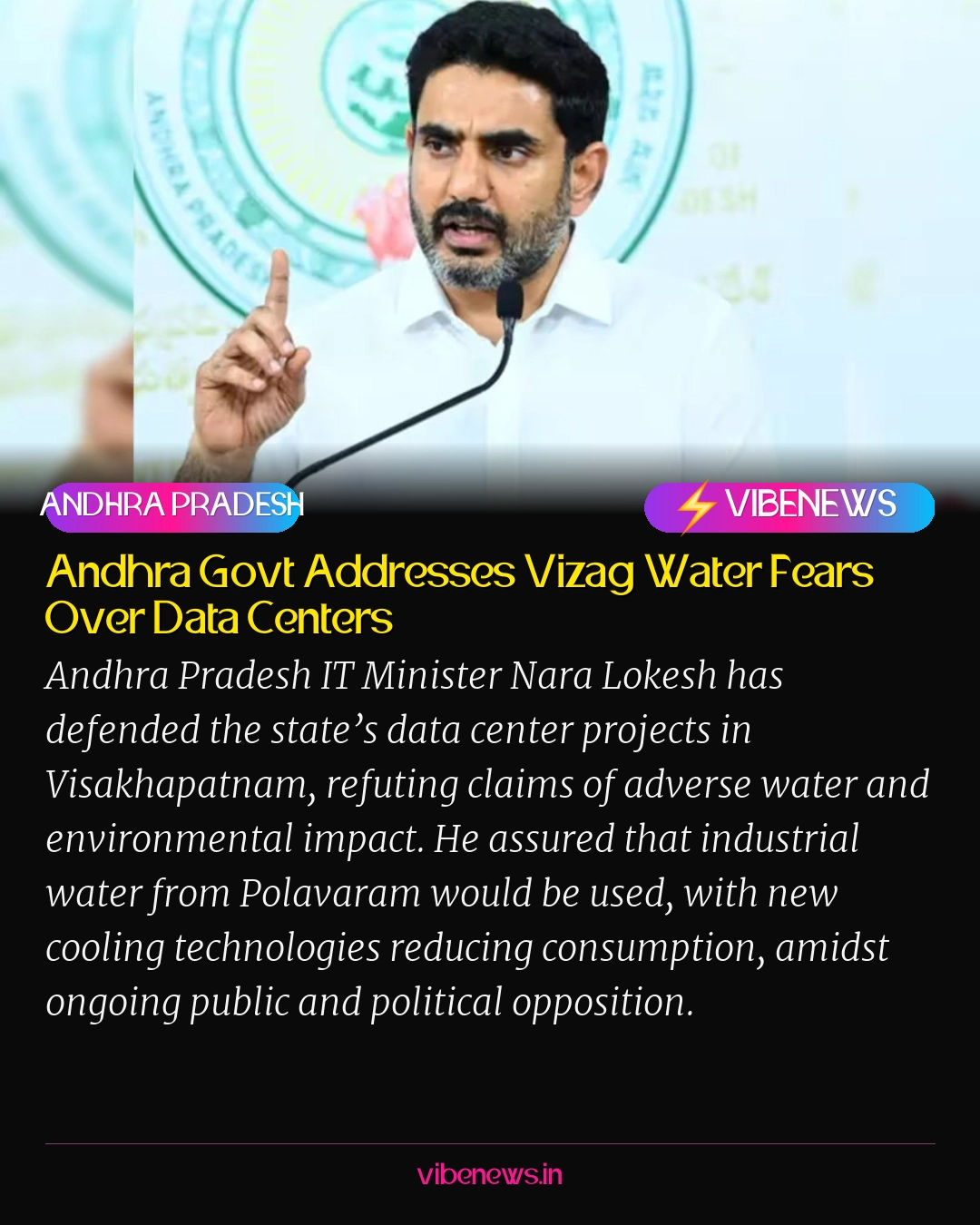

Andhra Pradesh IT Minister Nara Lokesh recently addressed the State Legislative Assembly, staunchly defending the government’s ambitious data center projects slated for Visakhapatnam. He dismissed widespread concerns regarding their potential impact on the city’s water supply and overall environmental health, attributing much of the opposition to misinformation.
The Minister highlighted the strategic importance of these data centers, particularly in the context of an AI-driven digital economy and India’s burgeoning need for data sovereignty. He noted that Google’s initial interest in Visakhapatnam had significantly amplified the city’s appeal to other major IT corporations, signaling a robust future for the region’s tech landscape.
Addressing Water Scarcity Concerns
A primary point of contention has been the substantial water requirements of these facilities. Minister Lokesh clarified that the proposed 6.5 GW data center ecosystem, once fully operational, is estimated to require approximately 3 TMC (thousand million cubic feet) of water annually. However, he emphasized that advancements in cooling technologies are expected to significantly reduce this consumption over time.
Crucially, Lokesh assured the assembly that the water allocated for these industrial facilities would be sourced exclusively from the Polavaram project’s industrial quota. This commitment ensures that the data centers will not divert water intended for Visakhapatnam’s urban residents, a key concern for local communities.
To further allay fears, the Minister detailed plans for dedicated pipelines to supply water directly to the data centers. He also drew a comparison, stating that a 1 GW thermal power plant consumes nearly ten times more water annually than a data center, questioning the disproportionate focus of protests on the latter.
Ensuring Urban Water Security
Beyond the industrial allocation, the Andhra Pradesh government has reiterated its commitment to securing Visakhapatnam’s long-term urban water needs. Minister Lokesh announced that a gravity-based water supply system from the Polavaram project is projected to be operational within 18 months, promising a sustainable solution for the city’s growing population.
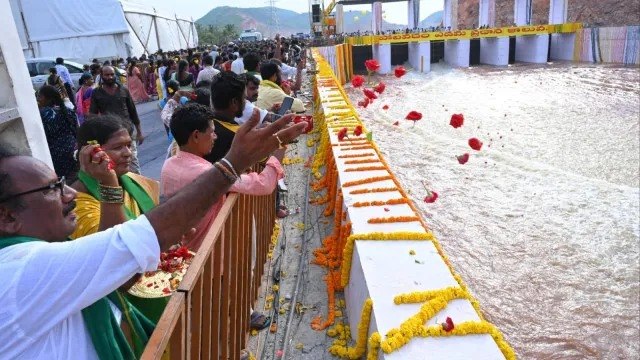
This dual approach aims to support industrial growth without compromising the essential needs of the populace. The Polavaram project, a multi-purpose irrigation initiative on the Godavari River, is central to the state’s water management strategy, designed to address irrigation, drinking water, and industrial requirements across various regions.
The Digital Infrastructure Push
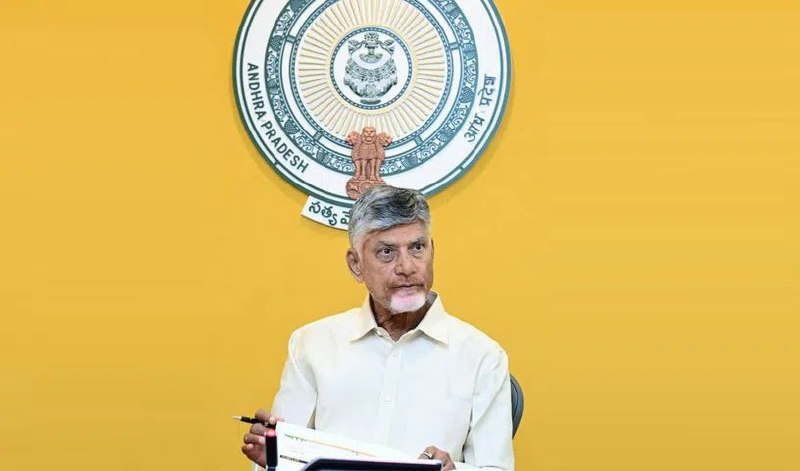
Chief Minister Chandrababu Naidu has set a clear ceiling of 6.5 GW for data center allocations in the state, a target that Minister Lokesh confirmed has now been fully achieved. This strategic cap underscores the government’s intent to manage growth responsibly while attracting significant investment in the digital sector.
The government has also pledged to prioritize companies that demonstrate strong environmental responsibility and adopt sustainable practices. This commitment reflects a growing awareness of ecological footprints associated with large-scale industrial projects and aims to foster a green tech ecosystem in the region.
Visakhapatnam, often referred to as the "Jewel of the East Coast," has long been envisioned as a major IT and industrial hub. The establishment of these data centers in areas like Adavivaram-Mudasarlova, Tarluvada, and Rambilli is part of a broader strategy to transform the city into a global digital gateway, leveraging its coastal advantages and existing infrastructure.
Public Outcry and Political Opposition
Despite the government’s assurances, the data center projects have faced considerable resistance from various quarters. Citizens’ groups in Visakhapatnam have voiced strong opposition, citing concerns over the potential strain on vital resources such as water and power, alongside broader environmental impacts.
These groups have pointed to recent climatic challenges, including Super El Niño-like weather patterns, which have already placed significant stress on water resources across the state. Their argument posits that adding high-consumption industrial units could exacerbate an already precarious situation for the region’s natural endowments.
Political parties, including the Communist Party of India (CPI) and the Communist Party of India (Marxist) CPI(M), have also actively opposed the data center hub. They allege that these projects would adversely affect the local environment, contaminate drinking water sources, and pose risks to public health, calling for a re-evaluation of the development strategy.
Editorial Context
The debate surrounding Visakhapatnam’s data center projects encapsulates a critical long-term challenge for Andhra Pradesh and indeed, for India: how to balance rapid economic development and technological advancement with environmental sustainability and equitable resource distribution. As India pushes for greater digital infrastructure and data sovereignty, the demand for energy and water-intensive data centers will only escalate.
This situation highlights the necessity for robust environmental impact assessments, transparent public consultations, and the adoption of cutting-edge sustainable technologies in all large-scale industrial endeavors. The government’s commitment to industrial water allocation from Polavaram and the promise of new cooling technologies are steps in this direction, but their effective implementation and monitoring will be crucial.
The ongoing public and political opposition underscores the importance of addressing community concerns proactively and demonstrating tangible benefits and safeguards. The long-term success of Visakhapatnam as a digital hub will depend not just on attracting investment, but also on fostering trust and ensuring that growth is inclusive and environmentally responsible for future generations.
TL;DR
- Andhra Pradesh IT Minister Nara Lokesh defended Visakhapatnam’s data center projects against water and environmental impact concerns in the State Legislative Assembly.
- The proposed 6.5 GW data center ecosystem is estimated to require 3 TMC of water annually, which will be sourced from Polavaram’s industrial allocation.
- New cooling technologies are expected to reduce water consumption, and dedicated pipelines will be provided for the data centers, ensuring no diversion from urban supply.
- The government assures a gravity-based urban water supply for Visakhapatnam from the Polavaram project within 18 months.
- Citizens’ groups and political parties like CPI and CPI(M) oppose the projects, citing potential strain on resources, environmental impact, and public health risks.
- Chief Minister Chandrababu Naidu set a 6.5 GW capacity ceiling for data center allocations, prioritizing companies with strong environmental responsibility.