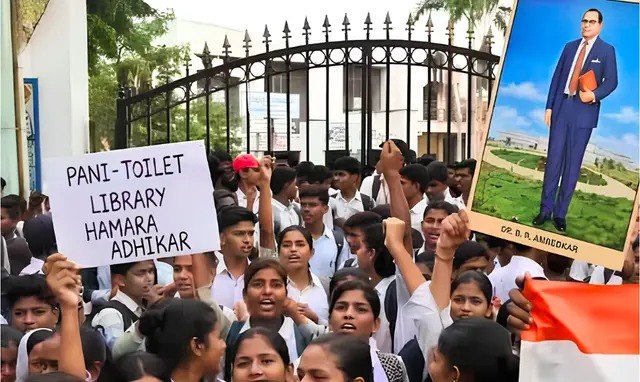
A New Generation’s Assertive Voice
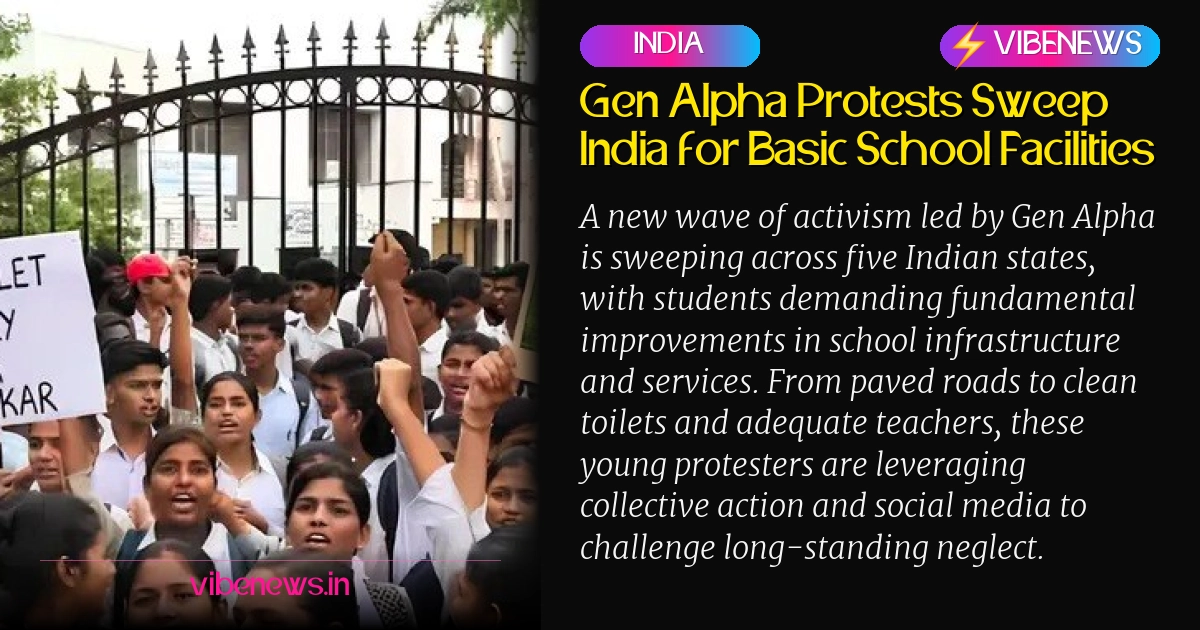
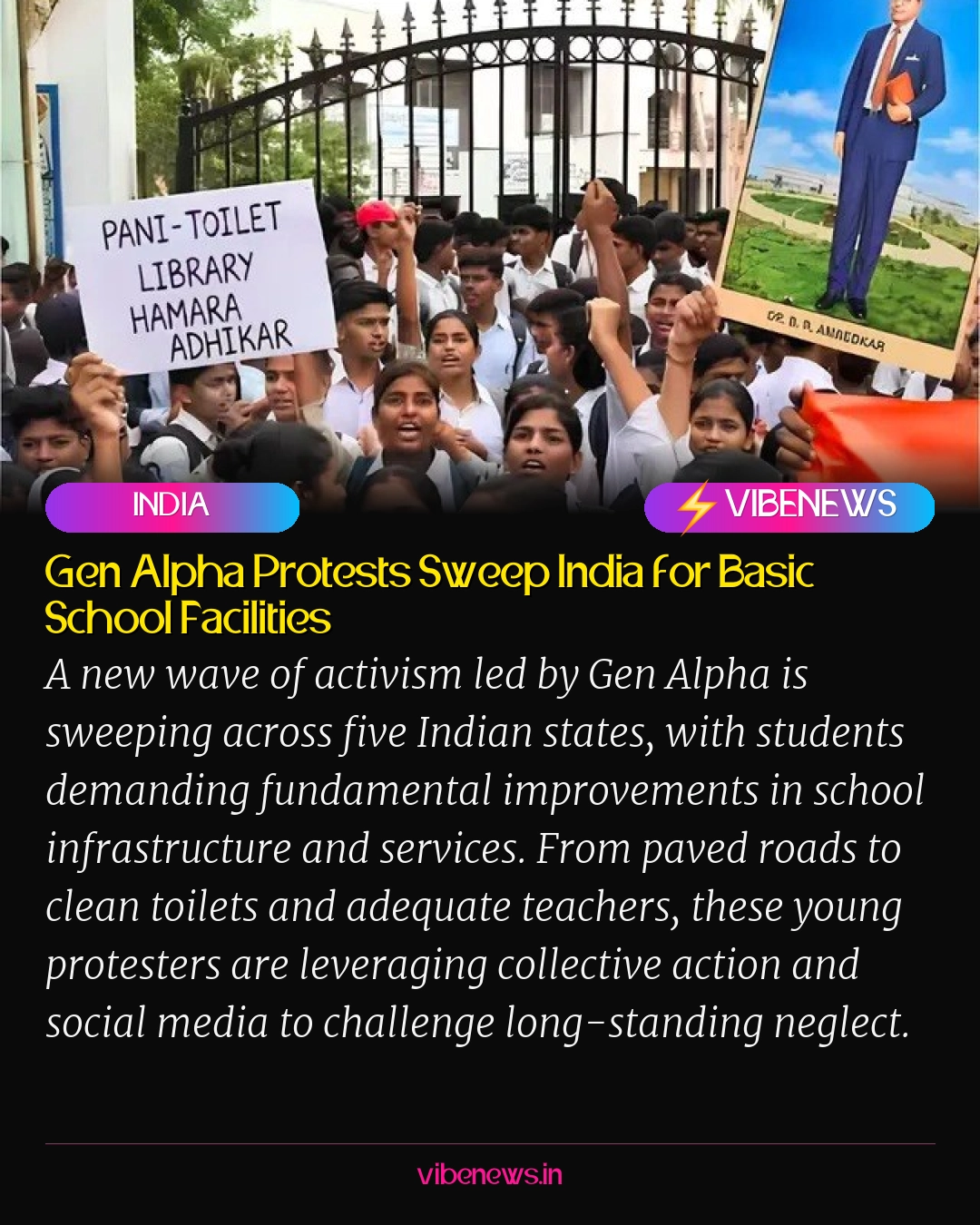
A distinct shift in civic engagement is emerging across India, marked by a burgeoning wave of protests led by Generation Alpha. Over the past fortnight, children born roughly between 2010 and 2025 have taken to the streets in at least five states, articulating demands for fundamental improvements in their educational environments and local infrastructure. This unprecedented multi-state mobilization signals a departure from traditional forms of complaint, as young students actively organize and confront authorities directly.
These demonstrations, while seemingly localized in their immediate triggers, collectively represent India’s first visible, multi-state movement by Gen Alpha. Their grievances are strikingly basic: functioning toilets, clean drinking water, adequate teachers, proper desks, libraries, fans in classrooms, better food, and even paved roads to their schools. This collective action underscores a growing impatience with long-standing deficiencies that previous generations might have passively accepted.
The Unfolding Wave of Demands
The protests have manifested across Uttar Pradesh, Bihar, Rajasthan, Madhya Pradesh, and Maharashtra, each highlighting critical gaps in public services. In Uttar Pradesh’s Hamirpur district, students and villagers embarked on a five-kilometre ‘Tiranga Yatra’ to the Collectorate, demanding a paved road to their school. They described navigating through mud, especially during the monsoon, and highlighted the absence of a proper road since India’s independence.
Similarly, in Fatehpur district, nearly 1,500 students of Sarvodaya Inter College walked out of classrooms to protest against inadequate facilities. Their demands encompassed proper desks, benches, functional toilets, drinking water, improved midday meals, and the establishment of essential amenities like a library and computer lab. The sheer scale and determination of these protests often compel school administrations to commit to addressing the issues.
Bihar witnessed students from Simuara Middle School in Gaya walking four kilometres to the Sub-Divisional Magistrate’s office, bypassing junior officials to speak directly to the top. Their complaints mirrored those elsewhere: inedible midday meals, unsanitary toilets, lack of classroom fans, broken benches, and non-functional hand pumps. Such direct engagement demonstrates a strategic understanding of bureaucratic hierarchies.
In Rajasthan, students in Barmer and Jalore districts locked school gates to protest vacant teacher posts, a critical issue impacting educational quality. Their resolve led to assurances from District Education Officers for immediate teacher deployment. Madhya Pradesh saw students at a residential school in Chhindwara protesting the abysmal quality of mess food, citing repeated instances of insects found in their meals. Maharashtra, too, reported student protests over issues ranging from dysfunctional toilets and erratic water supply to chronic teacher absenteeism, particularly crucial for those facing board examinations.
Learning from Predecessors: The Gen Z Blueprint
This surge in Gen Alpha activism does not occur in a vacuum. It draws significant inspiration and tactical cues from the preceding Generation Z, which has increasingly demonstrated its capacity for organized public protest. Barely a year prior, young people in Nepal orchestrated protests that contributed to the downfall of Prime Minister KP Sharma Oli’s government, highlighting Gen Z’s ability to mobilize large numbers through social media.
The Nepal protests, often characterized as the world’s first ‘meme-glazed’ demonstrations, showcased a new form of activism that was both seemingly unserious and profoundly consequential. This global trend resonated within India, influencing political discourse and prompting leaders like Rahul Gandhi to acknowledge Gen Z as a significant political constituency. The recent CJP protests against NEET-UG paper leaks further solidified this pattern, transforming individual grievances into collective anger against systemic failures.
Gen Alpha is growing up in this environment, observing how their slightly older peers leverage digital tools and collective action to demand accountability. They are witnessing firsthand that institutions respond when pressure is organized, visible, and amplified through contemporary communication channels. This early exposure is shaping their understanding of civic power and their willingness to challenge the status quo.
Visibility as Leverage: The Digital Advantage
Despite their young age and lack of formal political power, Gen Alpha has discovered a potent form of leverage: visibility. In an age dominated by social media, a group of schoolchildren marching with placards or staging a sit-in outside a government office becomes incredibly difficult for administrations to ignore, especially once videos of their protests begin circulating online. This digital amplification transforms local grievances into public spectacles, demanding immediate attention.
Uttarakhand-based journalist Robin Singh Chauhan noted on X that while much discussion focuses on Gen Z, Gen Alpha is now learning to ask questions too. He cited students at an Eklavya Model Residential School in Khatima, Uttarakhand, who staged a three-day protest over basic issues like poor food, expired rations, electricity, drinking water, and sanitation. This demonstrates a clear understanding of how to make their voices heard effectively.
A New Standard of Expectation
Perhaps most revealing is the nature of their demands. Unlike previous generations who might have resigned themselves to poor infrastructure, absent teachers, or inadequate facilities as an unavoidable part of everyday life, today’s protesting children are less willing to accept such conditions as normal. They are growing up in an India where information about standards elsewhere is readily available on their phones, allowing them to clearly perceive what they are missing out on.
This access to information fuels a sense of entitlement to basic amenities and quality education, transforming passive acceptance into active demand. While adults inevitably play a role in shaping some of these protests, the core grievances of Gen Alpha are undeniably real and deeply felt. Their actions reflect a fundamental instinct: if something isn’t working, change it.
Editorial Context
The emergence of Gen Alpha as an active protesting force carries significant long-term implications for India’s social and political landscape. This development signals a fundamental shift in civic engagement, where even the youngest citizens are demonstrating a heightened awareness of their rights and a willingness to demand accountability from governing bodies. Over time, this generation, having learned the power of organized, visible pressure, is likely to become an even more formidable political constituency.
This trend challenges traditional governance models, forcing authorities to be more responsive to grassroots issues, even those articulated by non-voting populations. It also suggests a future where social movements may be initiated and sustained by younger demographics, leveraging digital platforms with unprecedented agility. The lessons learned by Gen Alpha today — that institutions respond to collective, visible pressure — will undoubtedly shape their future interactions with power structures, potentially leading to more dynamic and demanding civic participation in the decades to come.
TL;DR
- Gen Alpha students across five Indian states are protesting for basic school facilities and infrastructure.
- Demands include paved roads, clean toilets, drinking water, adequate teachers, proper desks, and better food.
- Protests involve direct action like marching to government offices, locking school gates, and staging sit-ins.
- The movement is influenced by Gen Z activism, leveraging social media for visibility and impact.
- This generation refuses to accept poor facilities as normal, driven by access to information about better standards.
- Officials have responded with assurances and inquiries, demonstrating the effectiveness of organized, visible pressure.