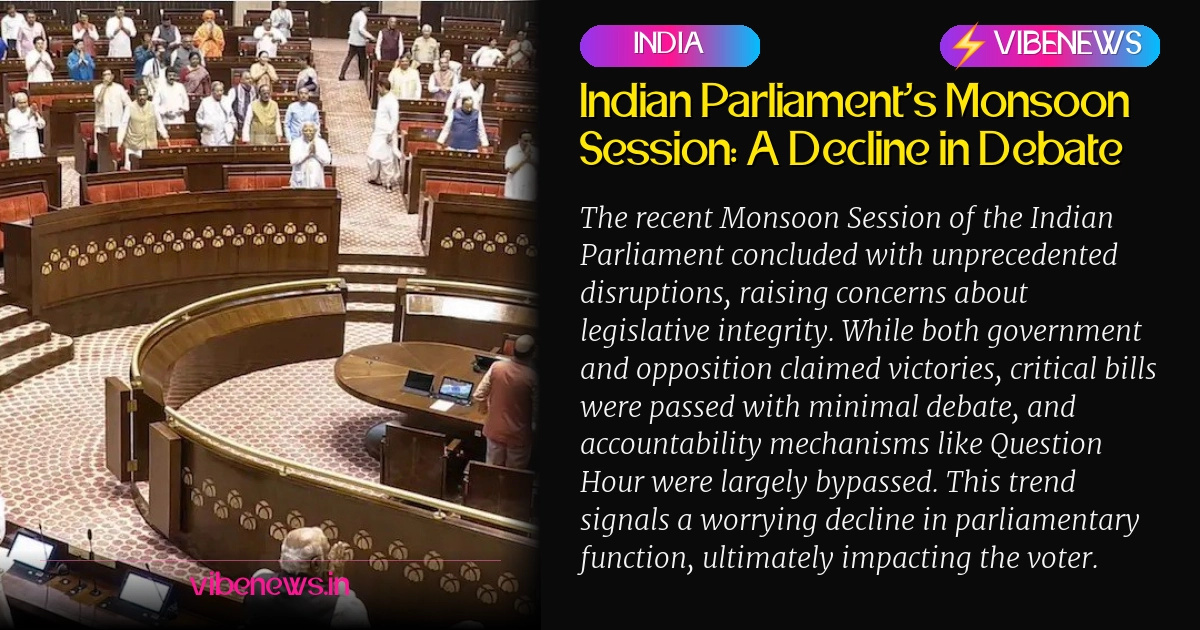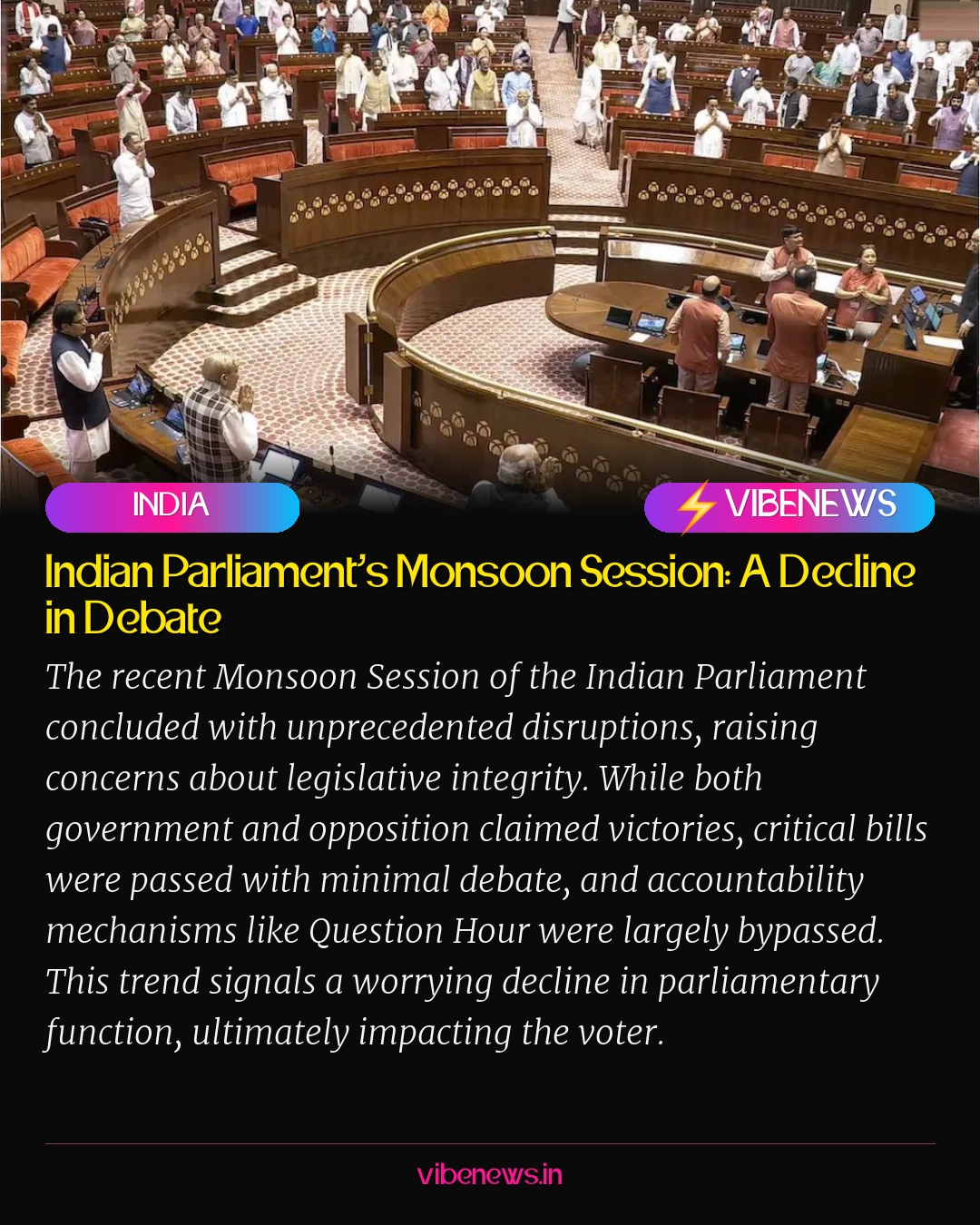
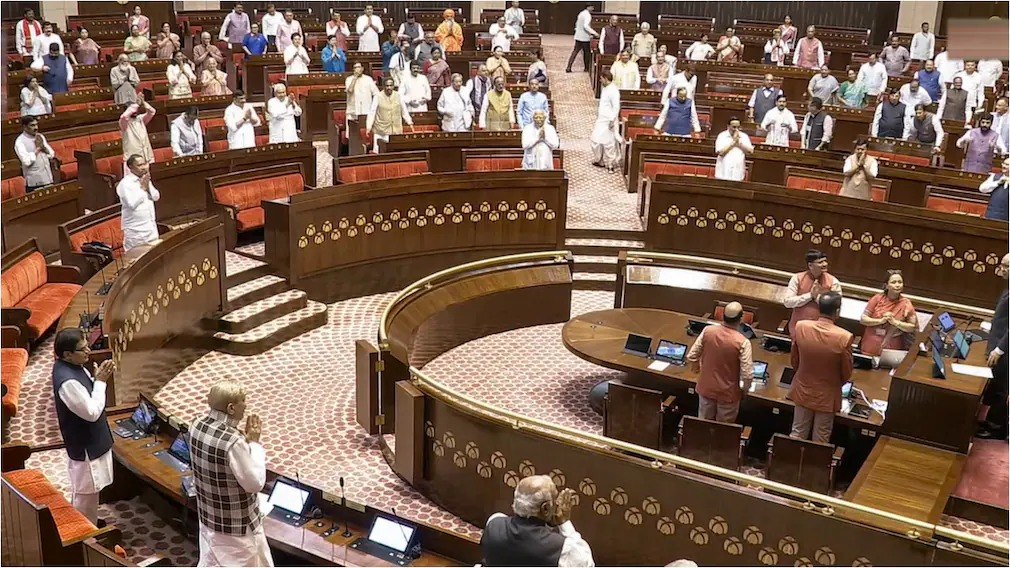
The Indian Parliament’s Monsoon Session recently concluded, marked by a disturbing rhythm of disruption and political posturing. What was envisioned by the Constitution’s framers as a forum for focused debate on public welfare and carefully considered legislation has increasingly transformed into a stage for political performance. The session ended abruptly, seven hours ahead of schedule, with the Lok Sabha Speaker adjourning proceedings sine die amidst a crescendo of opposition protests.
From the transparent-vinyl-walled ‘media hut’ offering a ringside view, observers noted a significant degeneration in parliamentary conduct. For the 19th sitting, MPs emerged from the Makar Dwar like gladiators, each side claiming victory in a session where substantive work was largely overshadowed by spectacle. This dynamic, reminiscent of Senator Gracchus’ cynical view of Roman politics, suggests that the beating heart of India’s democracy is shifting from the deliberative Senate to the performative Colosseum, with the voter emerging as the sole loser.
The Monsoon Session’s Disrupted Rhythm
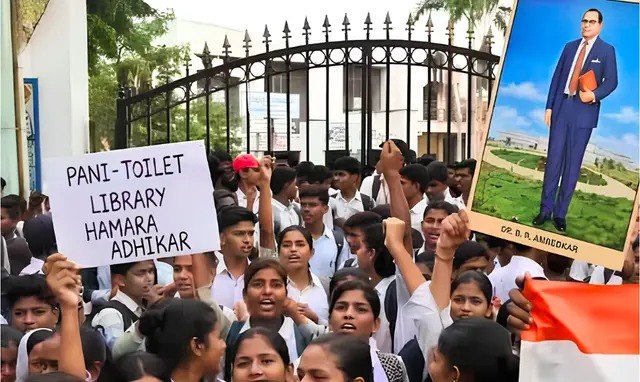
The session’s narrative was largely shaped by the opposition’s strategic maneuvers. Initially, the ‘Cockroach Janata Party’ (CJP), a satirical platform, managed to force the resignation of a minister, Dharmendra Pradhan, a feat the mainstream opposition had struggled with for years. The Congress, initially hesitant, later found its stride with Rahul Gandhi leading a renewed charge. His focus shifted to the crackdown on protesters and Union Home Minister Amit Shah’s perceived silence, aiming to build a ‘missing’ narrative and challenge Shah’s formidable political aura.
The remnants of the INDIA bloc, despite internal exits, rallied around this manufactured deadlock. Their objective was to corner Amit Shah, often dubbed ‘Chanakya’ for his strategic prowess. By the session’s end, Congress leaders proudly claimed that Rahul Gandhi had made Shah ‘squirm,’ viewing this as a significant political trophy. This perception of victory, however, was rooted in political optics rather than legislative achievement.
Legislative Efficiency Amidst Chaos
Despite the pervasive disruptions, the government managed to push through a significant number of bills. While high-profile legislations like the FCRA or Delimitation Bills did not see the light of day, approximately 20 other bills were passed. This outcome muddies the traditional victor-loser lines, as the government, though not exuding a ‘winner’s swagger,’ secured its legislative agenda.
The government strategically passed bills targeting key demographics, such as the Public Examinations (Prevention of Unfair Means) Amendment Bill, 2026, which aimed to address Gen Z’s anger over paper leaks. This bill saw a relatively extensive debate of 11 hours in the Lok Sabha and 7 hours and 14 minutes in the Rajya Sabha, likely due to public scrutiny. Other significant bills, including the one renaming Kerala as ‘Keralam’ and The Prevention of Insults to National Honour (Amendment) Bill, also sailed through. Notably, The Supreme Court (Number of Judges) Amendment Act, 2026, increasing the sanctioned strength of judges, was passed in a mere four minutes in the Lok Sabha and 21 minutes in the Rajya Sabha.
This trend of rapid bill passage was not an isolated incident. Several other crucial legislations, such as the Micro, Small, and Medium Enterprises Development (Amendment) Bill, 2026, and the Taxation and Other Laws (Amendment) Bill, 2026, were passed in as little as three minutes in the Lok Sabha. The Bankers’ Books Evidence Bill, 2026, and The Tribunals Reforms Bill, 2026, also saw similarly swift approvals, highlighting a concerning lack of thorough deliberation.
Erosion of Accountability and Debate
The true casualty of this session was the parliamentary process itself. Parliament, designed for debate, dialogue, and holding the government accountable, saw its core functions severely undermined. Data from the session tracker paints a distressing picture: Lok Sabha productivity stood at a mere 15%, and Rajya Sabha at 33%. This meant that approximately 20 bills were passed in the Lok Sabha in just about 17 hours of work, averaging 51 minutes per bill. Some days saw seven bills passed in a mere 36 minutes, averaging one bill every five minutes.
Even more concerning was the near-total loss of the Question Hour, often referred to as the ‘people’s hour.’ This crucial mechanism allows MPs to raise citizen concerns and question the government. In the Lok Sabha, only two questions were asked in 12 minutes across the entire session. The Rajya Sabha fared slightly better with 16 questions asked over 2.3 hours. Historically, the Question Hour has been instrumental in exposing scandals, such as the Mundhra scandal in 1957, unravelled by Feroze Gandhi. Its loss represents a significant blow to governmental accountability.
Editorial Context
The recent Monsoon Session underscores a worrying long-term trend in Indian parliamentary democracy. The shift from a deliberative body to a performative arena, where political parties prioritize spectacle and perceived ‘wins’ over substantive legislative work, has profound implications. While the government can claim legislative success by passing bills, and the opposition can claim political victories through disruption, the ultimate loser is the democratic process itself and, by extension, the Indian voter.
The decline in parliamentary sitting days, from an average of 135 days during the first Lok Sabha to a mere 55-68 days in recent terms, coupled with the rapid passage of bills without adequate debate, indicates a systemic weakening of legislative scrutiny. Laws, intended for the national good, risk becoming mere representations of the majority’s will rather than products of comprehensive deliberation. This erosion of accountability, particularly through the loss of the Question Hour, deprives citizens of their right to question and hold their government responsible. Voters must recognize that an underperforming Parliament is not just an inconvenience but a fundamental threat to the health and legitimacy of India’s democratic institutions, fostering a dangerous environment where political parties tacitly conspire to undermine the very foundation of governance.
TL;DR
- The Indian Parliament’s Monsoon Session concluded prematurely due to widespread disruptions.
- Both the government and opposition claimed political victories, despite minimal legislative debate.
- Over 20 bills were passed, some in as little as 3-5 minutes, indicating a lack of thorough scrutiny.
- Parliamentary productivity was severely low, with Lok Sabha at 15% and Rajya Sabha at 33%.
- The crucial Question Hour, a key accountability mechanism, was almost entirely lost during the session.
- The ultimate losers are the voters and the integrity of India’s democratic legislative process.