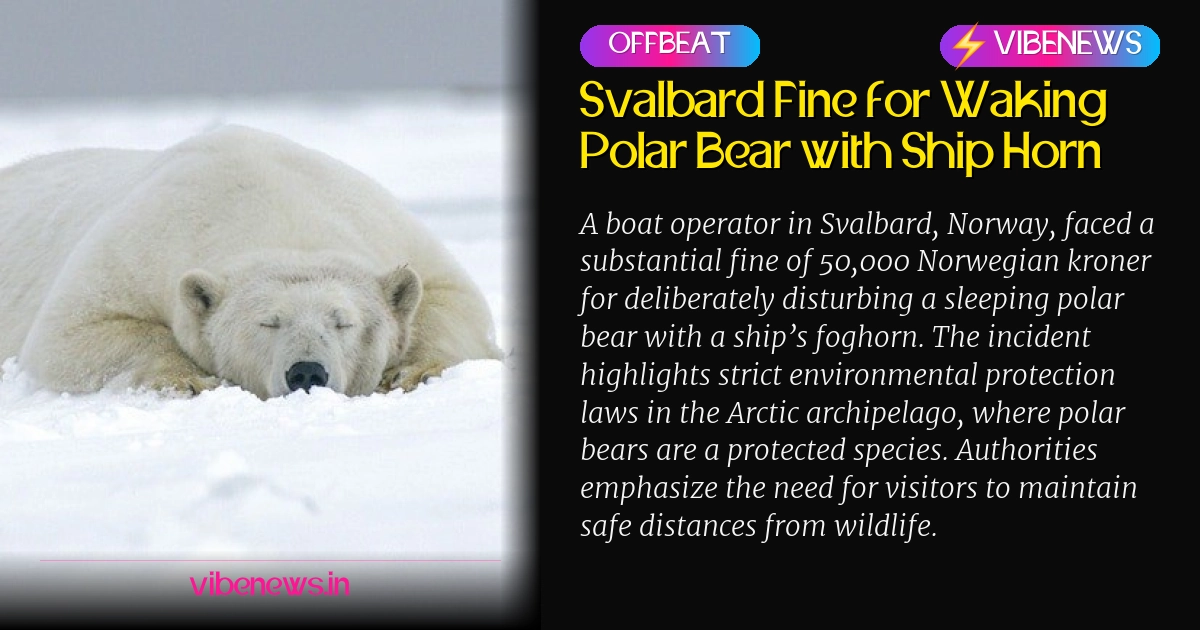
A boat operator navigating the pristine, icy waters off Svalbard, a remote Norwegian archipelago, has been handed a substantial fine of 50,000 Norwegian kroner, equivalent to approximately Rs 4.5 to Rs 5 lakh. The penalty was imposed after the individual deliberately used a vessel’s foghorn to rouse a sleeping polar bear, an act deemed a serious violation of the region’s stringent environmental protection laws.
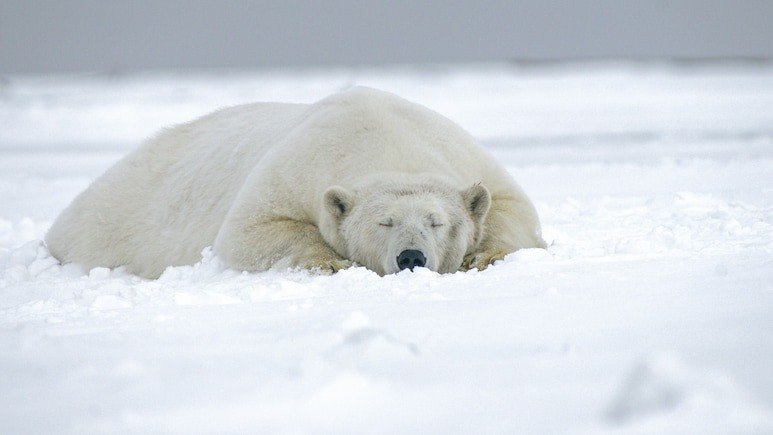
The incident unfolded earlier this month as the ship sailed through a local fjord. Passengers and crew spotted a polar bear resting peacefully on the shore. Instead of observing the animal from a respectful distance, a person aboard the vessel chose to sound the loud foghorn, startling the bear and causing it to abruptly flee its resting spot.
Upholding Arctic Wildlife Protections
Following the disturbance, local authorities were promptly notified, leading to swift legal action by Lars Fause, the Governor of Svalbard. In an official statement, Fause confirmed the details, reiterating that the deliberate act of waking the animal constituted a clear breach of regulations designed to safeguard the region’s unique fauna.
The legal basis for the fine stems directly from the Svalbard Environmental Protection Act. This comprehensive legislation strictly prohibits any needless disturbance, pursuit, or attraction of polar bears and other wildlife. Regulations mandate that all visitors maintain a safe and respectful distance from animals to prevent causing stress or altering their natural behaviour within their harsh habitat.
Svalbard’s Fragile Ecosystem and Its Guardians
Svalbard, situated roughly 620 miles from the North Pole, is a critical sanctuary for Arctic wildlife, particularly polar bears. This archipelago hosts one of the world’s most significant populations of these apex predators, making its conservation efforts globally important. The stark, beautiful landscape, characterized by glaciers, fjords, and vast expanses of ice, provides essential hunting grounds and denning areas for the bears.
Polar bears have been a legally protected species in Svalbard since 1972. This historical measure was enacted in response to concerns over declining populations due to unregulated hunting. Over the decades, Svalbard has evolved into a model for Arctic conservation, balancing scientific research, limited resource extraction, and a growing tourism industry with the paramount need to preserve its natural heritage.
The increasing popularity of Arctic tourism brings both economic benefits and significant challenges. While visitors are drawn by the allure of pristine wilderness and unique wildlife encounters, the potential for human-wildlife conflict rises. Authorities in Svalbard continuously work to educate and enforce strict guidelines, ensuring human presence does not negatively impact the delicate ecological balance.
A Clear Message to Visitors
While the identity and nationality of the offender were not disclosed, the Governor’s office used the incident to issue a stark reminder to all individuals visiting the region. The message was unequivocal: disturbing polar bears carries severe financial consequences and reflects a disregard for the protected status of these magnificent creatures.
This incident is not isolated, underscoring the ongoing need for vigilance and adherence to environmental protocols. Earlier in 2024, another tourist faced an 11,500 kroner fine for approaching a walrus too closely, demonstrating the consistent application of these protective laws across various species. Such penalties serve as powerful deterrents, reinforcing that wildlife welfare takes precedence over human curiosity.
Editorial Context: Long-Term Stewardship in the Arctic
This incident in Svalbard, while seemingly minor, carries significant weight for human interaction with vulnerable ecosystems. The robust enforcement of the Svalbard Environmental Protection Act underscores Norway’s unwavering commitment to environmental stewardship in the rapidly changing Arctic. Such decisive actions are crucial for maintaining the integrity of Svalbard’s unique biodiversity over the long term.
These penalties send a clear message to the global tourism industry and individual travelers: responsible conduct is not merely encouraged but legally mandated and rigorously enforced. This sets a vital precedent for other sensitive ecological zones worldwide, emphasizing that the privilege of experiencing pristine nature comes with a profound responsibility to protect it.
Furthermore, the incident highlights the ongoing educational imperative. As Arctic tourism grows, ensuring every visitor understands and respects wildlife protection rules becomes paramount. This fine contributes to a broader narrative of global conservation, reinforcing that even small acts of disturbance can have cumulative negative impacts on species already facing existential threats from habitat loss and a warming climate.
TL;DR
- A boat operator was fined 50,000 Norwegian kroner (approx. Rs 4.5-5 lakh) for disturbing a polar bear in Svalbard.
- The incident occurred off the coast of Svalbard, a remote Norwegian archipelago in the Arctic.
- The operator deliberately used a ship’s foghorn to wake a sleeping polar bear, causing it to flee.
- The Svalbard Environmental Protection Act strictly prohibits needlessly disturbing, pursuing, or attracting polar bears.
- Polar bears have been a legally protected species in Svalbard since 1972, emphasizing their vulnerable status.
- Authorities stress the importance of maintaining safe distances from wildlife to prevent stress and behavioral changes.