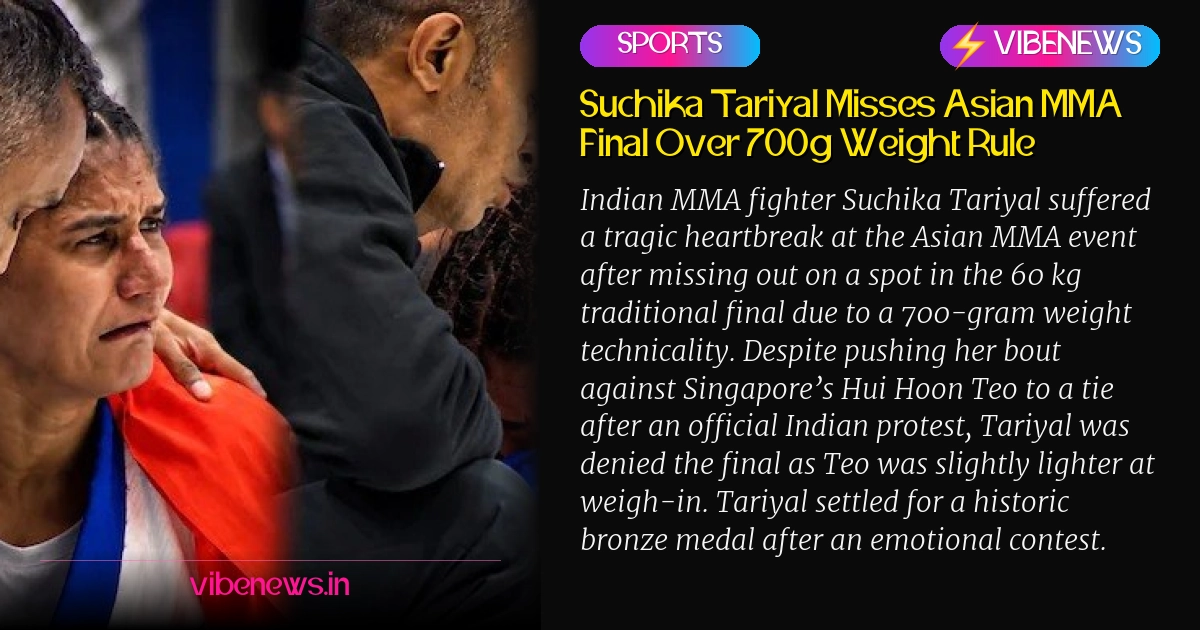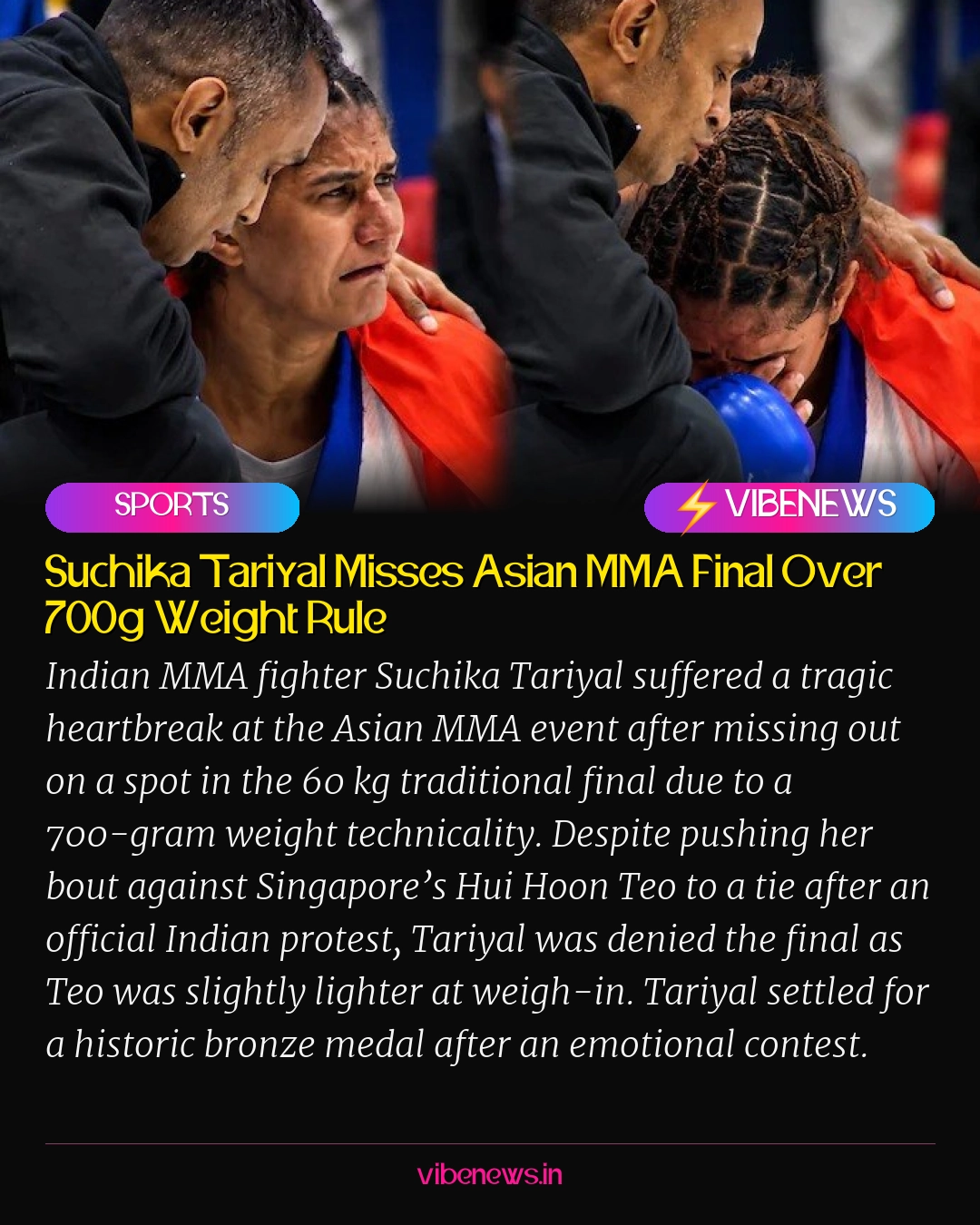
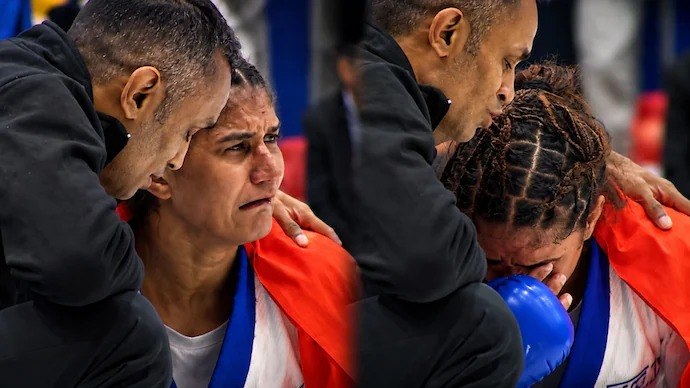
Indian fighter Suchika Tariyal was forced to settle for a historic bronze medal in the women’s traditional 60 kg category at the Asian MMA competition after losing a heartbreaking tie-breaker to Singapore’s Hui Hoon Teo on a subtle 700-gram weight technicality.
The sorrowful conclusion to Tariyal’s campaign left the 36-year-old athlete visibly devastated inside the arena. Having poured years of discipline, grit, and sacrifice into her craft, the agonizing turn of events proved that the fine margins of combat sports can be utterly crushing. What should have been a triumphant passage into the championship bout turned into a solemn ordeal, as an obscure rulebook clause extinguished her dreams of competing for Asian gold.
The clash between Tariyal and Teo was a grueling test of contrasting martial arts disciplines. In the opening round, the Singaporean fighter capitalized on her precise boxing combinations, effectively keeping Tariyal at bay and securing the judges’ favor. Refusing to yield, the veteran Indian martial artist adjusted her tactic in the second round. Drawing heavily from her technical judo expertise, Tariyal successfully dragged Teo to the canvas, delivering forceful strikes from top control and dominating the round to pull back into contention. With the regular contest deadlocked, the bout was pushed into a tense one-minute extra round, where both combatants traded strikes in a desperate bid to convince the officials.
When the initial ring result went against Tariyal, the crushing weight of disappointment overwhelmed her. In a moment of deep anguish and frustration, she refused to join the referee and Teo in the center of the ring, protesting what felt like an unjust outcome. Recognizing the injustice, the Indian MMA Sports Federation immediately intervened, lodging a formal protest and submitting the required USD 1,000 challenge fee to mandate an official review of the fight footage.
A comprehensive review panel comprising 10 judges meticulously evaluated the contest imagery and unanimously agreed that the bout was indeed an absolute draw. However, the momentary ray of hope for the Indian camp was quickly shattered by the sport’s rigorous regulation framework. Under Asian MMA guidelines, tied overtime outcomes are resolved through a strict hierarchical sequence: first checking for formal fighter warnings, followed by official advice given during the match. When those factors remain perfectly equal, the rulebook dictates that the athlete’s pre-competition weight determines the victor.
Because Teo registered slightly lighter during the morning weigh-ins before the event began, the victory was awarded to the Singaporean combatant by the slimmest of margins.
"After the Indian challenge, the result of the bout was declared drawn. The winner was then decided on the basis of the weights of competing athletes according to morning weigh-in," MMA Sports Federation president Nikhil Kunde told PTI. "Since, the Singaporean was lighter than Suchika by around 700 grams, she moved to the final. Suchika settled for bronze."
The tragic narrowness of the loss means that a mere 700 grams stood between Tariyal and an opportunity to fight for the ultimate prize. While her journey remains an immense source of inspiration for aspiring mixed martial artists across India, the agonizing nature of her elimination leaves a lingering sense of sorrow over what could have been a glorious gold medal finish.
TL;DR
- Suchika Tariyal secured a bronze medal in the women’s traditional 60 kg category after a heartbreaking tie-breaker loss.
- Opponent Hui Hoon Teo advanced to the final because she weighed 700 grams lighter during morning weigh-ins.
- The Indian MMA Federation paid a 1000 USD protest fee, successfully getting 10 judges to overturn the initial loss to a tie.
- Asian MMA rules stipulate that tied bouts with equal warnings and advice are decided by athlete weight differences.
- A visibly distraught Tariyal protested the initial decision and declined to stand alongside Teo and the referee.