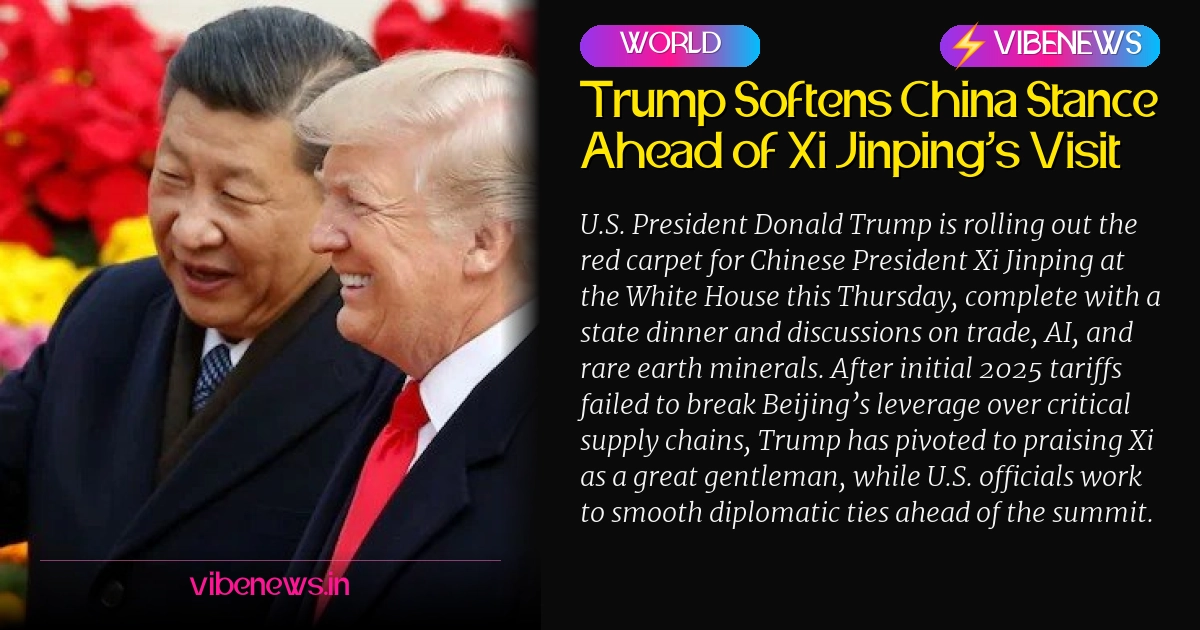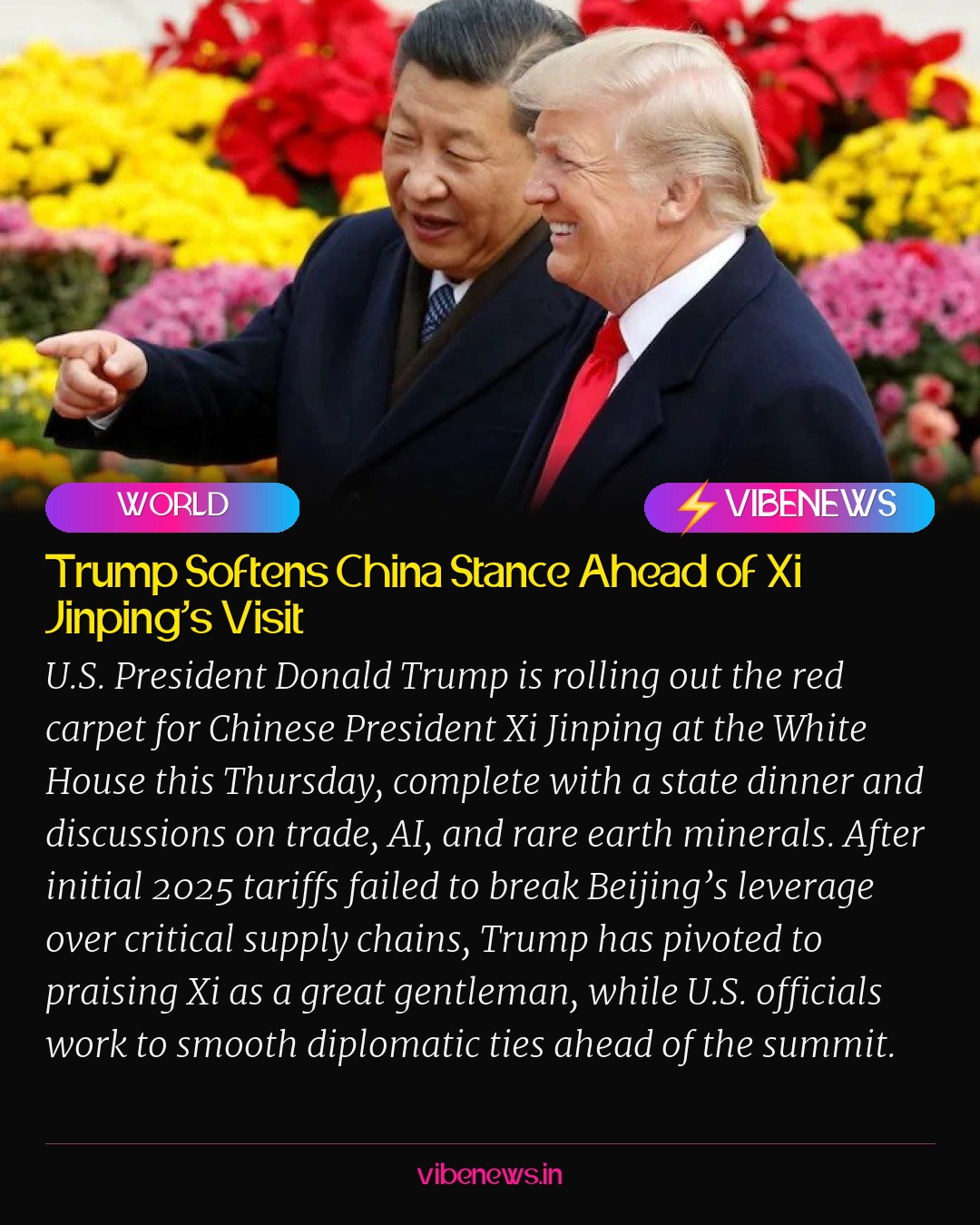
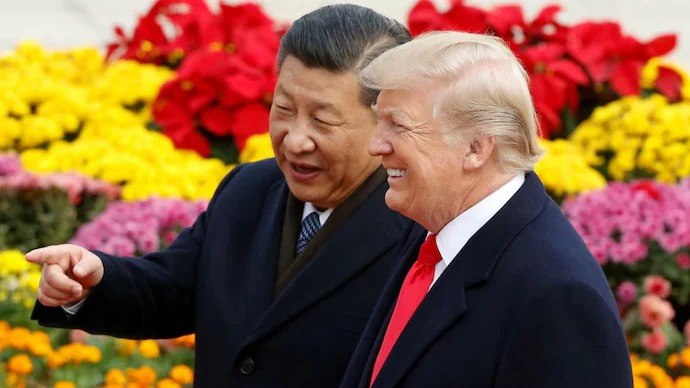
U.S. President Donald Trump will host Chinese President Xi Jinping for a high-profile White House state visit on Thursday to discuss trade, artificial intelligence, and critical rare earth minerals.
The grand red-carpet spectacle, complete with a lavish state dinner usually reserved for America’s closest historic allies, marks a dramatic pivot for a president who once built his political identity on blistering economic attacks against Beijing. After returning to office in 2025 with immediate tariffs and technology restrictions aimed at punishing China for weakening the U.S. middle class, the administration quickly discovered that Beijing held a few strategic cards of its own. China promptly leveraged its dominance over rare earth minerals and critical material processing—essential components for everything from military defense systems to electric vehicles—to force Washington back to the negotiating table.
From Tariff Crusader to Ballroom Logistics Coordinator
Having realized that economic warfare against a global manufacturing powerhouse is slightly more complex than a campaign rally slogan, the American chief executive has traded his confrontational bluster for charming hospitality. Trump has even publicly fretted over the physical capacity of the White House ballroom as he scrambles to prepare an extravagant reception for his guest. Where there were once promises to crush Beijing’s economic dominance, there is now an eager host wringing his hands over whether the dining arrangements are sufficiently grand for the visiting delegation.
The shift in tone has been remarkably swift. After Beijing retaliated against American tariffs by choking access to critical minerals, Washington found itself locked in a test of strength that did not end in an easy American victory. "Xi and Trump got into a contest of leverage, and Xi came out on top," noted Michael Kovrig, a senior adviser at the International Crisis Group. The resulting reality check has left Washington attempting to build alternative rare earth supply chains while simultaneously buttering up the very leader it failed to squeeze.
"He’s a great gentleman; we get along great," Trump said this month.
The Art of the Flattery Deal
To ensure the diplomatic atmosphere remains thoroughly pleasant before Thursday’s summit, the administration’s charm offensive has expanded well beyond the Oval Office. U.S. Attorney General Todd Blanche recently stepped up to smooth over delicate disputes regarding artificial intelligence, arguing that it was "unfair to just label China as a country" as a "bad actor" in the AI sector. Blanche reassured observers by emphasizing that the two presidents maintain a strong relationship and simply "make deals together," demonstrating a strikingly soft touch for an administration that once framed Beijing as America’s economic arch-villain.
Meanwhile, as U.S. Census Bureau data shows a decline in direct goods trade between the two nations, Chinese manufacturers have cleverly adapted. By rerouting exports through third-party countries such as Vietnam, Chinese companies continue to reach global buyers while maintaining their dominance in advanced batteries, electric vehicles, and strategic industries.
Diplomatic Wedges and Red Carpets
Adding a layer of comedic irony to the geopolitical stage, Trump’s habit of picking trade fights with traditional partners like Canada, questioning NATO obligations, and squabbling with European leaders has done wonders for Beijing’s public relations. According to Kovrig, Trump has effectively executed Xi’s wedge tactics for him, enabling the Chinese leader to portray Beijing as the stable, responsible power while Western allies scramble to China to stabilize their own relations.
As the two leaders prepare to discuss semiconductor chips, military technology, and global trade truces, Washington appears content to swap harsh rhetoric for photo opportunities. Whether this lavish White House welcome yields structural economic changes remains doubtful, but for now, the path to American leverage seems to run through a thoroughly pampered Chinese presidency.
TL;DR
- Donald Trump will host Xi Jinping for a White House state dinner on Thursday to discuss trade and AI.
- Trump praised Xi as a "great gentleman," marking a dramatic softening from his previous tariff-heavy economic rhetoric.
- China responded to 2025 US tariffs by leveraging its dominance over critical rare earth supply chains.
- Crisis Group adviser Michael Kovrig stated that Xi emerged victorious in a leverage contest against Trump.
- U.S. Attorney General Todd Blanche defended China, calling it unfair to label the country an AI bad actor.