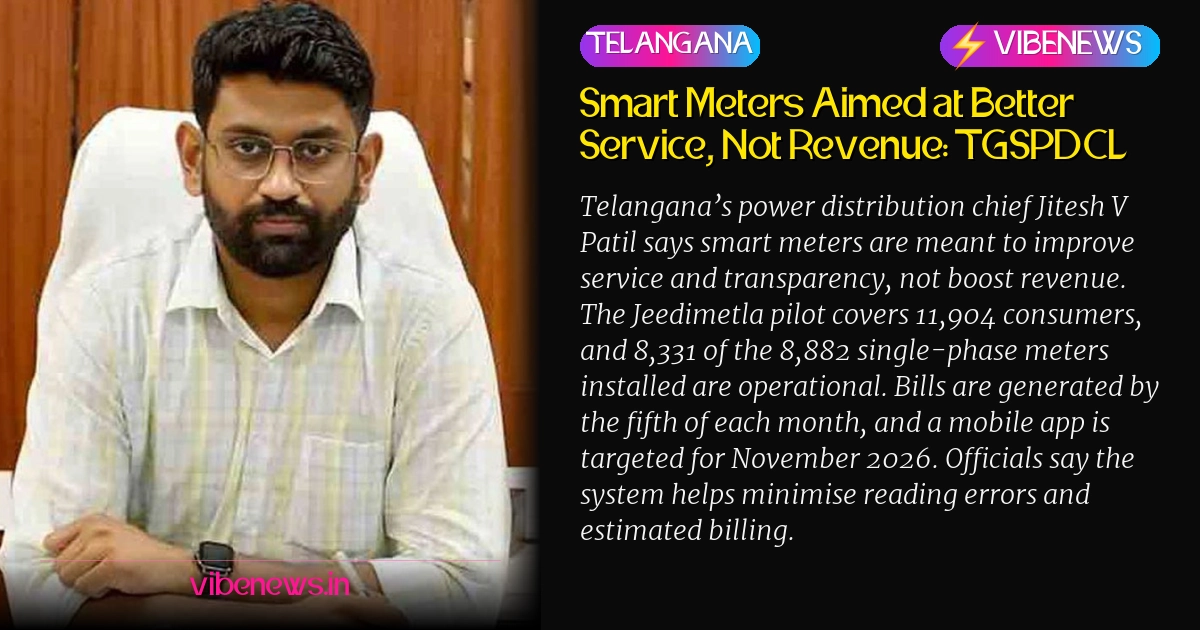
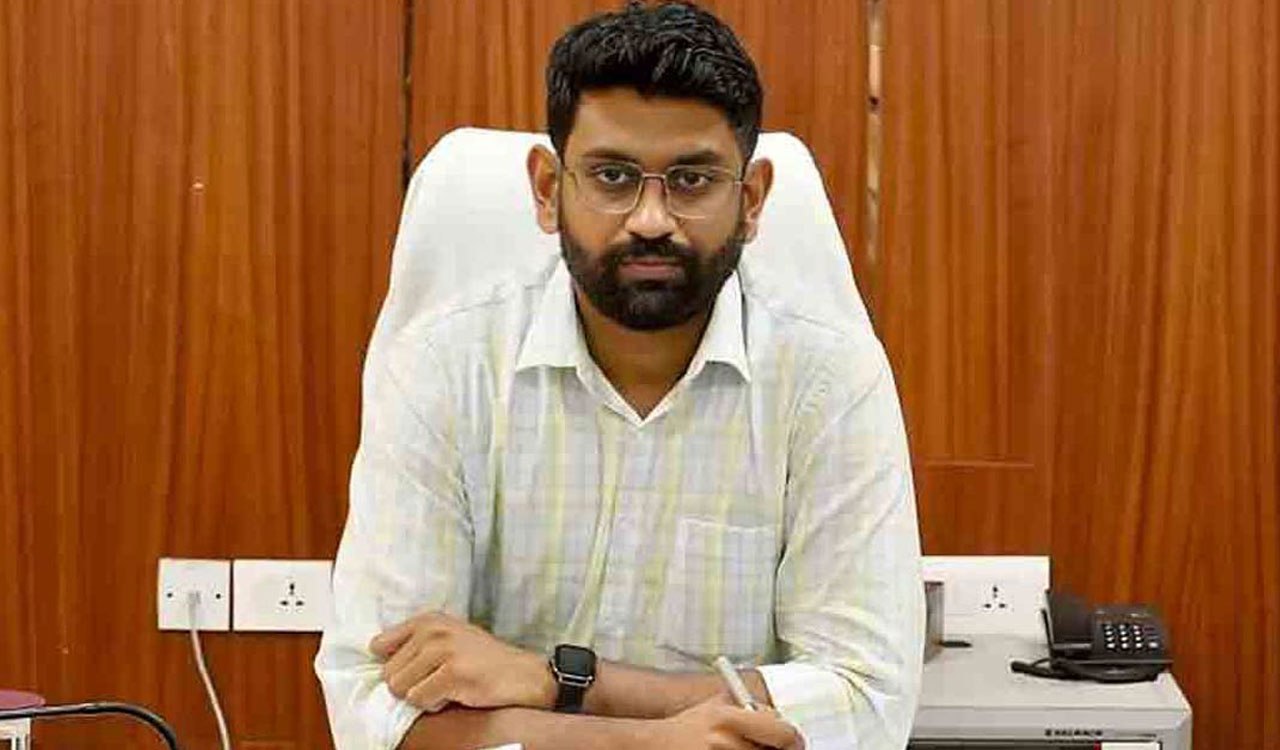
TGSPDCL chief Jitesh V Patil said on Monday that smart meters and the smart grid system are meant to deliver transparent, reliable and quality electricity services, not to increase the power utility’s revenue. The clarification comes amid concerns among consumers about the new meters, and Patil made the point during a field visit to Apurupa Colony in Shapurnagar.
Patil went to inspect the functioning of smart meters and the smart grid automation system as part of the Jeedimetla Smart Grid Pilot Project. He said the technology would improve consumer services and make the power distribution system more efficient. The most direct line from his remarks was this:
Smart meters and the smart grid system were intended to provide transparent, reliable and quality electricity services rather than increase the organisation’s revenue.
What the meters let consumers see
Patil explained that smart meters allow consumers to monitor their daily electricity consumption. People can check how much power they use, when consumption rises, and which periods account for higher usage. For households already anxious about what appears on their bills, that visibility is the core pitch.
A pilot with a sanctioned budget and a revised cost
The Jeedimetla project is one of the Smart Grid Pilot Projects sanctioned by the Union Ministry of Power across the country. It was designed to cover 11,904 consumers across all categories in the Jeedimetla and Shapurnagar sections. Its key components include Advanced Metering Infrastructure for residential and industrial consumers, peak-load management, an Outage Management System and power-quality monitoring.
The Union Ministry of Power first sanctioned the project at an estimated cost of Rs 41.82 crore. It went live on March 30, 2019, and services were made available to consumers. The National Smart Grid Mission and the Union Ministry of Power later approved a final project cost of Rs 29.86 crore, limiting the scope to single-phase smart meters and Distribution Management System equipment.
How many meters are running
A total of 8,882 single-phase smart meters have been installed under the project. Of these, 8,331 are currently operational, including 5,412 in the Jeedimetla section and 2,919 in the Shapurnagar section.
When a fault hits the feeder
Officials described how the network responds when a fault occurs on an 11 kV feeder. Fault Passage Indicators, auto reclosers and sectionalizers help identify and isolate the affected section. Power can then be restored to the unaffected sections through an alternative route using Ring Main Units, wherever technically feasible. The system is meant to cut both the number of consumers hit by an interruption and how long the outage lasts.
Bills, readings and fewer estimates
Smart meters in the TGSPDCL Jeedimetla Division automatically record electricity consumption data. Officials said the system generates bills by the fifth of every month and sends them to consumers through SMS and email. Because the process depends less on manual meter reading, officials say it helps minimise reading errors and problems arising from estimated billing.
Readings can also be collected when consumers are away from home, provided the communication system is functioning properly. That condition matters. The benefit depends on the network working as intended.
The app that is still in testing
The TGSPDCL SCADA and IT departments have jointly developed a dedicated mobile application for smart meter users. It is currently undergoing testing and is targeted for launch in November 2026. The proposed features include daily electricity consumption details, consumption records for the previous three months, estimated bills, monitoring of changes in electricity use and notifications about power supply interruptions.
Those features address the transparency problem consumers have been raising. A daily usage view and a three-month history give a household something concrete to check against its bill. Whether the app arrives on schedule remains to be seen, since it is still in testing.
Why Telangana households should watch this pilot
The pilot is not a distant policy experiment. Jeedimetla and Shapurnagar are the areas where the meters are already installed and operating, and the billing and outage systems described here are the ones running in those sections. For anyone living there, the questions are practical: what the meter shows, when the bill arrives, and what happens during an outage.
What comes next
Patil’s visit was aimed at showing the meters working on the ground. The stated goal of the project is better service and clearer electricity records rather than higher revenue. Whether that holds will show up in the bills residents receive and in the mobile app the department has promised for November 2026.
TL;DR
- TGSPDCL CMD Jitesh V Patil says smart meters aim to improve electricity services, transparency and reliability, not raise revenue.
- The Jeedimetla Smart Grid Pilot Project covers 11,904 consumers across the Jeedimetla and Shapurnagar sections.
- 8,331 of 8,882 installed single-phase smart meters are operational, including 5,412 in Jeedimetla.
- Bills are generated by the fifth of every month and sent to consumers via SMS and email.
- A dedicated mobile app is targeted for launch in November 2026, currently undergoing testing.
- The planned app will show daily usage, three months of records, estimated bills and outage notifications.