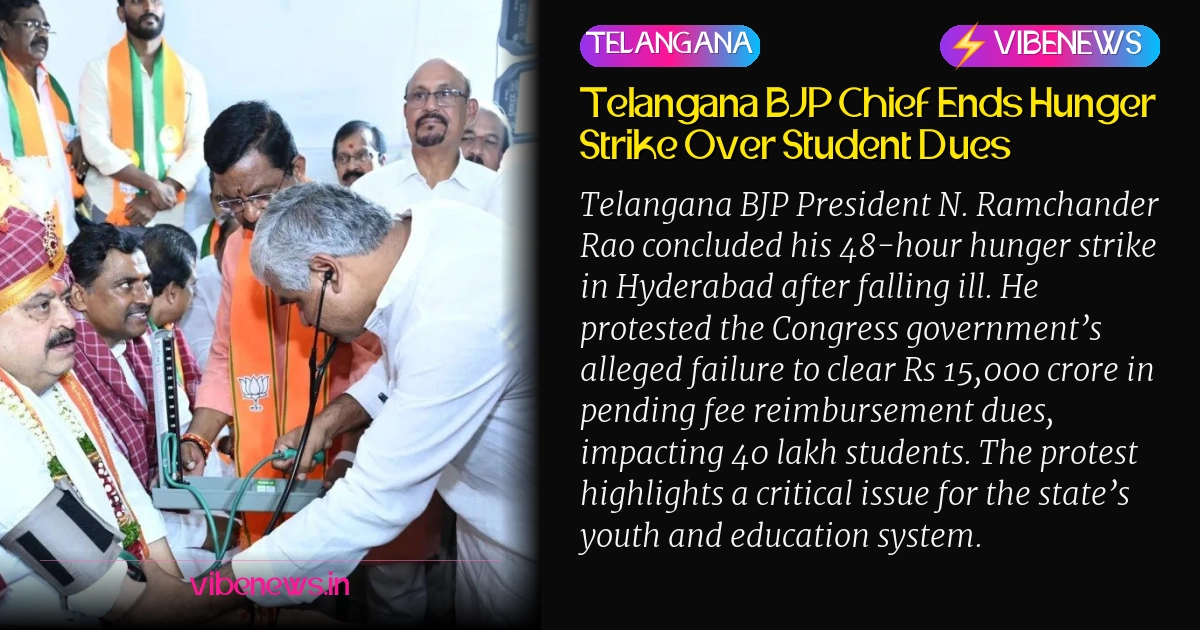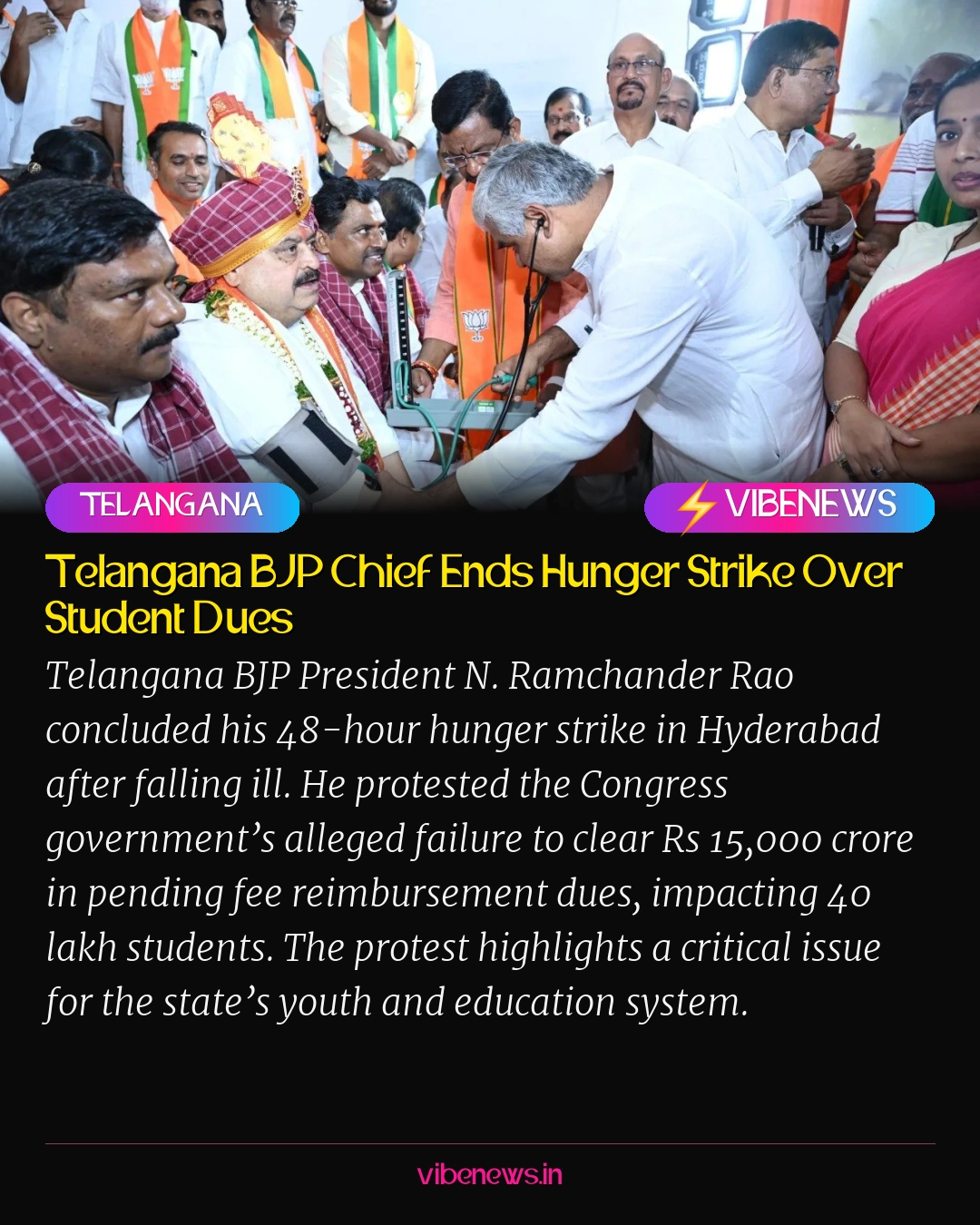
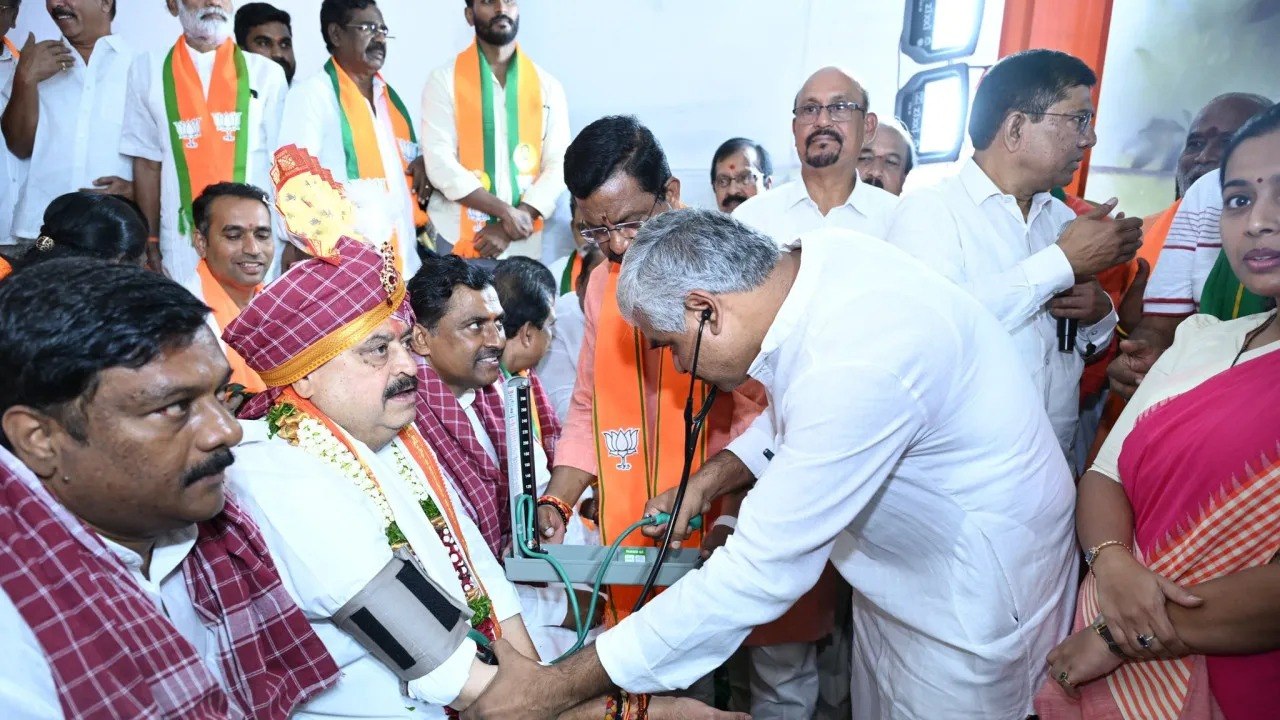
Telangana BJP President N. Ramchander Rao concluded his 48-hour hunger strike in Hyderabad on Tuesday after his health deteriorated. The protest was initiated to press the state government to release pending fee reimbursement dues, a critical financial lifeline for millions of students across Telangana.
Rao’s blood pressure dropped significantly during the strike, prompting concern among party cadres and senior leaders. Following medical advice and urging from colleagues, including MP K. Laxman, he ended his fast by accepting lemon juice.
The Genesis of the Protest
The hunger strike, which began on Monday, aimed to draw attention to the alleged failure of the Congress government to clear substantial fee reimbursement dues. Ramchander Rao claimed that nearly Rs 15,000 crore is owed, directly impacting the future of approximately 40 lakh students in the state.
Before his health declined, Rao had actively used social media to amplify his message. On ‘X’, he posted about commencing the second day of his strike, asserting that neither the Chief Minister nor his administration seemed to heed the plight of Telangana’s students.
He accused the Congress government of "utter indifference" towards the youth, labeling their recent attempts to project themselves as custodians of India’s youth as a "sham." Rao warned that the youth of Telangana were "awakened" and ready to hold the government accountable for its perceived failures.
Political Solidarity and Sharp Criticism
Throughout the protest, Ramchander Rao received strong backing from prominent BJP figures. Former Governor Bandaru Dattatreya, MP Eatala Rajender, BJP floor leader in Telangana Assembly Maheshwar Reddy, and other party MLAs visited the protest site to express their solidarity.
Eatala Rajender, a vocal critic of the current administration, specifically slammed Chief Minister A. Revanth Reddy over the unresolved fee reimbursement issue. Rajender urged the Chief Minister to prioritize the future of the state’s students, emphasizing the long-term consequences of these financial delays.
The BJP leaders collectively alleged that the government’s negligence had plunged Telangana’s education system into a severe crisis. They argued that the education, job prospects, and overall future of lakhs of students had become uncertain due to the administration’s irresponsibility.
The Fee Reimbursement Scheme: A Crucial Lifeline
The fee reimbursement scheme has been a cornerstone of educational policy in Telangana, and previously in undivided Andhra Pradesh, for decades. Designed to ensure that economically disadvantaged students can pursue higher education, particularly in professional courses like engineering, medicine, and management, the scheme covers tuition fees, making education accessible to a broader demographic.
Historically, timely disbursement of these funds has been crucial for both students and educational institutions. Delays often lead to significant financial strain on families, forcing some students to drop out, and creating operational challenges for colleges that rely on these reimbursements for their revenue.
The scheme’s implementation has often been fraught with administrative complexities and financial pressures on successive state governments. While intended to promote social equity and educational advancement, its effectiveness hinges entirely on consistent and prompt funding, which has frequently become a point of contention between political parties and student bodies.
Broader Implications for Telangana’s Future
The current impasse over fee reimbursement extends beyond mere financial transactions; it touches upon the very fabric of social mobility and human capital development in Telangana. For many families, higher education is seen as the primary pathway out of poverty, and the state’s commitment to supporting this aspiration is vital.
The BJP’s protest, therefore, taps into a deep-seated concern among a significant portion of the electorate. By framing the issue as a betrayal of the youth, the opposition aims to galvanize student support and highlight what they perceive as a fundamental governance failure by the Congress government.
The allegations of a Rs 15,000 crore backlog, if accurate, represent a substantial financial burden and a significant policy challenge. Addressing this requires not only immediate disbursement but also a robust, transparent mechanism to prevent future accumulation of dues, ensuring the scheme remains sustainable and effective.
Editorial Context
The ongoing dispute over student fee reimbursements in Telangana is more than a localized political skirmish; it underscores a persistent challenge faced by many Indian states: balancing ambitious social welfare programs with fiscal realities. Over the long term, the consistent failure to disburse these funds can have profound societal consequences, eroding trust in government institutions and exacerbating educational inequalities.
This issue highlights the critical importance of state investment in human capital. When students from economically weaker sections are denied access to higher education due to administrative delays or financial shortfalls, it not only impacts individual futures but also hinders the state’s overall development trajectory. Such protests serve as a crucial barometer of public sentiment regarding governance and accountability, particularly concerning promises made to the youth.
The political weaponization of student welfare issues is a recurring theme in Indian politics. While it mobilizes support, it also places immense pressure on governments to deliver on commitments, often under tight budgetary constraints. The resolution of this particular crisis will be a key test for the Revanth Reddy administration, demonstrating its capacity to manage both financial challenges and the aspirations of its young populace, ultimately shaping the political narrative for years to come.
TL;DR
- Telangana BJP President N. Ramchander Rao ended his 48-hour hunger strike due to ill health.
- The strike protested the state government’s alleged failure to clear Rs 15,000 crore in pending fee reimbursement dues.
- Approximately 40 lakh students are reportedly affected by these delays, jeopardizing their higher education and job prospects.
- Senior BJP leaders, including MP K. Laxman and former Governor Bandaru Dattatreya, expressed solidarity with Rao.
- BJP leaders criticized Chief Minister A. Revanth Reddy and the Congress government for their "indifference" towards students.
- The protest underscores a significant political and social issue concerning youth welfare and educational funding in Telangana.