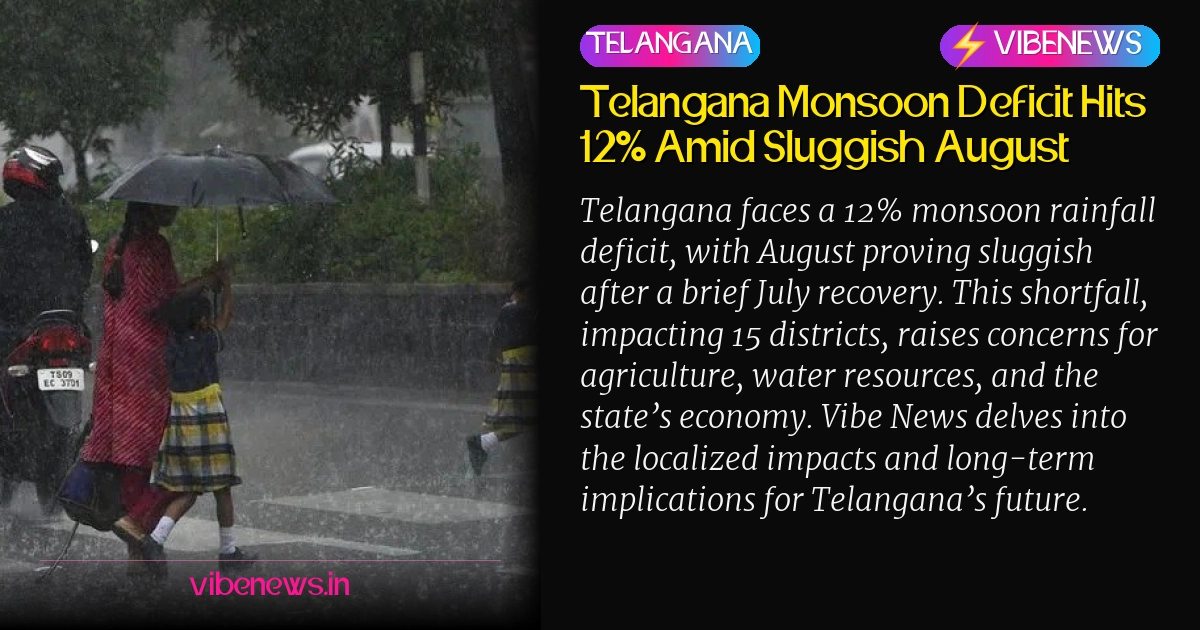
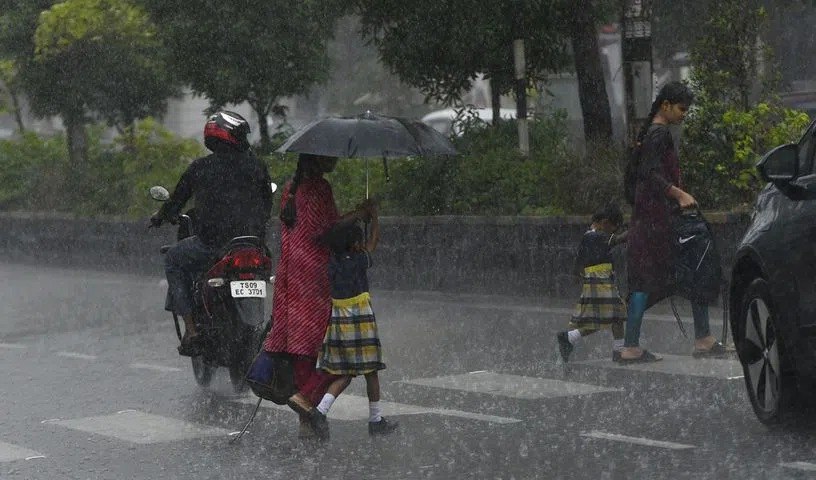
Telangana is grappling with a significant monsoon rainfall deficit, currently standing at 12% as the season progresses past its halfway mark. The cumulative rainfall recorded across the state is 430.1 mm against a normal of 488.8 mm, painting a concerning picture for the agricultural sector and water resources. This shortfall follows a sluggish August, which has seen a marked decline in precipitation after a brief recovery in July.
The monsoon season commenced with a subdued performance in June, registering 104.2 mm against a normal of 130.3 mm, indicating an initial deficit. July brought a temporary respite, with the state receiving 224 mm of rainfall, closely aligning with the normal 227.4 mm for the month. However, August has proven to be a critical period of concern, with only 90.8 mm recorded as of August 19, significantly below the normal monthly average of 215.8 mm, leading to a 31% deficit for the month.
District-Level Disparities
The impact of the erratic monsoon has not been uniform across Telangana’s 33 districts. While 17 districts currently maintain a normal rainfall status, a worrying 15 districts have slipped into the deficient category. Kamareddy stands as an outlier, being the sole district to report an excess rainfall of 23%. Major urban centers like Hyderabad and its adjacent districts, including Rangareddy and Sangareddy, are presently in the normal category. However, Medchal-Malkajgiri and Yadadri Bhongir districts are among those facing a deficit, highlighting localized vulnerabilities.
Agricultural Implications
The monsoon’s performance is intrinsically linked to Telangana’s agrarian economy, particularly the crucial Kharif cropping season. A sustained deficit poses a substantial threat to crops such as paddy, cotton, and maize, which are heavily reliant on timely and adequate rainfall. Farmers, who have already invested significant resources, face the prospect of reduced yields or even crop failure, potentially leading to economic distress in rural areas. The state’s irrigation systems, while robust in some regions, cannot entirely compensate for a widespread rainfall shortfall, making the coming weeks critical for agricultural recovery.
Water Security Concerns
Beyond agriculture, the deficit impacts urban and rural water security. Lower rainfall translates to reduced inflows into major reservoirs, which are vital for drinking water supply, industrial use, and power generation. Groundwater recharge, a critical component of the state’s water infrastructure, also suffers during periods of deficient monsoon. Cities like Hyderabad, despite currently being in the "normal" rainfall category, depend on these larger regional water sources, making the overall state deficit a concern for future water availability. The long-term implications for sustainable water management strategies are significant.
Historical Context and Climate Variability
Telangana’s monsoon patterns have historically shown variability, but recent trends suggest an increasing frequency of erratic rainfall events, characterized by prolonged dry spells interspersed with intense, short bursts of precipitation. For instance, last year, the state had received approximately 600 mm of rainfall by the same time, significantly higher than the current 430.1 mm. This year’s deficit underscores the growing challenges posed by climate change, which often manifests as unpredictable weather patterns, impacting seasonal cycles crucial for the region’s ecological and economic balance. Understanding these shifts is paramount for future planning.
Government Preparedness and Mitigation
State authorities typically monitor monsoon progress closely, activating contingency plans when deficits are observed. These plans often include advising farmers on drought-resistant crops, optimizing water release from reservoirs, and implementing water conservation measures. While the current deficit is not yet severe enough to trigger widespread drought declarations, the ongoing sluggishness in August necessitates proactive measures to mitigate potential impacts on livelihoods and ensure adequate water supply for the coming dry months. Public awareness campaigns on water conservation also become increasingly important.
Editorial Context
The ongoing monsoon deficit in Telangana is more than just a statistical anomaly; it represents a critical challenge to the state’s economic stability, food security, and environmental resilience. Over the long term, consistent rainfall shortfalls can exacerbate rural poverty, strain urban infrastructure, and accelerate groundwater depletion. This situation underscores the urgent need for comprehensive climate adaptation strategies, including diversified agricultural practices, enhanced water harvesting, and robust early warning systems. The state’s ability to navigate these climatic shifts will define its sustainable development trajectory for decades to come, making the current monsoon performance a bellwether for future policy directions and public welfare.
TL;DR
- Telangana recorded a 12% monsoon rainfall deficit, with 430.1 mm against a normal of 488.8 mm.
- August has been particularly sluggish, showing a 31% deficit for the month as of August 19.
- 15 out of 33 districts are currently in the deficient category, while 17 maintain normal status.
- Kamareddy is the only district with excess rainfall (23%).
- The deficit poses significant threats to the Kharif agricultural season and overall water security.
- This year’s rainfall is considerably lower than the 600 mm received by the same time last year.