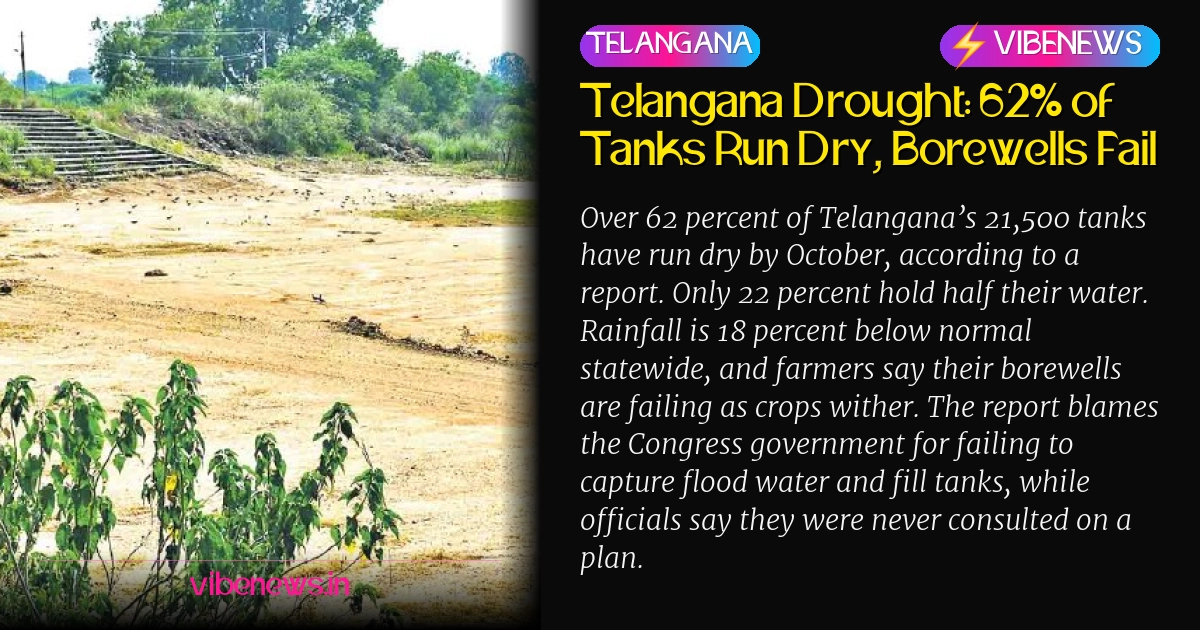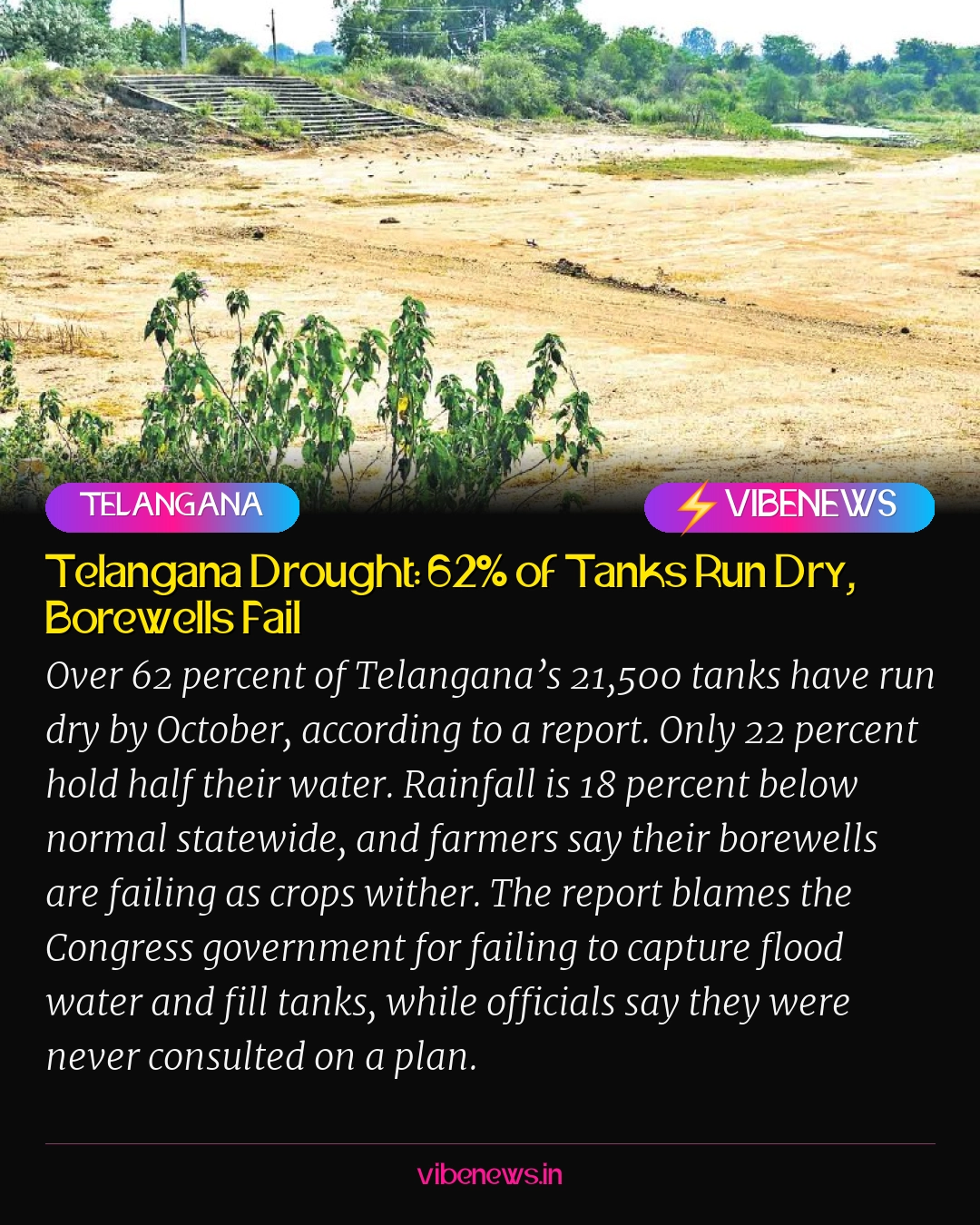
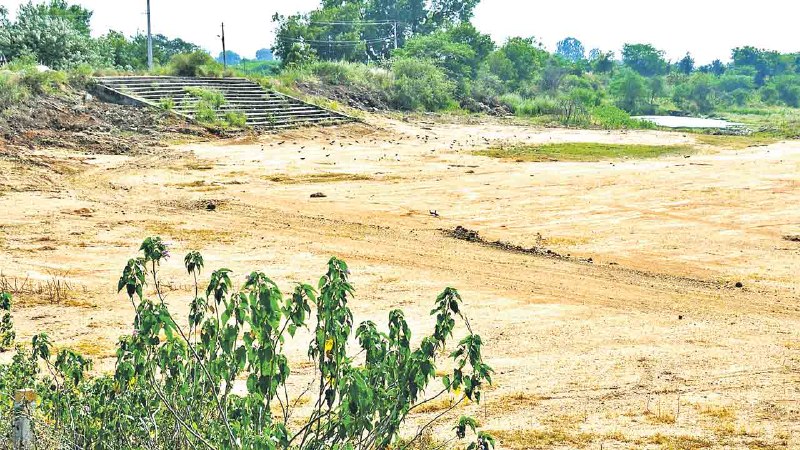
More than 62 percent of Telangana’s 21,500 tanks have run dry as of October, and farmers across the state say their borewells are failing. The report, published from Hyderabad, warns that crops are drying up in the fields as the drought spreads.
Rainfall deficit deepens the crisis. Statewide rainfall has come in 18 percent below normal this season. Weather experts had warned from the start that an El Nino effect would hit this year. Krishna and Godavari did bring some inflows, but the report says the state failed to capture that water and channel it into the thousands of tanks linked to irrigation projects.
Tanks are empty across key districts. Only 22 percent of the tanks hold around half their capacity. The report says tanks in Jagtial, Karimnagar, Kumuram Bheem Asifabad, Mulugu, Medak, Siddipet, Mancherial, Nagarkurnool and Sangareddy irrigation circles have almost completely dried up. Other circles have only a meager amount of water left.
Borewells are failing because the tanks are not being filled, farmers are explaining.
Why the land can’t hold water. The report explains the state’s geology as a key reason the drought bites so hard. About 80 percent of Telangana sits on hard rock formations, where water takes a long time to seep in. Sandstone layers, which recharge groundwater quickly, are found mainly in the Godavari basin. Geologists quoted in the report say no more than 10 percent of heavy rainfall typically soaks into the ground in such terrain. That makes tanks and check dams the main tools for trapping water and recharging aquifers.
Farmers bear the cost. Borewells are now the backbone of agriculture in many parts of the state. The report says roughly 45 lakh acres are irrigated through about 30 lakh borewells, and those wells depend on groundwater that tanks replenish. Farmers now say the wells are coming up dry, and thousands of acres of crops have withered as a result. Officials quoted in the report say the tanks could have held at least half their water if the available flood flows had been captured and the stored water used properly.
The government’s answer. The report says the state government cites a water shortage as the reason for the low storage. Officials say the government has not made any independent decision on how to respond, and they add that no discussions were held with them about what to do next. The report also says water is available in the Devadula project, yet it is not being lifted to fill the tanks that depend on it.
Where the blame lands. The report frames the crisis as the result of a policy failure. It argues that the Congress government has followed the same path as earlier administrations in neglecting tanks, and that it has abandoned the process of filling them. The report contrasts this with the water conservation drive begun under K. Chandrashekar Rao after Telangana’s formation, which included the revival of tanks under Mission Kakatiya, expanded check dam construction and linking of tanks to projects. Those measures, the report says, had kept groundwater levels rising and gave farmers a sense of security.
What comes next. With tanks empty and borewells failing, the immediate threat is to the kharif and rabi cycles that depend on stored water. Farmers in the affected districts face losses on crops already in the ground, and the report suggests the wider impact will fall on rural livelihoods. The government has not yet responded with a detailed plan to refill tanks in those districts.
TL;DR
- More than 62 percent of Telangana’s 21,500 tanks have run dry by October.
- Only 22 percent of tanks hold around half their water, with rainfall 18 percent below normal.
- Farmers say borewells are failing because tanks are not being filled, and crops are withering.
- Nine districts, including Karimnagar and Siddipet, have tanks almost completely dried up.
- The report says flood water was not captured and Devadula project water is not being lifted.
- The state government cites water shortage, while officials say no plan was discussed with them.