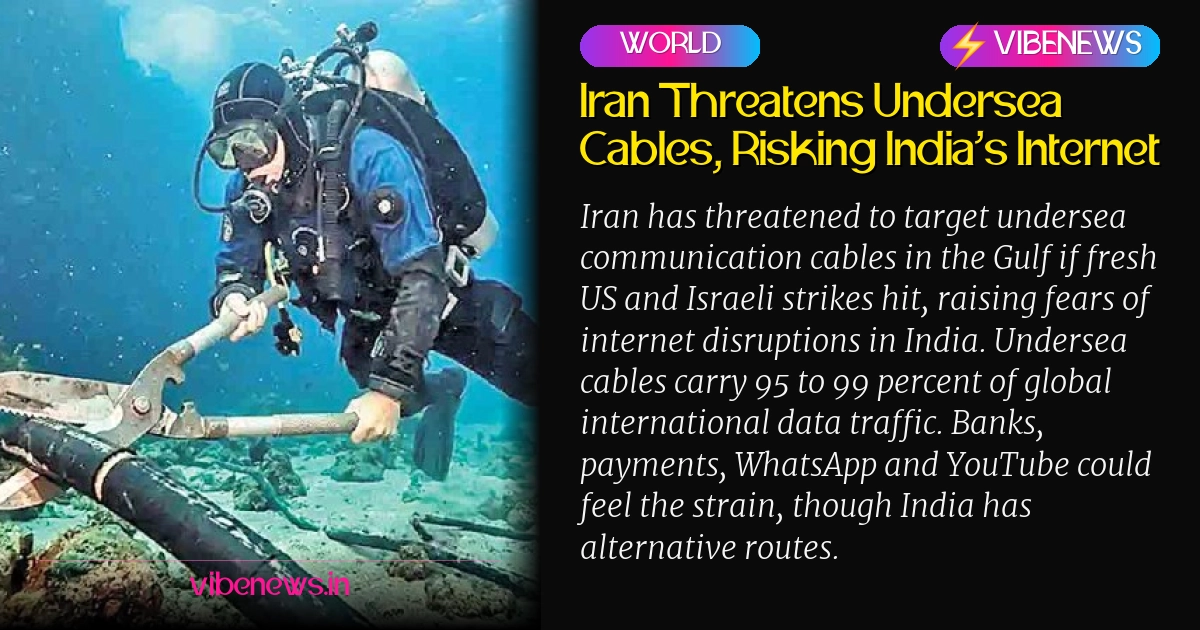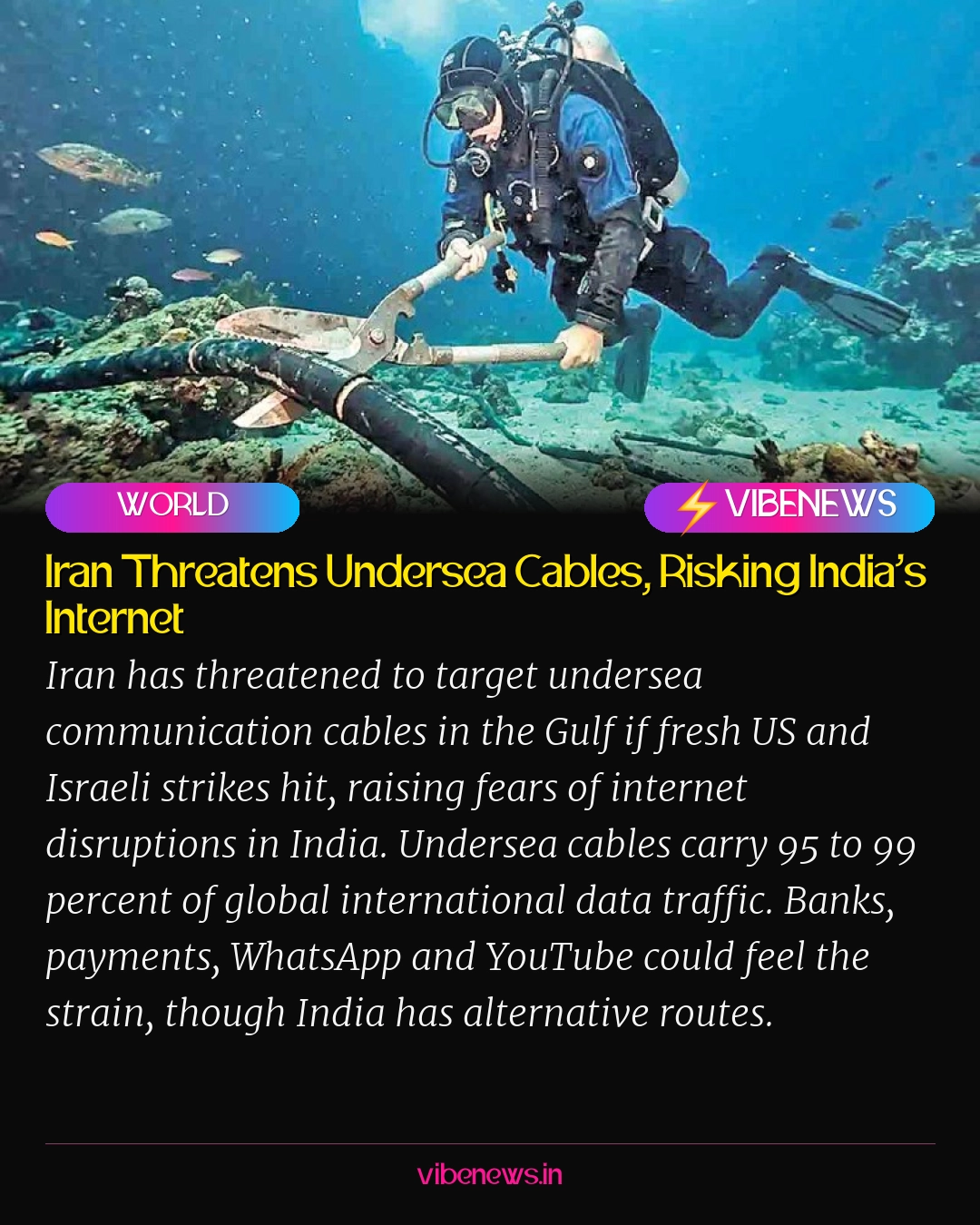

Iran has threatened to target undersea communication cables in the Gulf region if the United States and Israel launch fresh military strikes, raising concerns that internet services in India could be disrupted. The warning, reported from New Delhi on October 25, 2026, comes as the wider conflict involving Iran, Israel and the United States has already pushed up fuel prices around the world.
US President Donald Trump has warned that military attacks could resume if Iran and the United States fail to reach an agreement. Tehran responded that any new strikes by the United States and Israel would prompt it to target submarine communication cables in the Gulf area.
Iran’s warning puts the undersea cables that carry most of the world’s data under a direct threat.
Why the cables matter so much
Undersea cables carry roughly 95 to 99 percent of global international data traffic. The Strait of Hormuz is vital to world trade, and it is just as critical to the international communications system. Cables in this region provide internet connectivity between Asia, Europe and the Middle East, moving large volumes of data from one country to another.
That is why a cable cut in the Gulf would not stay a regional problem. The report says damage to these cables could affect digital services far beyond the Middle East, including in India.
The fear is not just theoretical. The concern is that the same routes carrying data between continents could become targets once the military confrontation escalates again.
What Indian users could feel first
Banks and payment systems rely on servers that connect across borders. If those links weaken, some transactions could fail or be delayed. For anyone trying to pay a bill or transfer money at a bad moment, that delay is not a minor inconvenience.
Messaging and calling are also exposed. WhatsApp users could face problems sending and receiving messages, along with voice and video calls. YouTube videos may take longer to load, and streaming could stutter or stop. Facebook and Instagram content could also load slowly.
Some artificial intelligence applications that run on foreign servers may be affected as well. The reach of the disruption would depend on which services depend on which routes.
The caveat that matters
The report is careful on one point. It does not say that services such as UPI or WhatsApp will shut down completely. India is connected to many international undersea cables and has alternative network paths. Data can be rerouted when one or a few cables fail.
How much of the country feels the effect depends on three things: how widespread the cable damage is, which routes are hit, and how much capacity the alternative paths can carry. A single break is manageable. A cluster of failures in one critical area is a different story.
The real danger is simultaneous damage. If many cables in the same key region are knocked out at once, the alternative routes could be stretched far beyond what they were built to handle, and the disruption could spread quickly across services that millions of people use every day.
What happens next depends on Washington and Tehran
For now, the threat remains a warning, not a confirmed attack. The chain of events described in the report starts with a possible failure in talks between Iran and the United States. If a deal is not reached, Trump has said military action could come again. Iran has answered by putting the region’s undersea infrastructure on the table.
Fuel prices have already reacted to the wider conflict. Internet users in India may be the next group to feel its consequences, and they may feel it in the most ordinary ways: a stalled payment, a frozen video call, or a message that never arrives.
TL;DR
- Iran has threatened to target Gulf undersea cables if the US and Israel strike again.
- Undersea cables carry roughly 95 to 99 percent of global international data traffic.
- A cable disruption could hit bank servers, payments, WhatsApp, YouTube and social media in India.
- India has many international cables and alternative routes, so services are not expected to stop entirely.
- The severity depends on how many cables fail and how much capacity alternative routes can carry.
- The threat follows Trump’s warning that military strikes could resume if no US-Iran deal is reached.