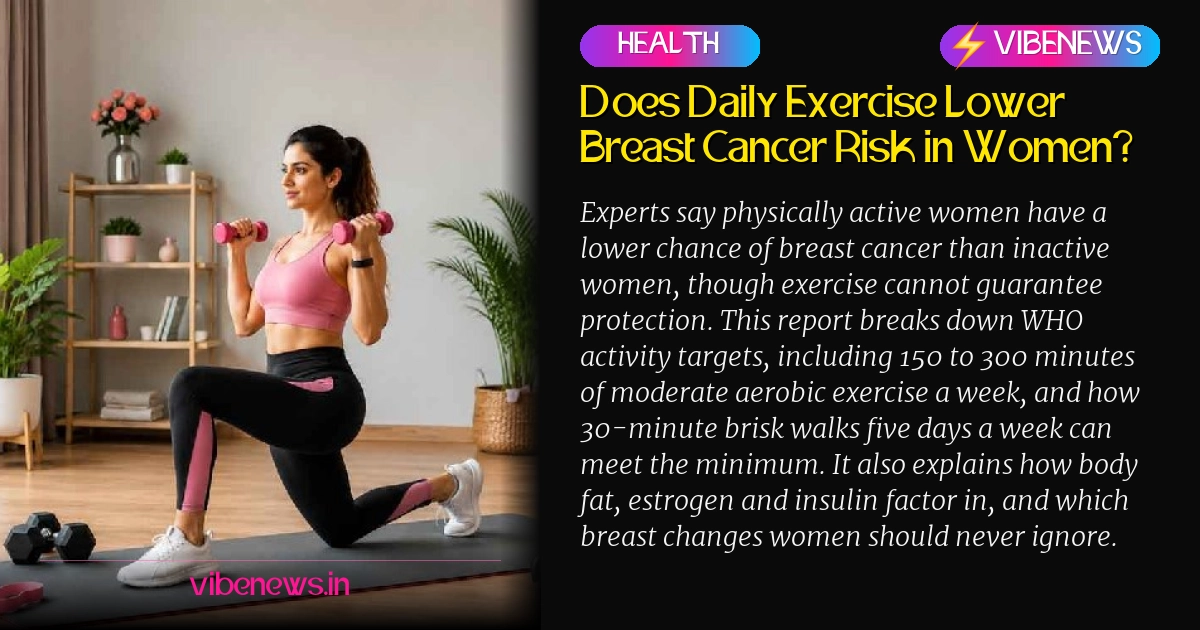

Physically active women have a lower chance of developing breast cancer than women who do not exercise, according to research that experts cited in a health report published by Ntnews on October 24, 2026. The catch is that exercise is not a shield. It lowers the odds. It does not erase the risk.
The report begins with a familiar problem. Many women drop exercise first when work deadlines, household duties and family care pile up. A missed morning walk becomes a missed week, and then the routine disappears. Experts want women to know that this slow drift away from movement matters for long-term breast health.
How Much Exercise Is Enough
The World Health Organization recommends that adults get 150 to 300 minutes of moderate-intensity aerobic activity every week. Another option is 75 to 150 minutes of vigorous aerobic activity. The guidance also calls for muscle-strengthening exercises on at least two days a week.
For busy women, the target can be broken into short sessions. The report gives a clear example. Walking briskly for 30 minutes a day, five days a week, meets the minimum recommended for moderate-intensity activity. No special equipment is needed to start.
Cycling, swimming and dance also count as options. Small changes add up too. Using the stairs at the office, taking short walks during work breaks and standing up regularly instead of sitting in one place all raise physical activity levels.
Women who are not exercising now should start with a shorter duration and increase it gradually. Experts in the report stress that a routine you can keep up matters more than a demanding plan you abandon after a few weeks.
Why Body Fat and Hormones Matter
The link between exercise and breast cancer is not only about burning calories. Physical activity affects body weight, hormone regulation and other metabolic processes. Those processes play a role in the development of some types of breast cancer.
Estrogen sits at the center of this story. The report says the hormone plays a part in the growth of certain breast cancers. After menopause, body fat tissue becomes an important source of estrogen. High body fat after menopause is linked with a higher risk of some hormone-dependent breast cancers.
Regular exercise helps keep body weight under control. It also influences how the body responds to insulin and the body’s inflammatory processes. Researchers are still studying exactly how these biological pathways connect exercise with breast cancer risk.
The message is direct. Exercise is one of the lifestyle factors women can change. It works over time, through consistent activity, not as a single workout that offers instant protection.
What Exercise Cannot Do
Women should not assume that a workout removes cancer cells or provides immediate defense. Benefits linked to exercise build up over months and years of steady activity.
Breast cancer can affect women at any body weight. Lifestyle is only one factor among many. Age, family history of cancer, inherited genetic changes, reproductive factors and hormonal influences all shape a woman’s risk. Women who exercise every day can still develop the disease.
Breast density also changes the picture. When breast tissue is dense, cancer can be harder to spot on a mammogram. Women need to understand their personal risk factors and follow their doctor’s advice on the screening tests they need.
Exercise is not a substitute for appropriate screening tests or medical advice. It is an additional healthy habit.
That line sums up the report’s central warning. Exercise supports health. It does not replace screening.
Breast Changes Not to Ignore
The report lists several changes women should never dismiss. These include a new lump in the breast, thickening in one area, changes in breast shape, skin changes, a nipple that turns inward, and unusual discharge from the nipple. Experts say these signs do not always point to cancer. Still, each one needs a check with a medical professional.
Screening decisions depend on age, personal risk level and medical guidelines. Women with a strong family history of breast cancer, or those who know they carry a hereditary risk, should get a personal medical assessment.
Before starting strenuous exercise, women who have been inactive for a long time or who live with health conditions should consult a doctor. Exercise plans should fit age, physical ability and existing health problems.
For women searching for simple ways to lower cancer risk, the practical takeaway is clear. Build a daily movement habit, watch your weight and hormones over time, know your family history, and never skip the checks your doctor recommends.
TL;DR
- Physically active women have a lower breast cancer risk than inactive peers, but exercise cannot guarantee prevention.
- WHO recommends 150 to 300 minutes of moderate aerobic activity weekly, plus muscle-strengthening work on at least two days.
- Thirty minutes of brisk walking five days a week meets the moderate-intensity minimum, and it needs no special equipment.
- After menopause, body fat becomes an important source of estrogen, which links weight control to hormone-driven breast cancer risk.
- Lumps, skin changes, nipple changes and unusual discharge need medical checks, even for women who exercise every day.