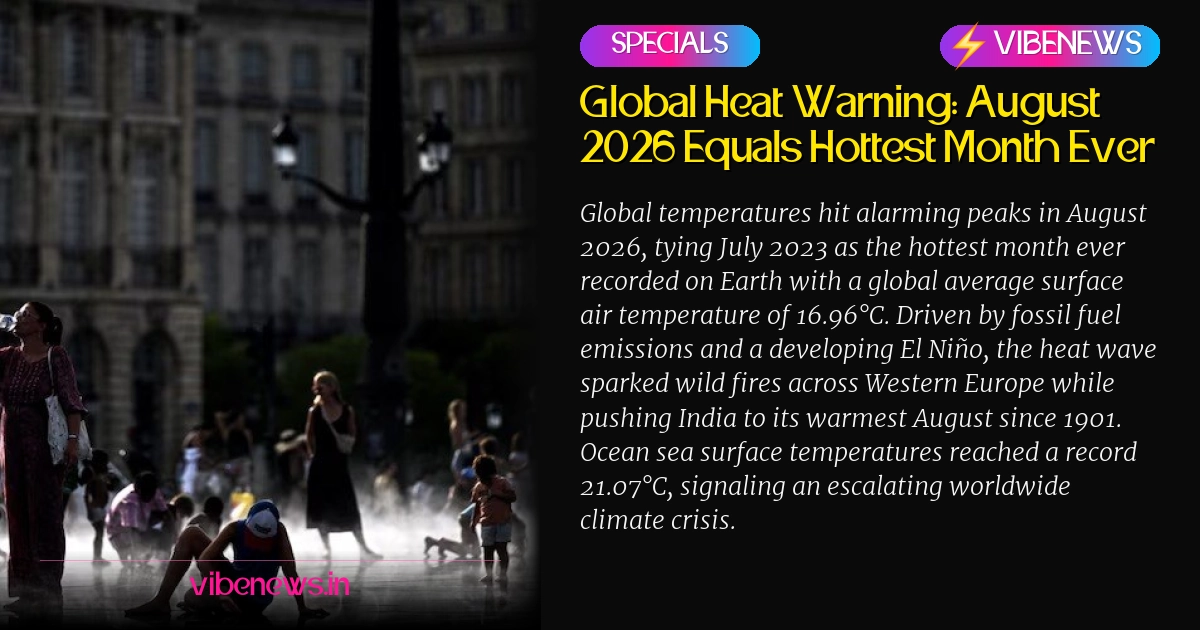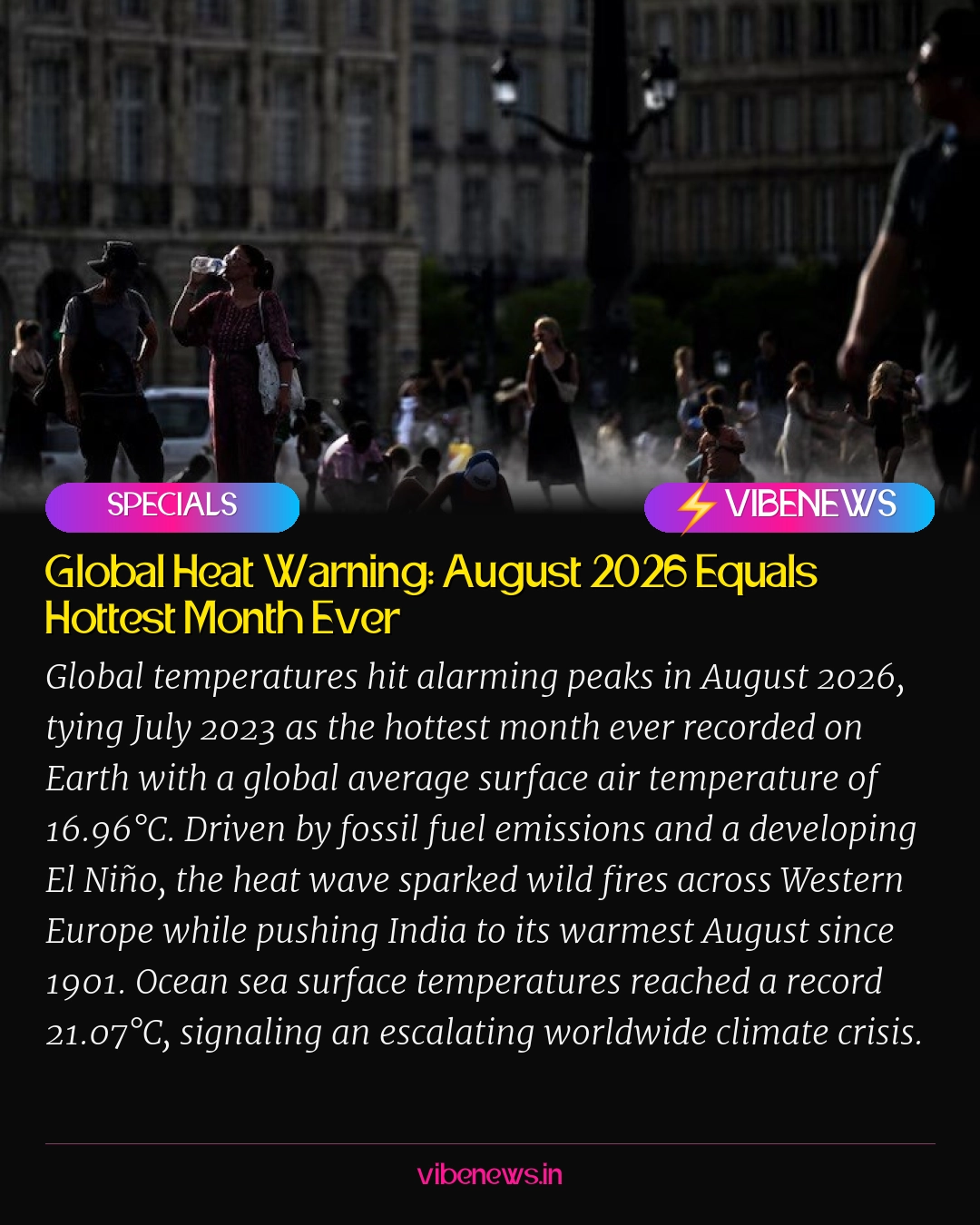

The European Union’s Copernicus Climate Change Service confirmed that August 2026 tied with July 2023 as the hottest month ever recorded globally, with planet-wide average surface air temperatures reaching 16.96°C.
This unprecedented thermal surge pushed global mean temperatures 1.65°C above the estimated pre-industrial baseline, signaling a dangerous acceleration in planetary warming. Climate scientists attribute the alarming spike to a dual force: decades of relentless greenhouse gas emissions from fossil fuels elevating baseline global temperatures, combined with a rapidly developing El Niño event in the tropical Pacific. As warm ocean waters in the equatorial region discharged tremendous amounts of thermal energy into the atmosphere, extreme heat conditions spilled across continents.
Ocean Heat and Global Climate Drivers
Data released by Copernicus revealed that extra-polar ocean sea surface temperatures surged to an extraordinary record of 21.07°C during August. The tropical Pacific experienced intense heating, creating the foundation for an El Niño phenomenon expected to intensify further in subsequent months. This marine heat overload effectively removed natural cooling buffers, amplifying atmospheric warmth worldwide.
August 2026 tied with July 2023 as the hottest month ever recorded globally, with the planet’s average surface air temperature reaching 16.96°C, according to the European Union’s Copernicus Climate Change Service.
Corroborating these findings, the US National Oceanic and Atmospheric Administration independently reported that August stood as the absolute warmest month in its global tracking history. Furthermore, NOAA documented that the June-to-August quarter established the single hottest three-month meteorological period ever logged, underscoring that the planetary heatwave extended far beyond a localized or brief weather anomaly.
Wildfires and Atmospheric Extremes in Europe
The consequences of this global heat crisis manifested severely across Western Europe, which suffered through its hottest summer on record. Persistent high-pressure systems locked in grueling heatwaves across France, Italy, central Europe, and the Balkan peninsula, where temperatures soared several degrees above long-term August averages. The prolonged desiccation of vegetation kindled widespread wildfires, sending massive smoke plumes across affected regions and overstretching emergency services.
India’s Historic Heatwave and the Warm Night Crisis
Despite being in the midst of its traditional southwest monsoon season, India registered its warmest August since national record-keeping began in 1901. Figures from the India Meteorological Department showed that the nationwide average temperature reached 28.01°C, standing 0.67°C higher than the historical normal. The heat spell blanketed urban and rural zones alike, proving that seasonal monsoon rains were insufficient to counteract the dominant atmospheric thermal pressure.
Particularly alarming for public health officials was the unprecedented rise in nighttime temperatures across the country. IMD records showed that India’s average minimum temperature reached a record 24.36°C, which was 0.68°C above normal. When nighttime temperatures remain elevated, human bodies, concrete infrastructure, and ecosystems are denied the critical cooling period required to recover from daytime heat stress. This thermal trapping dramatically escalates the risk of heat stroke, strain on energy grids, and agricultural stress across Indian states.
A Preview of the New Climate Reality
The simultaneous convergence of record-breaking ocean temperatures, atmospheric greenhouse gas accumulation, and El Niño dynamics in August 2026 provides a stark warning of the earth’s climate trajectory. Rather than representing an isolated anomaly, weather experts warn that the extreme heatwaves, persistent night heat, and severe forest fires observed throughout this period reflect what could soon become the standard baseline for global summers.
The broader implications of these record temperatures extend into global supply chains, water security, and public health systems. Urban areas experienced intense heat-island effects, where high building density trapped heat late into the evening. Agricultural sectors faced diminished crop yields as soil moisture rapidly evaporated under continuous high surface air temperatures. Environmental policy experts emphasize that without aggressive structural reductions in global fossil fuel consumption, the thermal thresholds broken in August 2026 will transition from historical anomalies to routine seasonal events.
TL;DR
- August 2026 tied July 2023 as Earth’s hottest month ever, averaging 16.96°C globally.
- Global temperatures rose 1.65°C above pre-industrial baselines, driven by fossil fuels and El Niño.
- Extra-polar ocean surface temperatures reached an unprecedented record high of 21.07°C in August.
- India recorded its warmest August since 1901, with average temperatures reaching 28.01°C.
- Record nighttime temperatures in India averaged 24.36°C, preventing necessary natural atmospheric cooling.