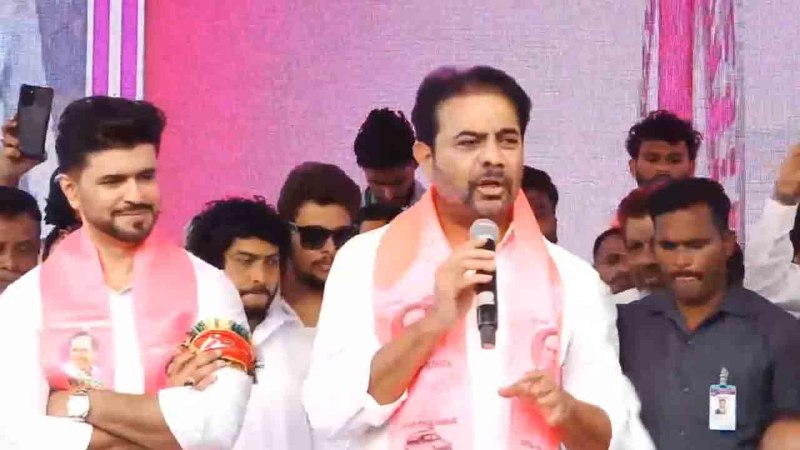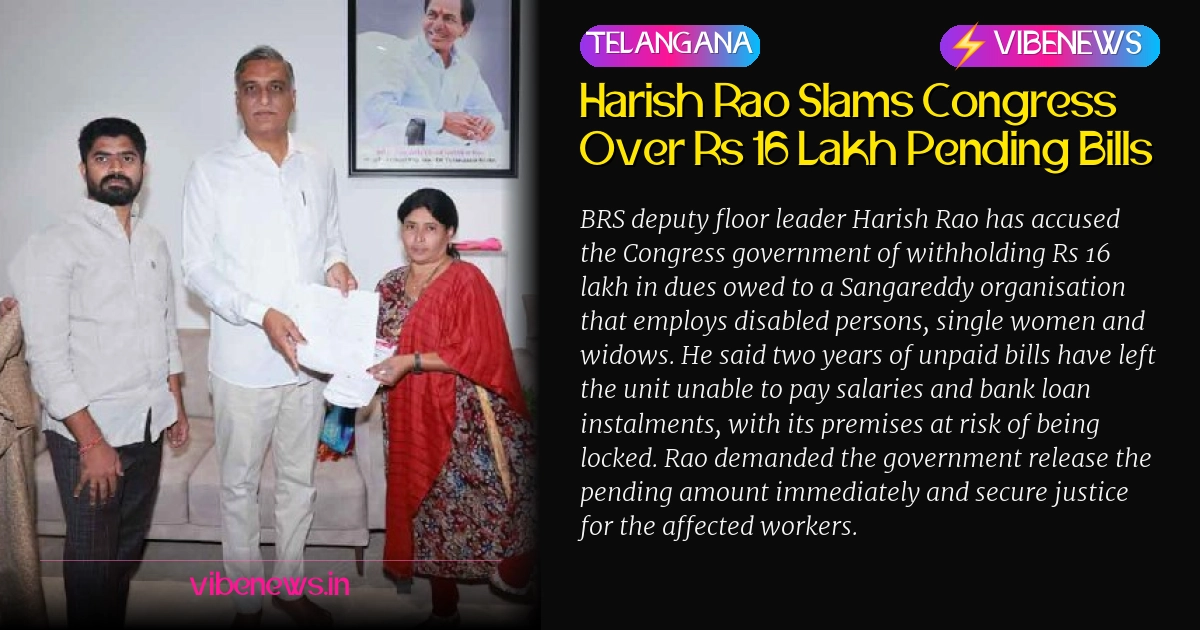
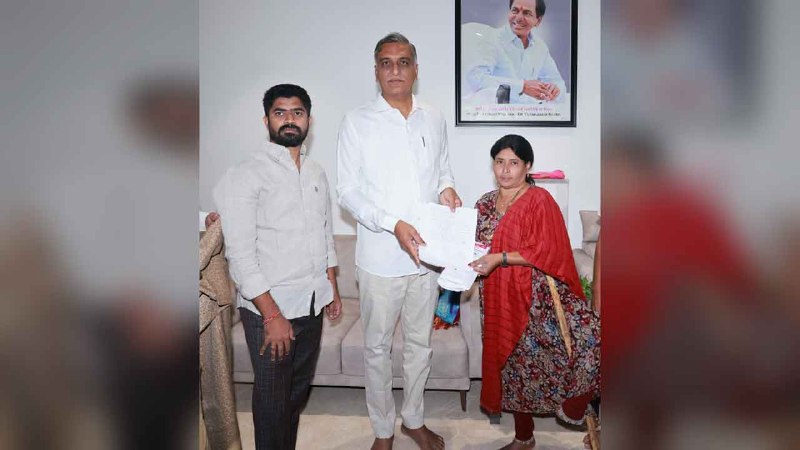
BRS deputy floor leader Harish Rao has accused the Congress government of withholding Rs 16 lakh in pending bills owed to a Telangana organisation that employs disabled persons, single women and widows, saying the non-payment over two years has pushed the unit to the edge of closure.
In a statement posted on social media, Rao said the bills relate to clothes stitched and supplied to hostels run by the Scheduled Castes welfare department. The organisation at the centre of the row is the Divyang Solar Society and Divyang Garments, run by Jubeda Begum from Sangareddy district. Rao said she set up the enterprises with the aim of creating livelihoods for disabled persons, single women and widows.
According to Rao, the unit completed the work and delivered the garments, but the payments for the supplies have not come through for two years. That delay, he said, has created a cash crunch that the organisation cannot absorb.
The human cost of the delay
Rao described a chain reaction that begins with the state’s unpaid invoices and ends with the workers themselves. The organisation, he said, is no longer able to pay its employees’ salaries. It has also failed to keep up with instalments on its bank loans, and as a result there is a real risk that the premises could be locked up.
For a unit built around people who already face barriers to employment, that is not an abstract accounting problem. It is a question of whether dozens of livelihoods survive the month. Rao framed it exactly that way, pointing to the labour of disabled workers and poor women that has gone unpaid while the work itself was delivered.
Rao’s sharpest criticism was aimed at the government’s stated priorities. He pointed out that the Congress government has repeatedly said it places importance on the welfare of persons with disabilities. He asked why a government making that claim would be negligent in paying for the work of the very people it says it is protecting.
A political clash over accountability
The allegation lands in a charged political setting, with the opposition BRS using the case to press the ruling Congress on how it handles welfare obligations. Rao’s statement did not stop at criticism. He called on the government to act without delay, release the pending Rs 16 lakh and deliver justice to the affected victims.
The core question in the dispute is simple and hard to deflect: if the state contracted the work and the work was completed, what is holding up the payment? Rao’s statement presents the delay as a failure of administrative follow-through rather than a dispute over the quality of the goods, though the reporting available does not include any detailed explanation from officials.
That gap matters. The source material carries Rao’s allegations and demands but does not include a response from the state government or the welfare department. Until the department explains the holdup, the case rests on the account of the organisation and the opposition leader who has taken it up.
Why Telangana should be watching this case
This is a Telangana story at its core. The hostels that received the garments belong to the state’s Scheduled Castes welfare department, and the organisation operates in Sangareddy district. How the state handles small suppliers that serve government institutions will shape whether such units can keep working, especially those run by women and people with disabilities who have fewer fallback options when payments stop.
Rao’s intervention also highlights a recurring pressure point for small enterprises that depend on government contracts. A unit can complete the work, deliver on schedule and still be pushed toward default if the payment cycle breaks down. For a welfare-focused enterprise, the consequences travel quickly from the balance sheet to the workers’ homes.
The immediate test is whether the Rs 16 lakh is released. Rao has made that the clear demand, and the organisation’s position, as he described it, leaves little room for delay. Each week without payment adds to the strain on salaries, loan repayments and the stability of the workforce.
Whatever the outcome, the episode underlines a basic accountability point that both sides will have to answer. Governments that promise support for disabled citizens are judged not only by their announcements but by whether the people already doing that work get paid for it.
Not paying the bills for the labour of disabled persons and poor women is shameful, Harish Rao said, demanding the government release the pending amount immediately.
The story is still developing, and the public record currently contains one side of the dispute in detail. Any official explanation of the payment delay, or confirmation of the release of funds, will determine how this case is ultimately read.
TL;DR
- BRS leader Harish Rao says Rs 16 lakh in pending bills owed to a disabled-run garment unit has gone unpaid for two years.
- The unit employs disabled persons, single women and widows and supplied clothes to SC welfare department hostels.
- The organisation is run by Jubeda Begum in Sangareddy district through Divyang Solar Society and Divyang Garments.
- Rao says the unit cannot pay salaries or bank loan instalments, and its premises could be locked.
- Rao has demanded the state government release the pending amount immediately and deliver justice to the affected workers.