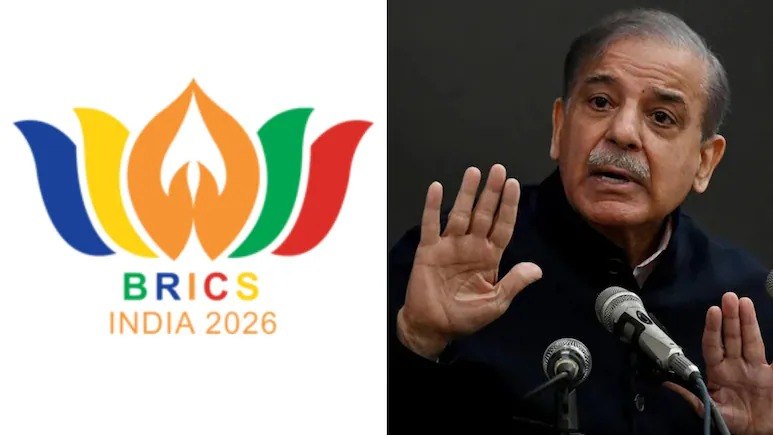
Islamabad’s formal application to join the BRICS economic coalition remains firmly trapped in diplomatic limbo due to India’s insurmountable veto power under the grouping’s strict unanimous consensus rules.
While the economic bloc—originally comprising Brazil, Russia, India, China, and South Africa—recently rolled out the red carpet for new inductees including Egypt, Ethiopia, Iran, and the United Arab Emirates to form "BRICS+", Pakistan finds itself standing outside the velvet rope. Islamabad is currently relegated to sitting in the waiting room alongside 29 other hopeful applicant nations, seeking entry to a club where its immediate neighbor holds an absolute security clearance key.
An Expensive Ticket to the Waiting Room
Driven by pressing domestic economic hurdles and a modest 3.70 per cent GDP growth rate recorded in the Pakistan Economic Survey, Islamabad has been eager to diversify its international financial options. In a bid to reduce its heavy institutional dependence on international lenders like the International Monetary Fund and the World Bank, Pakistan purchased a hefty $580 million stake in the BRICS-backed New Development Bank, as reported by Nikkei Asia. However, acquiring equity in the multilateral lender has proved to be the geopolitical equivalent of buying VIP merchandise at a venue gift shop without actually receiving a ticket to the main concert.
Islamabad’s formal push aligned with the coalition’s rapid rise as a dominant geopolitical force representing the Global South. The diplomatic ambition culminated in November 2023, when Pakistan officially submitted its application to join the bloc, insisting that its presence would enhance international dialogue despite the obvious elephant in the room.
"We believe that by joining BRICS, Pakistan can play an important role in furthering international cooperation and revitalising inclusive multilateralism," said Mumtaz Zahra Baloch, the Foreign Office spokesperson in Islamabad.
Friends in High Places, Bouncers at the Door
In an effort to bypass regional resistance, Pakistan launched a major diplomatic charm offensive aimed at influential member capitals. Pakistani Ambassador to Russia Muhammad Khalid Jamali revealed during an interview with Russian news agency TASS that Islamabad had actively contacted member countries to build support, placing particular emphasis on securing Moscow’s diplomatic weight. Both China and Russia offered enthusiastic endorsements for Pakistan’s candidacy, eager to expand the bloc’s footprint across Asia.
Unfortunately for Islamabad, the administrative mechanics of BRICS prioritize institutional consensus over majoritarian goodwill. Under the group’s established admission guidelines, existing full members and partner countries must grant unanimous approval before any new candidate is admitted. Consequently, while Beijing and Moscow are happy to endorse Islamabad’s aspirations from the sidelines, India’s fundamental refusal to sign off creates an absolute, non-negotiable barrier.
The Global South Heavyweight vs. Diplomatic Isolation
The desperation behind Pakistan’s persistent knocking becomes readily apparent when examining the vast economic footprint of the expanded alliance. BRICS+ now represents approximately 49 per cent of the world’s population and holds roughly 40 per cent of global GDP measured on a purchasing power parity basis. Missing out on such a sprawling economic network leaves Pakistan isolated from a key engine of emerging market trade.
In stark contrast, India’s position within the grouping continues to deliver massive economic dividends. New Delhi’s total exports to BRICS nations witnessed a dramatic 48.8 per cent jump, escalating rapidly from USD 64.3 billion to USD 95.7 billion. As New Delhi leverages its position to expand economic trade networks exponentially, Islamabad is left watching from the outer cold, discovering that warm relations with "most" members mean very little when one member holds a permanent lock on the front door.
TL;DR
- Pakistan remains excluded from BRICS despite submitting an official application in 2023 due to India’s veto.
- Admission into BRICS strictly requires unanimous consensus among all existing member states, giving India an absolute veto.
- Islamabad purchased a $580 million stake in the BRICS-backed New Development Bank to reduce reliance on the IMF.
- China and Russia support Pakistan’s entry, but India’s firm resistance halts any progress for Islamabad’s membership.
- BRICS expanded to include Egypt, Ethiopia, Iran, and the UAE, while 29 other nations currently wait in line.