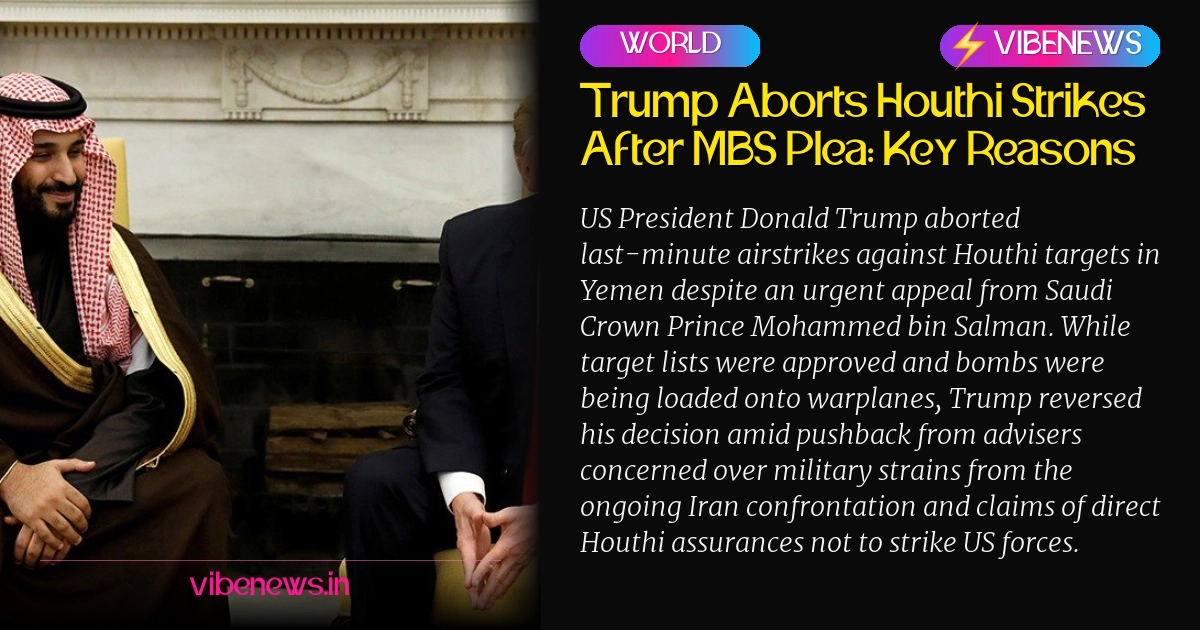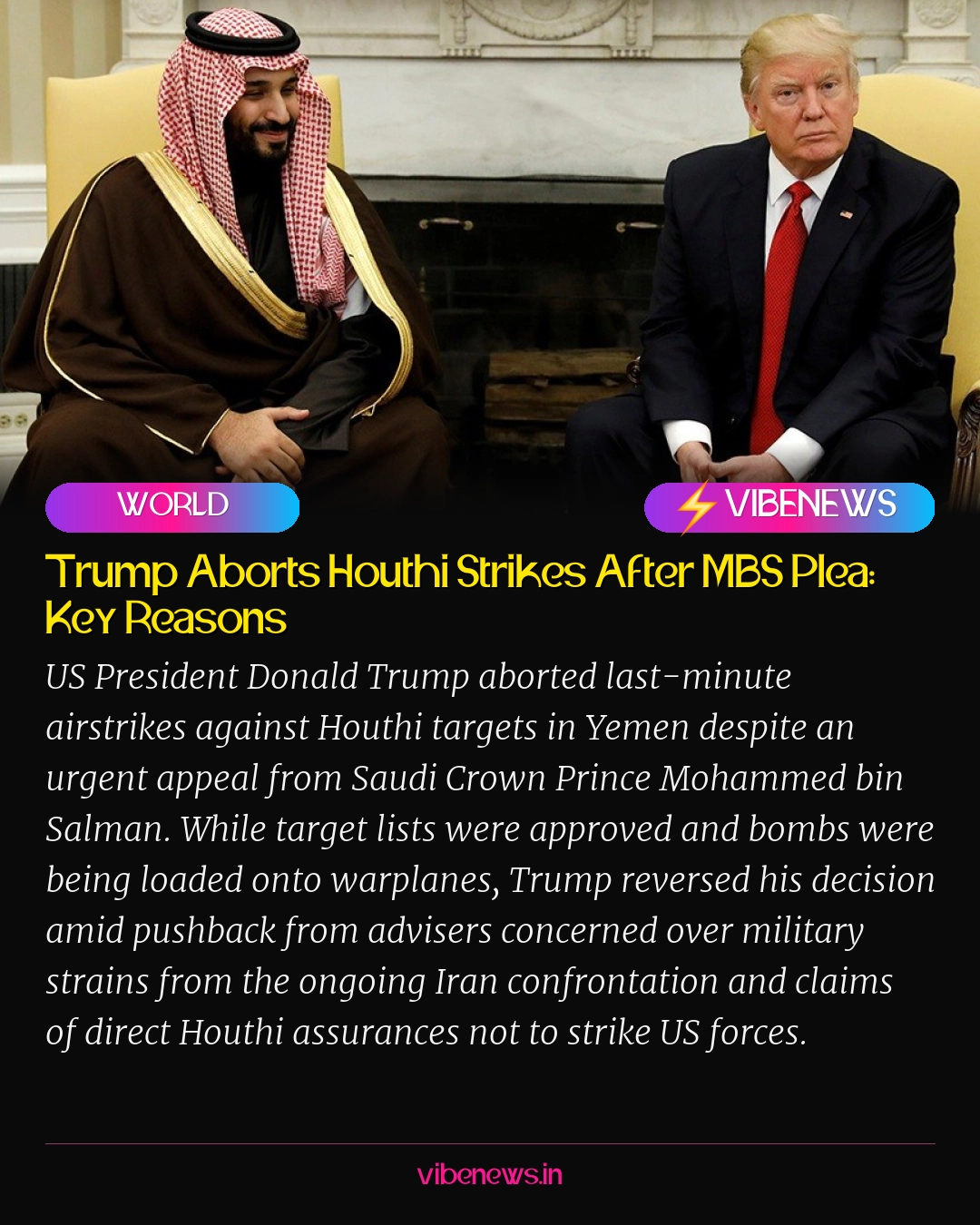
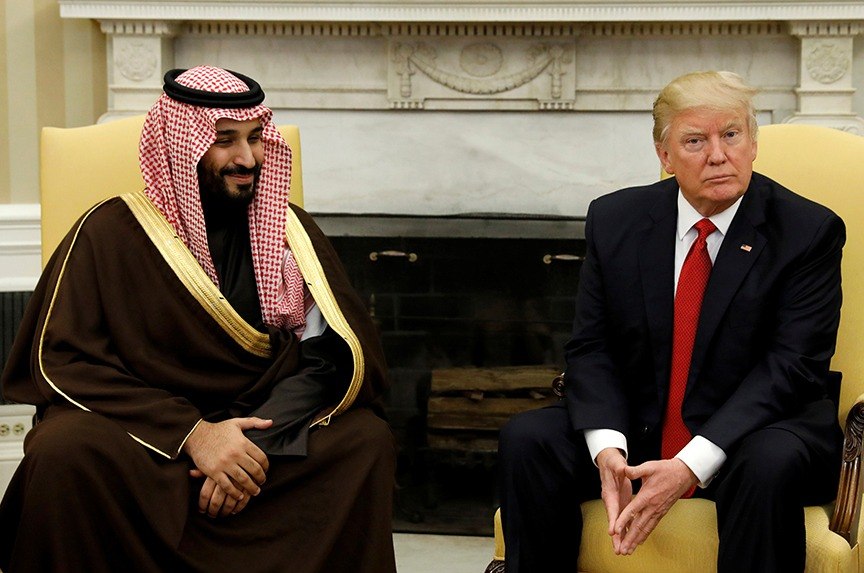
United States President Donald Trump halted planned airstrikes against Houthi targets in Yemen at the last minute on Sunday, overriding an earlier commitment made to Saudi Crown Prince Mohammed bin Salman following an urgent plea for military aid.
The sudden abort order came just as commanders had approved target lists and American military personnel were actively loading munitions onto selected warplanes. The decision underscores a sharp divergence within Washington over deep involvement in the Yemeni theatre while American military resources face heavy strains from an ongoing, nearly seven-month standoff with Iran.
Inside the Last-Minute Reversal
The geopolitical maneuver unfolded following a Thursday phone conversation between Trump and Saudi Crown Prince Mohammed bin Salman, often referred to as MBS. Saudi Arabia’s de facto leader urged the American president to intervene directly against the rapidly advancing Yemeni militia, which has expanded its hold over strategic territory near the Red Sea. Despite telling advisers a day prior that he opposed joining the conflict between the Saudis and Houthis, Trump initially relented to the Crown Prince’s request and instructed Pentagon officials to prepare precision strikes.
However, by Sunday, Trump executed a complete reversal, postponing all aerial missions for the foreseeable future. Reports indicate that most of Trump’s inner circle remains staunchly opposed to expanding military operations into Yemen, pointing to existing operational burdens associated with the broader campaign against Tehran that began with massive joint aerial operations alongside Israel on February 28.
Strategic Pragmatism or Direct Dialogue?
Addressing the shifting policy stance, Trump disclosed to Fox News that Washington maintains active lines of communication with the Yemeni group, claiming the Houthis have explicitly agreed to refrain from targeting American personnel or assets.
"The Houthis called us and they don’t want to fight with us," Trump said during a visit to Ireland on September 12. "They don’t want us to go after them."
Despite Trump’s assurances regarding American immunity, Saudi Arabia remains under heavy pressure. Houthi forces recently conducted a rapid offensive across Yemen, capturing broad swaths of territory from the internationally recognized government backed by Riyadh, while a missile successfully targeted the Saudi capital over the weekend. Although a senior White House official reaffirmed that the United States maintains a bilateral defense agreement with Saudi Arabia and remains committed to defending its allies, no official White House statement has been published explaining the sudden decision to stand down.
Broader Regional Standoff
The strategic hesitation comes amidst broader decisions confronting the administration regarding Iran. Fox News reporter Trey Yingst noted that Trump remains in a "deciding mode" concerning future kinetic actions against Tehran, warning that major developments could unfold shortly while weighing whether to escalate military pressure against the Iranian nation.
TL;DR
- President Donald Trump abruptly canceled planned US airstrikes against Houthi targets in Yemen on Sunday.
- The U-turn occurred despite an urgent call for help from Saudi Crown Prince Mohammed bin Salman.
- Inner circle advisers opposed joining the fight due to strains from the ongoing confrontation with Iran.
- Trump asserted that Houthis held back from targeting American forces after direct communications.
- Saudi Arabia faces heightened pressure following Houthi territorial gains and a missile attack on Riyadh.