From Village Sand to Global AI Frontiers
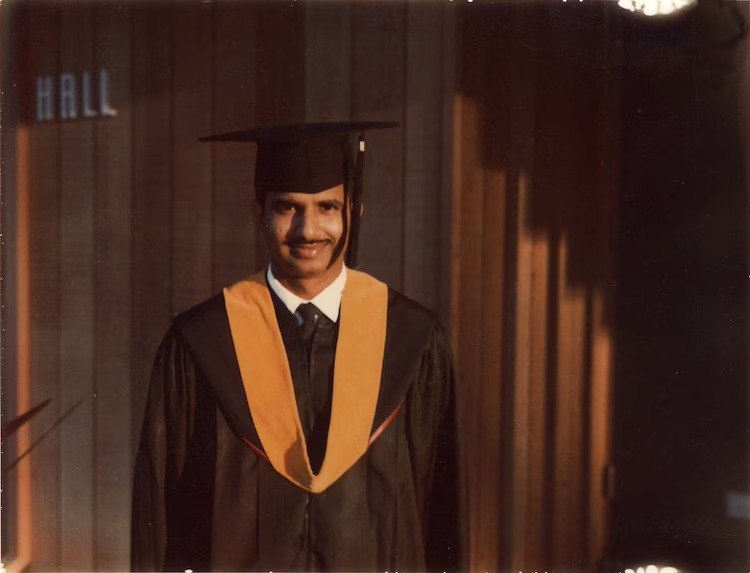
Turing Award-winning computer scientist Dabbala Rajagopal "Raj" Reddy, who grew up in the rural village of Katur in Andhra Pradesh, established himself as a world-renowned artificial intelligence pioneer after completing his doctorate under AI forefather John McCarthy at Stanford University in 1966.
Reddy’s journey represents one of the most remarkable trajectories in modern technological history. Born on June 13, 1937, in present-day Chittoor district to a farming family, he grew up alongside six siblings in an environment where basic amenities like electricity, running water, and classroom paper were nonexistent. In his one-room village school, he learned to write by physically tracing letters into sand—a traditional learning method documented in historical Indian pathshalas. Reddy went barefoot through much of his childhood, acquiring his first pair of shoes only around age 16. Undeterred by these constraints, he became the first person in his family to attend college, earning a bachelor’s degree in civil engineering from the College of Engineering, Guindy, in 1958. His technical horizon expanded dramatically when he moved to Australia, completing his MTech at the University of New South Wales in 1960 while working on the primitive English Electric DEUCE computer—a machine built with vacuum tubes and mercury delay-line memory—before working at IBM Australia.
Pioneering the Science of Machine Perception
In 1963, Reddy made a decisive transition to Stanford University, entering the laboratory of Professor John McCarthy, who had coined the term "artificial intelligence" at the 1956 Dartmouth conference. Working on decision-making under uncertainty, Reddy completed his 1966 doctoral thesis on a computer program designed to play Blackjack. His focus soon expanded to speech recognition, language processing, vision, and robotics. Transitioning to Carnegie Mellon University in 1969, Reddy spearheaded the creation of groundbreaking continuous speech recognition systems, including Hearsay I, Hearsay II, and Harpy. His academic lineage directly propelled commercial voice technology; his student James K. Baker later co-founded Dragon Systems to bring speech recognition into consumer markets.
At Carnegie Mellon, Reddy’s leadership proved transformative. In 1979, he became the founding director of the CMU Robotics Institute, an institution that became so inextricably linked with his stewardship that colleagues affectionately dubbed it the "Raj Mahal." He later served as Dean of CMU’s School of Computer Science. In 1994, Reddy and collaborator Edward Feigenbaum received the ACM Turing Award—widely regarded as the Nobel Prize of computing—for their pioneering contributions to large-scale AI systems, making Reddy the first person of Asian origin to earn the prestigious honor. His contributions were further recognized with India’s Padma Bhushan in 2001 and the French Legion of Honour.
Building the Technological Bedrock of Andhra Pradesh and Telangana
Beyond international academia, Reddy played a pivotal role in shaping the modern technology ecosystem of Andhra Pradesh and Telangana. When former Chief Minister N. Chandrababu Naidu was formulating his vision to transform Hyderabad into a major technology hub, he turned directly to Reddy for strategic guidance and architectural ideas. Reddy served as the founding chairman of the International Institute of Information Technology (IIIT) Hyderabad, cementing the city’s status as an educational and technological powerhouse. Furthermore, driven by his conviction that technology must empower the underprivileged, Reddy helped establish the Rajiv Gandhi University of Knowledge Technologies (RGUKT) in Andhra Pradesh to provide elite technical education to gifted rural youth.
Democratizing Technology for the Bottom of the Pyramid
Throughout his career, Reddy remained focused on deploying artificial intelligence to bridge economic and social divides rather than serving only affluent populations. His research agenda prioritized speech recognition and automated translation specifically to grant unlettered and rural individuals direct access to digital information systems.
His vision was not simply to build smarter machines for those who already had access to technology, but to use AI, speech recognition, translation and digital education to reach people at the bottom of the economic pyramid.
From a rural classroom where soil served as a notepad to the highest corridors of global computing, Raj Reddy’s life stands as a testament to how human intellect and perseverance can redefine the boundaries of human-machine interaction while uplifting communities worldwide.
TL;DR
- Raj Reddy grew up in Katur, Andhra Pradesh, learning to write by tracing letters in sand.
- Earned his PhD under AI pioneer John McCarthy at Stanford University in 1966.
- Became the first Asian recipient of the ACM Turing Award in 1994 for AI breakthroughs.
- Founded Carnegie Mellon University’s Robotics Institute and served as Dean of Computer Science.
- Helped shape Hyderabad’s tech vision and co-founded IIIT Hyderabad and RGUKT for rural youth.